
DUMOS 3.2 Cu.Ft Mini Fridge with Freezer
4.1Editor score
Low 0.41 kWh consumption
Five temperature settings
38 dB operating noise
Explore the best Energy Efficient Mini Fridge options, comparing capacity, energy use, noise, storage, freezer design, and convenience.
An energy efficient mini fridge should provide dependable cooling without consuming unnecessary power, but the best examples also need to fit your room, organize everyday food, and operate quietly. Energy consumption is important, yet capacity, compressor efficiency, insulation, temperature control, and practical features also shape the value of a compact refrigerator.
We compared ten mini refrigerators using the supplied specifications, focusing on rated energy use or ENERGY STAR certification where available, along with capacity, freezer layout, noise, temperature settings, storage flexibility, dimensions, and intended room. The list includes compact single-door units, freezer-equipped models, and larger-capacity refrigerators for dorms, offices, bedrooms, and apartments.
Each review identifies the strongest reasons to consider a particular model and any limitations visible in its specifications. The ranking reflects efficiency, practical design, useful features, and customer ratings, while acknowledging that operating conditions and household needs vary. Product details and prices can change, so confirm the latest listing before purchasing.
4.1Editor score

4.5Editor score
4.3Editor score
This side-by-side comparison highlights each mini fridge's capacity, efficiency credentials, freezer arrangement, noise level, and key convenience features to help identify the most appropriate model for your space.




The Upstreman BR321 combines a 3.2 cu.ft footprint with ENERGY STAR certification, quiet operation, and a useful set of storage features. Its customer rating of 4.4 reflects a broadly positive reception, while the supplied specifications make it a credible choice for bedrooms, offices, dorms, and apartments where a compact but functional refrigerator is needed.
We may earn a commission when you buy through this link, at no additional cost to you.
The refrigerator section provides 2.9 cu.ft of chilled storage, including two adjustable glass shelves and a crisper drawer. Five temperature settings cover a 32°F to 50°F range, and the reversible door can open left or right to suit the room. These are meaningful advantages over a basic drink cooler because the model can organize meals, produce, dairy products, bottles, and cans rather than merely chilling a few beverages.
Its 38 dB operating noise is suitable for a bedroom or study, and the tight door seal, adjustable leveling feet, and included defrost tool add practical value. The trade-off is that the 0.3 cu.ft freezer is intended for light frozen storage, not ice cubes or ice cream. A mechanical-style adjustable thermostat also offers less precision than a digital display, so users who want exact temperature readings may prefer a more advanced control system.
This is a strong all-around recommendation for anyone seeking an efficient 3 cu.ft-class mini fridge with a freezer. It balances certified energy performance, quiet operation, flexible shelving, and straightforward installation without requiring a large footprint. Choose it when compact storage, low noise, and an included freezer matter more than premium digital controls or a large frozen-food compartment.
ENERGY STAR certification makes this model appealing for continuous operation, while the larger 2.9 cu.ft refrigerator section remains useful for daily meals and snacks. The freezer is modest, so efficient chilled storage is the model’s stronger suit.
The reversible door, adjustable feet, and 18.7-inch width make the unit easier to position in dorm rooms, offices, and compact apartments. Its 33.1-inch height should be checked against the intended opening before purchase.
We may earn a commission when you buy through this link, at no additional cost to you.
This single-door mini fridge stands out for providing a clearly defined 0.35 cu.ft upright freezer within a 3.2 cu.ft total capacity. It has a 4.4 customer rating and is positioned for bedrooms, offices, and dorm rooms, offering more of a traditional upright-freezer experience than the micro-freezer configurations common among similarly compact refrigerators.
We may earn a commission when you buy through this link, at no additional cost to you.
Its stated average consumption of 0.6 kWh per day provides a concrete basis for comparing efficiency. The simple mechanical thermostat uses five positions, with setting 3 recommended for everyday use. A separate freezer capable of reaching -6°F to -11°F is useful for ice making and short-term storage of frozen goods, while the main compartment accommodates beverages, groceries, and meal preparation.
Storage is well organized through adjustable shelves and door bins, and the reversible door adds placement flexibility. Manual defrosting is simpler than some automated systems but requires periodic attention. The freezer is not a deep-freeze replacement, and the recommended thermostat setting may not suit every food or ambient condition, so adjustments could be necessary in hot rooms.
Choose this model for shoppers who want a distinct freezer section, transparent energy-use information, and compact organization. It is a particularly sensible option for dorm rooms and offices where drinks, snacks, and small quantities of frozen food need to share one efficient appliance.
The dedicated upright compartment is easier to organize than a small top or rear freezer. It is still designed for everyday frozen goods and ice cubes rather than long-term commercial-style storage.
The five-position dial is direct and durable, with setting 3 suggested for daily use. Users who value a digital display may find this less refined, but the straightforward control suits compact spaces.
We may earn a commission when you buy through this link, at no additional cost to you.
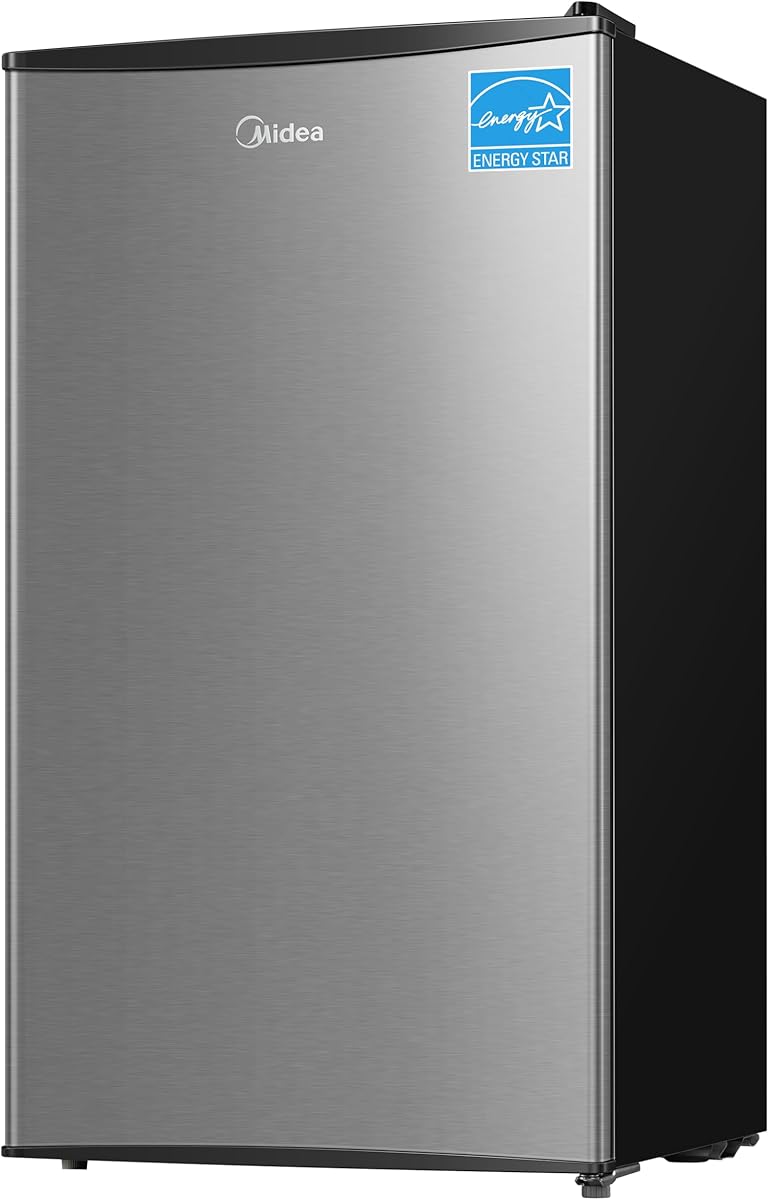
The Midea 3.1 cu.ft model combines ENERGY STAR certification, a 4.5 rating, and separate refrigerator and freezer temperature ranges. That combination makes it one of the most balanced options in the guide, particularly for dorm rooms, offices, bedrooms, and apartments where both chilled and frozen storage are desired.
We may earn a commission when you buy through this link, at no additional cost to you.
Its R600A high-efficiency compressor is associated with annual energy consumption of 270 Kwh/Y, while a multi-air flow system is designed to distribute air more evenly. The mechanical thermostat covers 32°F to 50°F in the refrigerator section and -11.2°F to 5°F in the freezer. Detachable glass shelves, a 2-liter bottle rack, and a crisper drawer support organized everyday use.
The reversible door can be configured to open from either side, and LED lighting makes contents easier to find at night. A potential concern is the physical footprint of 19.4 inches deep by 18.5 inches wide by 33 inches high, which may be less suitable for unusually tight spaces. The model also uses R600A, a flammable refrigerant, so it should be installed in accordance with the manufacturer’s instructions and serviced appropriately.
This is an excellent recommendation for buyers who want certified efficiency without giving up a freezer, useful organization, and quiet everyday convenience. Its strong rating, 270 Kwh/Y figure, and flexible door make it especially appealing for a dorm or home office where reliable, continuous cooling is important.
Dedicated refrigerator and freezer ranges make the model more versatile than a single-zone cooler. This is particularly useful for keeping everyday drinks chilled while reserving a separate section for frozen items.
Removable shelves, a dedicated 2-liter bottle rack, a crisper drawer, and LED illumination make frequently used items easier to reach. The reversible door also allows the layout to match the room rather than forcing the appliance into a fixed position.
We may earn a commission when you buy through this link, at no additional cost to you.
The Igloo 3.2 cu.ft mini fridge offers a familiar, uncomplicated approach to compact food storage. Its 4.4 rating and straightforward specification set make it a reasonable option for homes, dorms, and offices that need a full-size interior within a relatively small appliance.
We may earn a commission when you buy through this link, at no additional cost to you.
The principal strengths are easy to understand. It offers 3.2 cu.ft of capacity, glass shelves for organized storage, an adjustable mechanical thermostat, and a separate freezer compartment for frozen food. The refrigerator cooling range is listed as 32°F to 50°F, which gives users clear guidance when setting the control for drinks, dairy products, fruit, and prepared meals.
Static compressor cooling means there is no fan circulating air, so cold may be distributed less evenly than in a refrigerator with a fan-assisted system. The supplied information also does not state an energy-use figure or ENERGY STAR certification, making it harder to compare directly with the certified models in this roundup. Its efficiency should therefore be evaluated through current certification and product-label information rather than assumed from capacity alone.
Pick this refrigerator when simplicity, recognizable storage organization, and a separate freezer are more important than digital controls or a published consumption estimate. It may suit households wanting a straightforward mini fridge for everyday snacks, drinks, and small quantities of frozen food.
The adjustable thermostat provides a simple way to manage cooling without navigating digital menus. This can be advantageous in a dorm, office, or guest room where the appliance is shared by several people.
Glass shelves make it easier to view and rearrange stored items. A 3.2 cu.ft interior and separate freezer provide enough room for common personal refrigerator needs without taking up a full-size appliance footprint.
We may earn a commission when you buy through this link, at no additional cost to you.
The Midea 3.3 cu.ft refrigerator is the largest-capacity model featured here, with ENERGY STAR certification and an annual energy-consumption figure of 260 Kwh/Y. Its 4.3 rating indicates a solid customer reception, while the multi-air flow system and low-noise compressor target reliable, convenient everyday use.
We may earn a commission when you buy through this link, at no additional cost to you.
The refrigerator maintains a mechanical temperature range of 33.8°F to 50°F and includes a 2-liter bottle rack plus an easy-access can rack. A reversible door, LED interior light, and generous 3.3 cu.ft volume make it a practical fit for apartments, dorms, offices, and kitchens where users want more chilled storage than a compact drink cooler provides.
Unlike several other refrigerators in this list, the supplied specifications do not identify a separate freezer compartment. That makes this primarily a refrigerator for drinks, fruit, snacks, and other chilled foods. The stated noise level of less than 42 dB is suitable for offices and bedrooms, although it is not among the lowest figures here. Its 18.6-inch width and 33.9-inch height should be measured before installation.
Choose the Midea 3.3 cu.ft model if chilled capacity, certified efficiency, and air circulation matter more than frozen-food capability. It offers an attractive balance of useful storage and low energy use for a compact refrigerator, especially for shared rooms and offices that need frequent access to drinks and snacks.
The 3.3 cu.ft capacity is useful for households that want to keep more than a few drinks or snacks chilled. Dedicated bottle and can storage helps prevent smaller items from shifting around the main shelves.
ENERGY STAR certification and 260 Kwh/Y consumption provide clear efficiency credentials. The multi-air flow system is also intended to produce more even temperatures throughout the cabinet.
We may earn a commission when you buy through this link, at no additional cost to you.
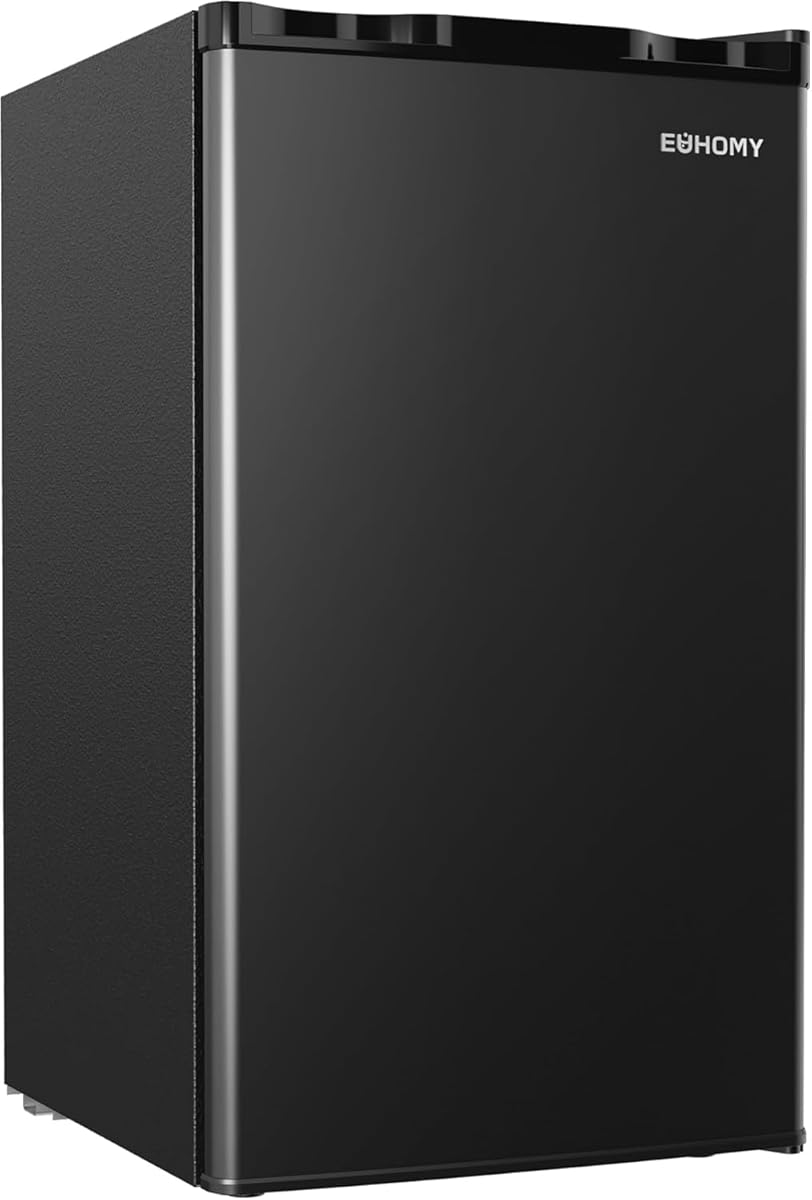
The EUHOMY 3.2 cu.ft mini fridge combines a stated 0.66 kWh daily consumption with 38 dB operation, flexible placement, and both refrigerator and micro-freezer sections. Its 4.3 rating and extensive convenience details make it a credible choice for dorm rooms, bedrooms, kitchens, and offices.
We may earn a commission when you buy through this link, at no additional cost to you.
The main refrigeration area supplies 2.9 cu.ft and operates from 25°F to 44°F. A 0.3 cu.ft micro-freezer offers a 23°F to 41°F range for short-term storage, accompanied by a water catch pan to simplify defrosting or cleaning. Two removable glass shelves make it possible to adjust the interior for different containers, while a seven-position control knob offers more settings than many competing models.
The reversible top hinges allow the door opening to be changed according to placement, and adjustable feet help stabilize the unit on uneven floors. At 19 inches deep, 17.5 inches wide, and 31.1 inches high, the refrigerator occupies 2.2 square feet. Its freezer is better for brief storage than for ice cream or long-term frozen goods, and the quoted daily consumption is higher than the lowest figures in the list.
This is a good recommendation for buyers who value quiet operation, flexible door placement, and useful maintenance details. It is particularly appropriate for a dorm or office where the appliance will run continuously and where a compact freezer for occasional use is sufficient.
The stated 38 dB operating level makes the refrigerator suitable for bedrooms, study areas, and offices. It also includes adjustable feet to reduce vibration and instability on uneven surfaces.
A water catch pan under the micro-freezer helps manage condensation during defrosting or cleaning. The small compartment is functional for short-term storage, though it is not intended to replace a full-size freezer.
We may earn a commission when you buy through this link, at no additional cost to you.
The Midea 1.7 cu.ft mini fridge is built for smaller spaces and straightforward chilled storage. It is ENERGY STAR certified, has a 4.0 customer rating, and offers a compact 1.7 cu.ft capacity that can serve bedrooms, offices, dorms, and apartments where a large refrigerator would be impractical.
We may earn a commission when you buy through this link, at no additional cost to you.
The most useful design feature is the built-in door storage for a 2-liter bottle or similarly large beverage container. A removable shelf lets users create more vertical space for tall bottles, cans, or containers. The reversible door can be attached to open from either side, making placement possible beside a desk, in a bedroom corner, or inside a kitchen nook.
There is no specified freezer section, so this model is intended for drinks, snacks, and fresh food rather than frozen goods. Its smaller capacity also means that careful organization matters more than it would in a 3 cu.ft model. Although the efficiency certification is a clear positive, the supplied information does not include a numerical annual consumption figure for direct comparison with several other Midea refrigerators.
Choose this mini fridge if your priorities are a certified energy-efficient appliance, compact dimensions, and convenient bottle storage without frozen-food capability. It is a sensible fit for a student room, office, bedroom, or travel-oriented setup where chilled drinks and snacks are the primary requirement.
The model prioritizes frequently used drinks, snacks, and fresh food in a small cabinet. Users who regularly store frozen items should choose a refrigerator with a dedicated freezer instead.
The removable shelf and reversible door provide flexibility despite the 1.7 cu.ft capacity. Dedicated 2-liter bottle storage also helps keep larger containers stable and accessible.
We may earn a commission when you buy through this link, at no additional cost to you.
The DUMOS 3.2 cu.ft refrigerator has the lowest stated daily energy consumption in this guide at 0.41 kWh. That figure, together with 38 dB operation and a compact 2.15-square-foot footprint, makes it a compelling efficiency-focused choice for bedrooms, offices, dorms, garages, and other secondary spaces.
We may earn a commission when you buy through this link, at no additional cost to you.
The appliance provides a 2.9 cu.ft refrigerator area and a 0.3 cu.ft freezer section. Five temperature settings cover 33.8°F to 44°F in the main compartment and 23°F to 35°F in the freezer, with the third setting recommended for everyday home or office use. One crisper drawer, two adjustable shelves, and a door compartment provide sufficient organization for drinks, snacks, and prepared meals.
The freezer is compact and not intended for extensive frozen-food storage. Unlike several certified competitors, the supplied specifications do not mention ENERGY STAR certification, so the low consumption figure is the main efficiency evidence. A 4.1 rating is respectable, though not as high as the leading models. The relatively low published consumption may also reflect assumptions that buyers should compare with the actual certification label and operating conditions.
This is the best choice for shoppers whose main goal is to minimize stated energy use while retaining a full 3.2 cu.ft capacity. It also suits users who want quiet operation, a modest freezer, and flexible shelving without paying extra for a premium control panel or internal display.
A 0.41 kWh daily figure is especially notable because the refrigerator still offers 3.2 cu.ft of total storage. That balance makes it more versatile than a very small drink-only cooler.
The 2.15-square-foot footprint supports placement in tight rooms and corners. A crisper drawer, two movable shelves, and a door compartment keep daily items visible and organized.
We may earn a commission when you buy through this link, at no additional cost to you.
This 3.2 cu.ft grey mini fridge combines a stated 0.55 kWh daily consumption with an exceptionally low noise figure of below 37 dB. Its 4.3 rating and one-touch defrost system make it a strong option for bedrooms, offices, dorms, and other places where quiet operation and low maintenance are especially valuable.
We may earn a commission when you buy through this link, at no additional cost to you.
The refrigerator is 17.83 inches wide, 16.73 inches deep, and 33.27 inches high, giving it a relatively slim profile for a 3.2 cu.ft model. Storage includes two detachable glass shelves, a crisper drawer, a reversible door, adjustable leveling legs, and LED lighting. A six-position thermostat provides reasonable control, and the detachable door seal is designed to make cleaning easier.
The one-touch defrost button is the standout convenience feature. Activating it from the center of the temperature control initiates the melting process and reduces the manual work associated with frost buildup. One consideration is that the supplied listing text contains minor inconsistencies, including differences between the stated total capacity and one reference to 3.1 cu.ft. Buyers should verify the final dimensions and capacity on the current product page.
Choose this model for a dorm, bedroom, or quiet office where the compressor’s low sound level and easy defrosting outweigh the benefits of a digital display. Its stated energy use and ample interior make it a practical, feature-oriented compact refrigerator.
The listed noise level of below 37 dB is among the lowest in the group. It is a useful characteristic for sleep spaces, study rooms, offices, and nurseries where background sound can be disruptive.
The one-touch defrost system simplifies frost removal from the control area. Detachable shelves and a removable door seal also support routine cleaning, which is important in frequently used refrigerators.
We may earn a commission when you buy through this link, at no additional cost to you.
The Midea 1.6 cu.ft mini fridge delivers one of the strongest efficiency profiles in the guide, with ENERGY STAR certification, 207 Kwh/Y consumption, and a 4.5 customer rating. Its compact dimensions and reversible door suit garages, apartments, dorms, kitchens, bedrooms, and offices where every inch of floor space matters.
We may earn a commission when you buy through this link, at no additional cost to you.
The appliance measures 18.6 inches wide, 17.7 inches deep, and 19.4 inches high, allowing it to fit spaces that cannot accommodate a taller mini refrigerator. Its mechanical thermostat covers 28.4°F to 35.6°F, and an internal chiller box is intended to cool drinks faster. A 2-liter bottle rack and removable glass shelf make the small interior practical for beverages, fruit, and other fresh food.
There is no specified freezer, and the narrow temperature range may be restrictive for households that need a wide variety of conditions. The chiller box also occupies some of the limited interior space. These constraints make the model more appropriate as a personal refrigerator or beverage cooler than as the sole storage appliance for a shared household.
Choose this refrigerator for excellent energy efficiency, compact placement, and a strong customer rating. It is a particularly good fit for a small office, garage, guest room, or dorm where drinks and fresh snacks are the main priorities and frozen storage is unnecessary.
The 207 Kwh/Y figure is the lowest annual estimate listed among these products. Combined with ENERGY STAR certification, it makes the model a strong efficiency choice for continuous operation.
At 19.4 inches high, the model can fit beneath counters and on tables where taller refrigerators cannot. The bottle rack, chiller box, and removable shelf maximize the available interior.
We may earn a commission when you buy through this link, at no additional cost to you.
The right energy efficient mini fridge depends on room size, storage needs, noise sensitivity, and whether frozen food is essential. Compare documented consumption, certification, compressor technology, capacity, and layout rather than relying on a single specification.
Energy-use information comes in several forms. Some models provide annual kilowatt-hour estimates, while others list average daily consumption, and ENERGY STAR certification offers an independent efficiency benchmark. These figures are not always directly interchangeable because test methods, capacities, and operating assumptions can differ. Compare the most clearly stated figure available, but also check the current ENERGY STAR database or product label because listings and certification status can change.
Prefer a model with both a credible certification and a published consumption figure whenever possible.
A 1.6 or 1.7 cu.ft refrigerator is best for drinks, snacks, fruit, and personal use in a tight room. A roughly 3.2 to 3.3 cu.ft model can support more varied groceries, prepared meals, and a small freezer section. Measure the intended location, including clearance for the door, before committing to a larger cabinet. A model that fits the available space and reduces wasted storage is usually more useful than the highest possible capacity.
Choose enough room for regular groceries, not merely the largest advertised volume.
A dedicated upright freezer is easier to access and can hold ice more effectively than a compact micro-freezer, but it may reduce usable space elsewhere or require manual defrosting. Dedicated freezer sections generally suit short-term frozen storage, not extended preservation of frequently opened items. Refrigerators without freezers can be more efficient and compact when your priorities are drinks, dairy products, fruit, and ready-to-eat food.
Select a freezer only if frozen storage is part of your regular routine.
Noise figures in this guide range from below 37 dB to 38 dB for several models, with some rated below 42 dB. Lower figures generally suit bedrooms, nurseries, offices, and study areas, although real sound varies with room acoustics, compressor cycling, and uneven placement. A 42 dB rating may still be unobtrusive in a busy kitchen but noticeable in a quiet bedroom during nighttime operation.
Give the lowest noise specification extra weight in sleeping and working areas.
A reversible door can open left or right, making it easier to place the refrigerator beside a wall or under a counter. Before purchasing, check the clearance needed to open the door all the way, including handle projection if applicable. Adjustable leveling feet help on uneven floors, while the overall footprint determines whether the appliance can fit without blocking walkways, cabinets, or outlets.
Confirm the door swing and final dimensions before ordering.
Adjustable or removable shelves help accommodate different bottle and container shapes, while a crisper drawer provides a dedicated place for produce. Door bins and bottle racks keep frequently used drinks visible, and LED interior lighting makes nighttime access easier. Because mini fridge interiors are compact, every shelf and bin affects usable capacity. A model with flexible storage may be more satisfying than one with greater nominal volume but fixed shelving.
Prioritize removable shelves and dedicated bottle storage.
Manual defrost models require scheduled thawing, while one-touch or other assisted systems can reduce effort. A removable door seal, drip tray, catch pan, or included defrost tool makes cleaning easier and can help preserve cooling performance. Check the manufacturer’s cleaning guidance and avoid blocking ventilation. Whether the freezer is manual or automated, regular maintenance is important for efficient and reliable operation.
Choose the defrost system you are willing to maintain consistently.
ENERGY STAR certification, ETL safety certification, and details about the compressor and refrigerant can help distinguish otherwise similar refrigerators. The listed Midea models use R600a, a highly efficient but flammable refrigerant, which makes correct placement and eventual professional servicing important. Buyers should review the full manual rather than assuming one installation arrangement is suitable for every model.
Verify certification, electrical requirements, and placement rules before installation.
Before using the refrigerator, verify that it has been upright for the period required by the manufacturer, clean the interior with a mild solution, and allow it to cool before loading it heavily. Position the unit on a level surface with the ventilation openings unobstructed. If the door can be reversed, decide which direction works best before final placement, and avoid extending power cords where they create a trip hazard.
Organize food according to its storage needs, keeping raw meat sealed and away from produce or ready-to-eat items. Do not block interior vents with large containers, and leave reasonable space around stored items so cold air can circulate. A compact refrigerator works most efficiently when its door openings are brief and the thermostat is adjusted only as needed. Allow hot food to cool before placing it inside.
Clean the shelves, drawers, door bins, and door seal regularly, and check for spills or loose debris. Follow the manual’s defrosting instructions for freezer-equipped models, and use the supplied catch pan or drip tray where applicable. Keep the coils and exterior vents clear, and have the appliance inspected by an appropriate professional if you notice unusual noise, heat, moisture, or a damaged power cord.
The most efficient choice depends on capacity, design, and certification rather than size alone. Compact models may use less energy simply because they hold less, while efficient compressors and good insulation can reduce consumption in larger cabinets. Compare current ENERGY STAR status, annual or daily kilowatt-hour estimates, and the capacity required for your household.
No. ENERGY STAR certification primarily addresses energy efficiency and does not guarantee a specific sound level. Noise depends on compressor design, cabinet construction, leveling, room acoustics, and operating conditions. Compare decibel figures separately, especially for bedrooms, offices, and other quiet spaces.
Follow the clearance instructions in the product manual because required space varies by model. Ventilation openings must remain unobstructed, and the door needs enough room to open fully. Avoid placing the refrigerator directly against a wall if the manufacturer specifies rear clearance, and make sure the appliance stands steadily on adjustable feet where applicable.
Not necessarily. A freezer adds a second temperature zone and some additional operating demands, but the difference can be modest for compact models. The compressor efficiency, insulation, cabinet size, and usage pattern all affect consumption. Compare published figures and certification rather than assuming one configuration is always less efficient.
Many compact refrigerators are marketed for garages, bedrooms, offices, and dorms, but ambient temperature can affect cooling performance and energy use. Use the appliance within the manufacturer’s recommended environment, avoid extreme heat, and maintain ventilation. A bedroom model should also have an acceptable noise rating for sleeping.
Several products recommend their third thermostat setting, while some broader ranges are also suitable for normal use. The right setting depends on room temperature, food type, and the particular appliance. Start with the manufacturer’s recommendation, then adjust gradually while observing whether drinks remain cold and produce stays fresh.
Defrost when frost becomes noticeable or when performance and ice production decline. Manual models require more attention, while one-touch systems can make the process easier. Follow the manual’s procedure and avoid using sharp tools or excessive heat that could damage the cabinet, shelves, or refrigerant system.
Customer rating is useful but should be combined with efficiency, capacity, noise, dimensions, and required features. A highly rated model may still be unsuitable if it is too large, lacks a needed freezer, or does not suit a noisy room. The top recommendations here combine specifications with ratings to provide a more complete buying picture.
The Midea 3.1 cu.ft mini fridge with freezer is the most balanced overall recommendation, combining ENERGY STAR certification, a 4.5 rating, separate temperature zones, and useful storage. The DUMOS 3.2 cu.ft model is the efficiency-focused budget option because of its stated 0.41 kWh daily use, while the Midea 3.3 cu.ft refrigerator offers the largest stated capacity and a low 260 Kwh/Y figure with certification.
Prioritize documented efficiency, but choose a capacity and configuration you will actually use. A small certified model can be ideal for drinks and personal snacks, whereas a 3 cu.ft-class refrigerator is better for meals and a small freezer. Also consider noise, door direction, ventilation, storage flexibility, defrosting, and the manufacturer’s placement and safety guidance.
Ratings, certification details, product specifications, and prices can change over time, so check the current listing before making a final decision. Compare the dimensions, energy information, and features against your room and habits, and use the linked product pages to review the latest details and customer feedback.