WSDCAM 113dB Anti Theft Vibration Sensor Alarm
4.6Editor score
113dB audible alarm
Seven sensitivity levels
328-foot wireless range
IP65 waterproof housing
This Alarm System for Boats guide compares ten options for theft detection, bilge monitoring, GPS tracking, alerts, and marine installation.
An alarm system for boats must protect against more than casual theft. A useful setup can detect impact or entry, identify high water, track a vessel remotely, warn of low battery conditions, and provide evidence of movement when the boat is left unattended. The right balance depends on how and where the boat is stored.
We compared ten products ranging from portable vibration alarms to sophisticated monitoring hubs, GPS systems, annunciators, motion sensors, and physical security bars. Our evaluation focused on alarm coverage, alert delivery, wireless capability, power requirements, environmental resistance, installation demands, and how each system supports theft deterrence or broader onboard safety.
The selections reveal three distinct approaches: audible deterrence, connected remote monitoring, and physical access control. Each review explains the product's strongest use case and practical limitations, while the buying guide explains how to match monitoring technology to a boat, storage environment, and level of technical experience. Prices and availability can change.
4.6Editor score

4.8Editor score

4.5Editor score
The table below compares all ten systems by core monitoring method, alert capability, power approach, and intended role, making it easier to distinguish a basic deterrent from a connected boat-safety platform.


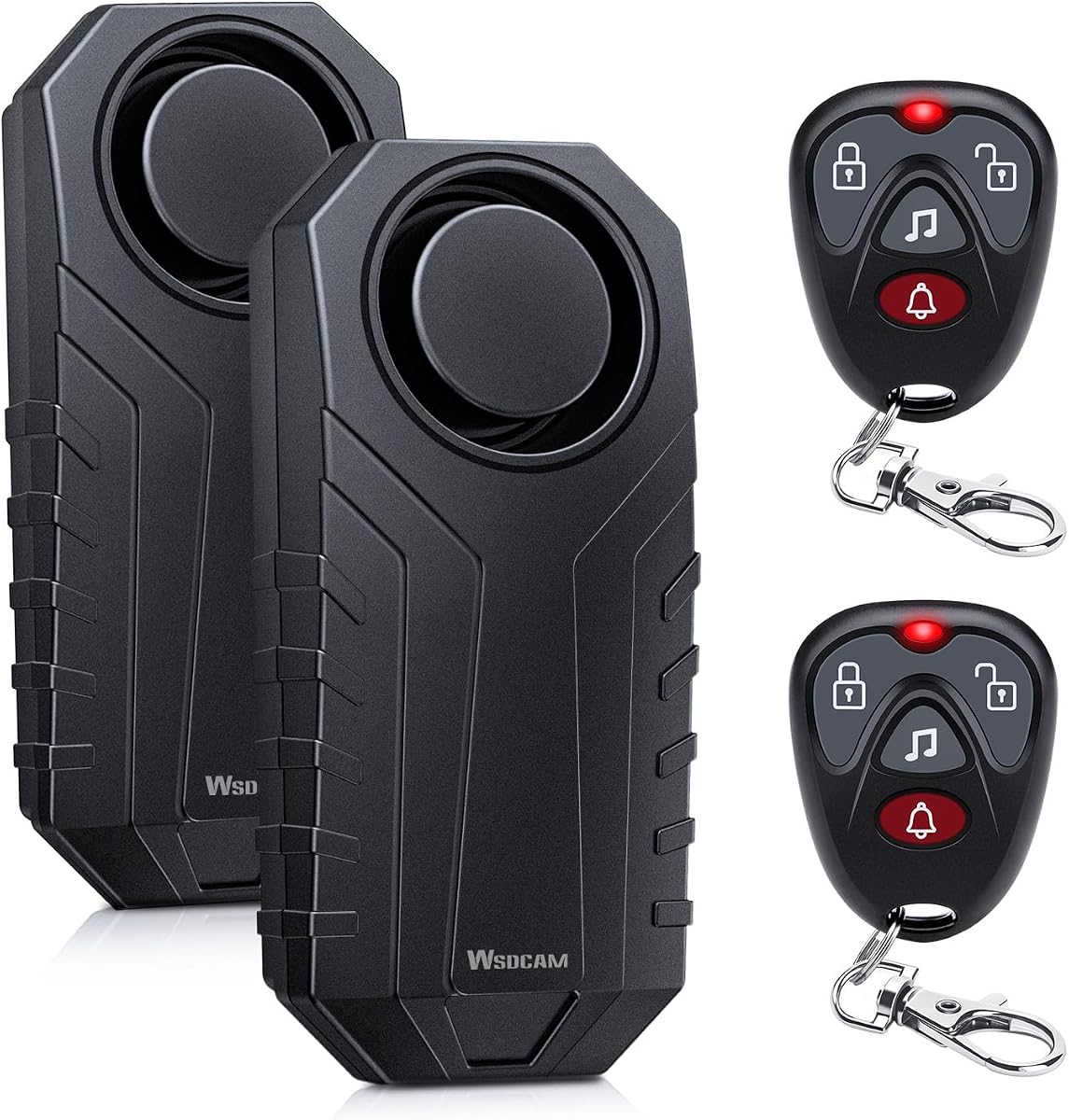
The WSDCAM 113dB vibration sensor alarm is a general-purpose anti-theft device with a 4.6 rating. It is not a dedicated marine security platform, but it can still be useful for a smaller boat, dock locker, trailer, or nearby equipment. Its principal strength is a 113dB alarm designed to create an immediate audible deterrent.
We may earn a commission when you buy through this link, at no additional cost to you.
The system includes remote control, vehicle-search feedback, three selectable bell sounds, and a wireless range stated at up to 328 feet. A seven-level sensitivity adjustment lets the owner distinguish between light contact and deliberate movement, while three volume levers make it possible to tune the output. The IP65 housing also gives it some resilience for outdoor use.
Its limitations are important. It does not provide cellular alerts, GPS location, or a verified list of boat systems, and the supplied information does not identify marine certification. It must be attached with adhesive or straps, which means placement, surface condition, and exposure can affect performance. The remote search feature should not be treated as a substitute for GPS tracking.
This is a sensible pick for owners who want a simple, inexpensive deterrent without vessel wiring or a subscription-based setup. It works particularly well when the boat is stored where an audible alarm can be heard. Boaters needing remote monitoring, high-water alerts, or precise location should consider one of the connected systems instead.
The high-output alarm is designed to discourage a would-be thief before an intruder has time to remove equipment. That makes the system most useful in situations where people are likely to hear the boat or nearby storage area.
Seven sensitivity levels and three volume settings help reduce false triggers caused by waves, wind, or normal contact. A short adjustment period after installation is advisable before relying on the alarm unattended.
We may earn a commission when you buy through this link, at no additional cost to you.
The LocMarine Global LTE Boat Monitoring & Security Hub carries a 4.8 rating and offers one of the broadest monitoring capabilities in this guide. It combines real-time bilge, high-water, shore-power, GPS, speed, entry, geofencing, and battery information in a purpose-built marine hub with all sensors included.
We may earn a commission when you buy through this link, at no additional cost to you.
The system is particularly useful for owners who need more than an audible alarm. Its 4G and 5G LTE technology supports remote awareness, while GPS and geofencing can help establish whether a boat has moved beyond an expected area. Entry and shore-power monitoring broaden the picture beyond physical impact, allowing the owner to receive a more useful set of boat-status alerts.
The hub is described as rugged, durable, and made in the USA, while the LocMarine app is intended to make setup and daily checking straightforward. Six months of monitoring service are included. Cellular signal availability at the boat's location remains a practical consideration, and the system should be treated as a complement to physical security rather than a guarantee against loss.
This is the leading recommendation for a boat owner seeking a consolidated monitoring platform. It suits vessels that may sit unattended for long periods and owners who want both security information and important bilge or high-water warnings. Installation planning and cellular coverage should be confirmed before purchase, but the breadth of included sensors is impressive.
Combining bilge, high-water, shore-power, entry, GPS, and battery information gives the owner a more complete operational picture. A single app workflow is more useful than juggling unrelated security devices.
Bilge and high-water monitoring make this system relevant even when no theft occurs. The included monitoring period and remote access also make it practical for boats stored away from the owner.
We may earn a commission when you buy through this link, at no additional cost to you.
The Skyhawk Oversea Cellular Hub is a wireless marine monitoring gateway with a 4.5 rating. It is designed as the central communication point for a broader Oversea sensor system, offering remote location checks and rapid alerts without requiring a connection to the boat's electrical system.
We may earn a commission when you buy through this link, at no additional cost to you.
Its drop-in design is one of the most attractive features. The hub runs on replaceable AA batteries and is advertised as offering up to three years of operation with sensor monitoring, while the product information also describes a one-to-two-year expectation in location-on-demand and gateway use. The hub connects wirelessly to sensors for bilge pump, battery, power, entry, high-water, sound, and motion monitoring.
Marine-grade construction includes IP64 and IP67 ratings, and the stated absence of vessel-battery drain reduces concerns about leaving the system active during storage. A complete system is not included, however; owners must consider the hub together with whichever sensors their boat needs. Subscription-dependent remote alerting also belongs in the purchasing decision.
This premium choice fits owners who want a scalable, wire-free platform without tying the hub directly to boat power. It is especially attractive for vessels where running new cable is inconvenient or undesirable. The strongest reason to choose it is flexibility: start with essential sensors and expand toward comprehensive entry, motion, bilge, and environmental coverage.
Because the hub does not require vessel wiring, it can be positioned with fewer installation constraints. That is valuable in older boats where opening panels or routing new cable may be undesirable.
The hub can link with a broad selection of Oversea sensors, allowing owners to address different risks over time. Choosing a focused initial package is often more practical than attempting to cover every possible event immediately.
We may earn a commission when you buy through this link, at no additional cost to you.
The Murphy ST10AS-LM is a 10-point Selectronic remote alarm Tattletale annunciator rated 4.1. Rather than detecting theft by itself, it presents warnings from other boat systems in a central display, making it most relevant to owners with a suitably equipped marine control panel.
We may earn a commission when you buy through this link, at no additional cost to you.
Typical applications include engine, gear, bilge, and auxiliary power plant problems. The ten-point format lets multiple conditions be recognized without requiring the owner to inspect each subsystem separately. This makes the unit a useful addition to a professionally integrated vessel that already has compatible remote alarm signals.
This is a Less Mount model, so neither a flange nor a gimbal mounting bracket is included. That distinction can simplify or complicate installation depending on the panel. It is also not a consumer anti-theft alarm, does not itself provide GPS tracking, and cannot function without properly connected alarm inputs and supporting system wiring.
Boat owners should consider the ST10AS-LM when their priority is operational fault awareness rather than remote theft monitoring. It is well suited to a refit or upgrade involving a qualified marine technician. For a basic security alarm or connected monitoring hub, one of the more purpose-built options in this list will serve more directly.
A dedicated annunciator lets the operator see multiple developing problems from one location. This can improve response time when the helm is the center of the boat's monitoring setup.
The annunciator depends on compatible inputs from engines, bilge equipment, and other monitored systems. Confirm the vessel's wiring and control architecture before treating it as a security solution.
We may earn a commission when you buy through this link, at no additional cost to you.
The T-H Marine 2-Way Boat Alarm System has a 2.9 rating, the lowest numerical score among the products reviewed. Despite that weak customer feedback, its specified features directly address a familiar boating concern: detecting impact or motion around a boat and notifying a remote user.
We may earn a commission when you buy through this link, at no additional cost to you.
The system includes an adjustable shock sensor, a 128dB horn, and a two-way remote that can vibrate, flash, and beep when triggered. Its stated alert range extends to 3000 yards, while the sealed engine module is designed to withstand marine conditions. Sensitivity can be tuned to the boat's environment.
The low rating is a meaningful caution. Potential buyers should consider customer feedback carefully, verify the installation requirements, and confirm the remote's practical performance in their marina or storage area. A nominal maximum range does not guarantee the same result through buildings, vegetation, terrain, or interference.
The alarm may appeal to owners who want a dedicated marine impact detector and do not require smartphone-based location tracking. Its two-way remote feedback is a useful distinction from a basic local siren. Still, the rating makes this a purchase that merits more scrutiny, direct compatibility checks, and careful testing before leaving the boat unattended.
A remote that confirms an alert can be more informative than a siren the owner cannot hear. Vibration, flashing, and beeping provide several ways to notice that the sensor has been triggered.
Marine movement can easily produce false triggers if sensitivity is set too aggressively. Test the sensor while the boat is exposed to expected movement and adjust it before relying on unattended alerts.
We may earn a commission when you buy through this link, at no additional cost to you.
BoatSense by BilgeBuddy has a 4.7 rating and combines theft-related monitoring with extensive onboard safety functions. It tracks GPS position and monitors high water, low battery voltage, system malfunctions, current, impact, temperature, and other operating conditions, making it one of the most complete systems in the guide.
We may earn a commission when you buy through this link, at no additional cost to you.
The standout feature is remote bilge pump control through a smartphone. Owners can receive push notifications, SMS, or email alerts, while regular health tests and a backup auto-float switch add another layer of protection against a failed pump or float switch. The system is described as waterproof and ruggedized for the bilge environment.
It is designed for 12-volt systems rated at 15 amps or less, and proper integration with the boat's electrical system is important. GPS tracking can support theft awareness, but its value is primarily situational reporting rather than a guarantee of recovery. Installation and communication-service requirements should also be reviewed before purchase.
BoatSense is an excellent match for owners who want remote control over a critical safety system rather than only an audible deterrent. It suits a boat with a conventional 12-volt bilge installation and an owner willing to maintain the system. For broader entry and sensor coverage, the LocMarine and Oversea platforms may offer more expansion.
The ability to operate the bilge pump remotely can reduce the consequences of a developing flood when the owner is away. That operational value extends well beyond traditional security use.
Routine bilge pump and float switch checks can reveal a problem before a critical failure. Combining those tests with low-battery and high-water alerts gives the owner a more proactive picture of boat condition.
We may earn a commission when you buy through this link, at no additional cost to you.
The T-H Marine Loc-R-Bar has a 4.3 rating and takes a different approach to boat security. Instead of detecting movement electronically, it physically links deck lockers and rod compartments with an adjustable stainless steel bar and an integrated motion-activated alarm padlock.
We may earn a commission when you buy through this link, at no additional cost to you.
The concept is straightforward: an intruder cannot simply open one hatch and remove valuable equipment when several compartments are secured together. The bar adjusts to the boat's width and works with included aluminum mounting brackets. This makes it particularly relevant for anglers storing tackle, electronics, and rods in multiple deck compartments.
The padlock supplies an audible deterrent without external sensors, wiring, or a connected subscription. That simplicity is an advantage, but it also establishes a clear boundary. The system does not provide GPS tracking, phone notifications, or high-water monitoring, and the owner must confirm that the mounting geometry suits the boat's hatches and compartments.
The Loc-R-Bar is a good complementary layer for a boat parked at a hotel, ramp, or marina where thieves could access deck storage. It is less appropriate as the sole alarm for a vessel needing remote oversight. Used alongside a tracker or connected monitoring hub, it can add meaningful physical protection without complicated electronics.
The adjustable bar ties access points together so one person cannot quickly open a single locker and remove gear. That physical obstacle can be more effective than a small electronic alarm in a quiet storage area.
The integrated motion-activated padlock avoids external sensor placement and wiring. It is an approachable security upgrade for owners who want deterrence without cellular monitoring.
We may earn a commission when you buy through this link, at no additional cost to you.
The Oversea Wireless Motion Sensor is a compact PIR detector designed for boat decks, cabins, salons, and walkways. It is a specialized accessory rather than a complete alarm system, requiring the Oversea Hub to relay detection events and a subscription to enable full remote alerting.
We may earn a commission when you buy through this link, at no additional cost to you.
The sensor can detect people or animals and deliver alerts within seconds. Its stated detection range reaches up to 16 feet, while long-range RF communication allows it to work without Bluetooth or WiFi. It also avoids a connection to the boat battery or shore power, using AA batteries for an advertised life of up to five years.
Installation is flexible because the package includes screws, Velcro tape, and magnets. The unit measures 2.75 by 3.75 by 1.15 inches and weighs 5.5 ounces. Its IP-rated, waterproof marine construction and low weight make placement straightforward, but pet detection should not be treated as an intrusion-verification system.
This sensor is most useful for owners who already use, or are prepared to add, the Oversea ecosystem. It fills a specific gap by detecting movement inside or near a vessel. Because it is not a standalone alarm and no customer rating is supplied, buyers should evaluate the full platform cost and confirm hub compatibility before ordering.
PIR sensing can reveal movement in a cabin or salon where impact sensors may not provide useful coverage. Owners should account for pets and familiar activity when positioning the detector.
Battery operation and three included mounting methods allow the sensor to move as the boat's layout or security priorities change. The long-RF link also gives it more placement freedom than a short-range Bluetooth accessory.
We may earn a commission when you buy through this link, at no additional cost to you.
The Murphy ST10AS-F Tattletale Annunciator has a 5.0 rating, making it one of the highest-rated items in this comparison. Like the Less Mount model, it is primarily an alarm display and annunciation panel rather than a theft-detection device or standalone remote security system.
We may earn a commission when you buy through this link, at no additional cost to you.
Its ten-point Selectronic arrangement can indicate problems involving the engine, gear, bilge, auxiliary power plant, and other connected systems. The visual warning is designed for a marine pilot house, where a central panel gives the operator a clear view of developing faults. A 5.0 rating is encouraging, though it should be interpreted alongside the limited nature of the product.
The key practical difference from the ST10AS-LM is the included flange mount. This can make the ST10AS-F more convenient for a standard panel installation, provided the opening and layout are compatible. It still requires the appropriate alarm signals and wiring, and it does not provide GPS location, smartphone notifications, or a local anti-theft siren.
The ST10AS-F is best suited to a professionally equipped boat with integrated monitoring. It can improve the visibility of operational warnings and complement a separate security strategy. Owners seeking standalone protection should instead evaluate a vibration alarm, physical security bar, or connected monitoring hub.
A dedicated annunciator can make important boat warnings easier to identify than a collection of scattered indicator lights. This is valuable during operation or when troubleshooting an unfamiliar issue.
The included flange mount distinguishes this model from the Less Mount version. It may reduce panel-installation work, although the boat's existing instrument layout still needs to be checked.
We may earn a commission when you buy through this link, at no additional cost to you.
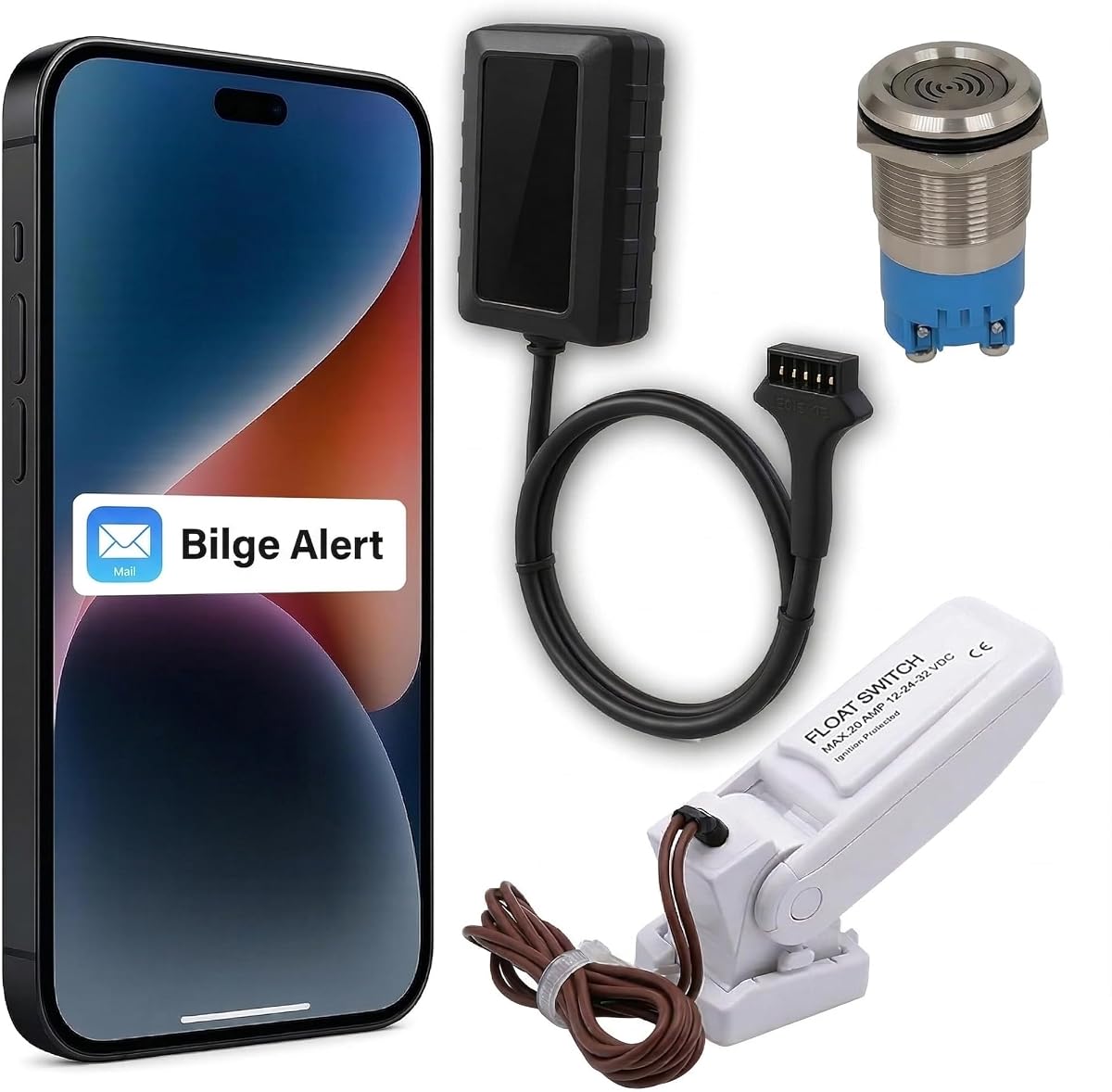
The SPY SPOT GV57 has a 5.0 rating and combines a GPS boat tracker with a float switch and dashboard-mounted buzzer. The bundle is designed for unattended boats in marinas, docks, boatyards, or long-term storage, where both unauthorized movement and developing bilge water warrant attention.
We may earn a commission when you buy through this link, at no additional cost to you.
GPS tracking provides real-time location information, movement alerts, and geofence notifications. In the event of rising water, the included float switch activates a loud dashboard buzzer. The system also provides low-battery and system-status notifications, while low standby power supports extended storage periods.
The package includes the tracker, float switch, and buzzer, reducing the need to source separate components. Installation, however, is explicitly intended for a qualified marine technician so wiring, waterproof sealing, and integration with common 12-volt systems are handled properly. The local buzzer should not be confused with a remote notification, and cellular coverage must exist where the boat is stored.
This system is a strong choice for owners who want both position monitoring and a basic bilge warning. Its 5.0 rating is promising, but the product's relative newness and the need for professional installation encourage careful planning. It complements rather than replaces a physical security system, high-water automation, and good marina practices.
Real-time GPS information and geofence notifications help the owner identify unexpected vessel movement. These features make the system useful for both short-term absences and seasonal storage.
The automatic float switch detects rising bilge water and activates the dashboard buzzer. Pairing it with automatic bilge-pump equipment and professional wiring can create a more resilient response to flooding.
We may earn a commission when you buy through this link, at no additional cost to you.
A boat alarm should match the threats, storage environment, electrical system, and remote-monitoring needs of the vessel. The most useful purchase combines reliable detection with alerts the owner can actually receive and maintain.
Start by separating theft deterrence from remote boat awareness. A local siren, vibration alarm, or cross-locking security bar can discourage someone physically accessing the vessel, while a GPS tracker or cellular hub reports location and movement to the owner. A smart monitoring platform can do both and add high-water, bilge, battery, and entry information. Owners should also distinguish between detecting an impact and detecting ordinary activity inside a cabin.
Cellular monitoring requires usable coverage where the boat is stored, and it may be less dependable in remote marinas or underground facilities. RF alarm remotes have a different purpose and can work over local distances without internet service. Verify whether the device offers phone notifications, SMS, email, geofencing, or only a local horn. Long-distance communication should never be assumed solely from a maximum range, because walls, terrain, weather, and nearby structures can affect the result.
Some systems connect directly to a 12-volt electrical system, while others run on replaceable batteries. Hardwired equipment can offer continuous operation and integrate with the boat, but installation may require qualified help. Battery-powered systems are easier to retrofit and avoid drawing from the vessel's battery, yet batteries must be checked and replaced. Confirm voltage limits, current requirements, standby consumption, and whether the product can operate safely during extended storage.
A boat alarm may encounter rain, salt spray, humidity, sunlight, vibration, and wide temperature changes. IP ratings provide useful information about water and dust protection, while ruggedized construction offers additional confidence. Pay attention to where the device will actually be mounted: a protected cabin can have different requirements from a hatch, engine compartment, trailer tongue, or open deck. A waterproof rating should not be treated as permission to ignore proper seals, cable routing, or corrosion prevention.
Some alarms use adhesive, straps, magnets, or a simple mounting bar. Others require wiring into a control panel, connection to the bilge system, or integration with existing alarm inputs. A plug-and-play system is easier for a simple retrofit, but professional installation can improve reliability for a complex marine installation. Owners of older or heavily equipped boats should check access behind panels, available power, existing sensor circuits, and the risk of creating new leaks or wiring faults.
Boats move in waves, wind, and changing dock conditions, and animals may enter a cabin. Impact sensors often include sensitivity controls, while PIR sensors require careful placement to distinguish meaningful movement from expected activity. Test the system in its actual environment, starting with the least sensitive setting and making measured adjustments. Repeated false alerts can lead the owner to ignore the device, which defeats much of its purpose.
A hardware purchase may be only one part of a connected system's cost. Check whether cellular service, geofencing, text messaging, app access, or cloud storage requires a subscription, and determine what is included during the initial period. Remote alerts also depend on having a compatible phone and adequate coverage. Owners who want monitoring to continue without recurring service should verify whether essential local functions continue when the subscription is inactive.
No single device covers every threat. A tracker can report movement but does not stop someone from opening a locker; a cross-locking bar deters access but cannot report a flood; a local alarm may be difficult to hear from a distance. Combining a physical deterrent, remote tracker, onboard high-water or bilge monitoring, and sensible marina habits creates a more resilient setup. The right combination depends on the value of the equipment aboard and how long the boat remains unattended.
Begin by mapping the boat's vulnerable points and likely storage conditions. Identify hatches, deck lockers, cabins, trailers, and accessible compartments, then decide whether the primary need is an audible deterrent, remote notification, GPS awareness, entry detection, or high-water monitoring. Choose mounting locations that are protected from unnecessary exposure but still allow the sensor to detect meaningful movement. Before drilling, routing wires, or attaching adhesive, test the device in its intended position.
After installation, test every alert path rather than only the sensor. Confirm that the local horn sounds, the remote receives the notification, the app displays the correct boat position, and low-battery or loss-of-signal messages are understood. Simulate an alert with the boat safely secured and ask another person to confirm remote reception. This process also reveals whether cellular coverage is adequate at the marina and whether busy or shared storage areas cause confusion.
Care for the system by checking batteries, connections, seals, and sensor alignment on a regular schedule. Clean marine sensors with fresh water when appropriate, inspect adhesive or mounting hardware, and prevent salt and debris from accumulating around openings. Update any app or service settings when prompted, keep emergency contacts current, and review geofence locations after the boat moves to a new marina. A written inspection routine is easier to follow than relying on memory during a busy boating season.
A connected GPS or cellular monitoring system is especially useful for a marina-stored boat because it can report location, movement, entry, and selected onboard conditions while the owner is away. A physical alarm padlock or security bar can supplement it by discouraging access to deck compartments. The ideal combination depends on the value aboard, local cellular coverage, and how the boat is secured at the dock.
A tracker and an alarm serve different purposes. A tracker reports the vessel's location and movement, while an alarm can create noise, confirm impact, or detect entry. A tracker does not physically secure lockers, and an alarm usually cannot tell the owner where the boat is. For greater protection, combining remote monitoring with an audible or physical deterrent is usually more effective than relying on either category alone.
It can, provided the power source and communication method remain viable. Battery-powered devices may require periodic checks, while cellular systems depend on coverage and service availability. Low-power hardware, automatic bilge monitoring, and a reliable location are especially helpful when a boat is stored for weeks or months. Test the system before leaving it unattended and again after a long absence.
Begin with conservative sensitivity settings and test the sensor during conditions that resemble the boat's normal environment. Adjust gradually rather than making a large change at once. For PIR motion sensors, place the unit away from pets, curtains, and surfaces that move easily. Periodic re-testing is important because dock conditions, battery voltage, and sensor alignment can change over time.
Portable alarms, magnetic sensors, and simple security bars may suit a DIY installation, provided the instructions are followed and mounting surfaces are prepared correctly. Hardwired GPS, bilge, control-panel, and annunciator systems are better handled by a qualified marine technician. Professional installation helps protect wiring, waterproof seals, battery performance, and the boat's other electrical systems.
No. An alarm can detect or report a problem, but it does not remove water unless the system includes a separate connected pump control function. Many owners use monitoring, a float switch, a backup auto-float switch, and an automatic bilge pump together. This creates layers of detection, notification, and response rather than relying on a single device.
The system requires sufficient cellular service at the boat's storage location, not merely at the owner's home. Coverage can vary inside marinas, near steep terrain, or in remote coastal areas. Check the service provider's current coverage map and consider whether a boat moved to another area changes the signal environment. A local alarm function remains useful even when remote notifications are temporarily unavailable.
It depends on the design. A hardwired system can monitor continuously and integrate with other equipment, but it must be protected against excessive current and battery drain. A self-powered system is easier to retrofit and may be better for a small boat or temporary use. Match the device's voltage and current specifications to the vessel and have integrated installations reviewed by a marine technician.
The leading options serve different needs. The LocMarine Global LTE Hub offers the broadest connected monitoring in this guide, combining location, entry, bilge, high-water, shore-power, geofencing, and battery information. The Skyhawk Oversea Hub is especially appealing for owners who want a wire-free, expandable marine ecosystem, while the WSDCAM vibration alarm offers a straightforward budget deterrent for a smaller boat or nearby equipment.
Prioritize the risk that concerns you most. Choose remote tracking and location alerts for unattended storage, motion or entry detection for cabin and deck coverage, an audible alarm for a location where it can be heard, and a physical security bar when valuable gear is stored in accessible compartments. For boats with complex electrical systems or an existing marine control panel, a properly integrated annunciator may provide useful fault visibility without replacing dedicated security tools.
Before buying, confirm compatibility, power requirements, environmental ratings, installation responsibilities, and any recurring service costs. Prices, promotions, and product availability can change, so check the current listing and included accessories before ordering. Test the finished setup under realistic conditions and keep the inspection schedule consistent; a properly installed and maintained system is much more useful than an advanced device left unconfigured.

