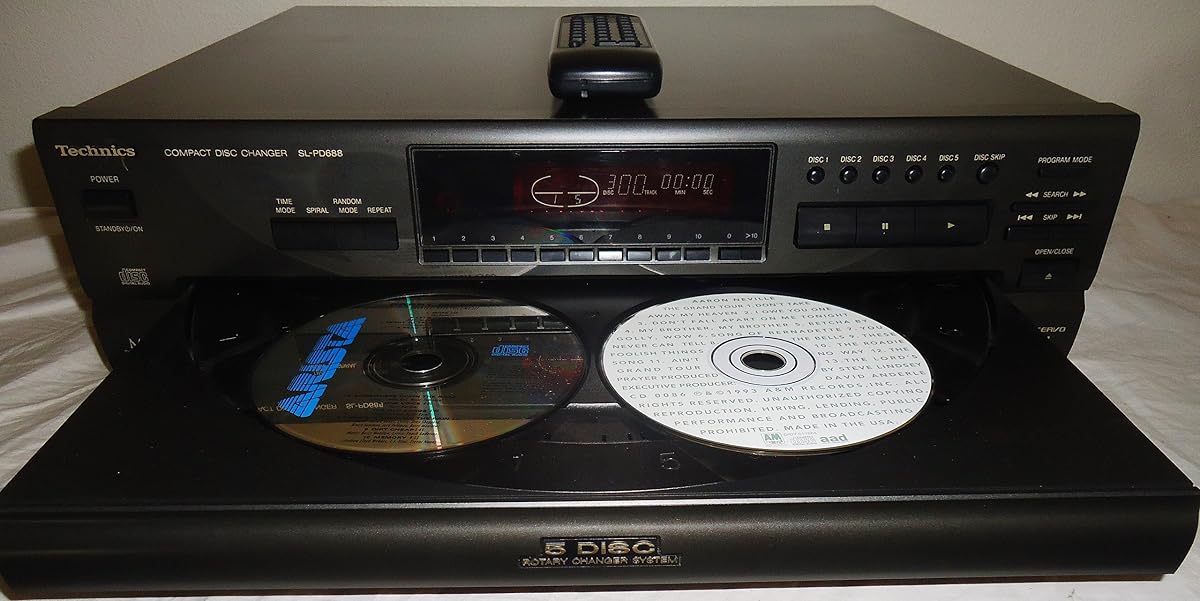
Technics SL-PD688 5 DISC ROTARY CHANGER SYSTEM BLACK
5.0Editor score
Rotary five-disc changer mechanism
One-bit MASH digital converter
100 dB signal-to-noise ratio
Discover the best 5 Disc CD Changer options for audio, media, features, connectivity, disc handling, and sound in this practical 2026 buying guide for home use.
A 5 disc CD changer offers a convenient way to build a physical music library without replacing a trusted stereo system. The best models combine dependable carousel or tray mechanisms, useful playback controls, compatible outputs, and the ability to keep music playing while changing other discs. They appeal especially to listeners who want albums, compilations, and recorded performances available at the press of a button.
We compared the featured 10 products by examining disc capacity, playback formats, changer operation, playback programming, audio or video connectivity, signal-path features, and the likely needs of different listeners. The list includes dedicated audio-only changers, DVD/CD models with video features, renewed and used options, and a complete Bose system whose changer is designed to integrate with its main unit.
Each review explains what distinguishes the product, where it fits best, and which compromises deserve consideration. The Yamaha CD-C603 leads for modern file playback and disc access, while the Technics SL-PD688 stands out for audiophile-oriented specifications and the TEAC PD-D2610 offers a focused, economical approach. Ratings and availability can change, so confirm current listings and specifications before purchasing.
5.0Editor score

4.2Editor score

4.0Editor score
This side-by-side comparison highlights changer capacity, supported media, playback features, connectivity, and the type of home audio system each product is best suited to support.


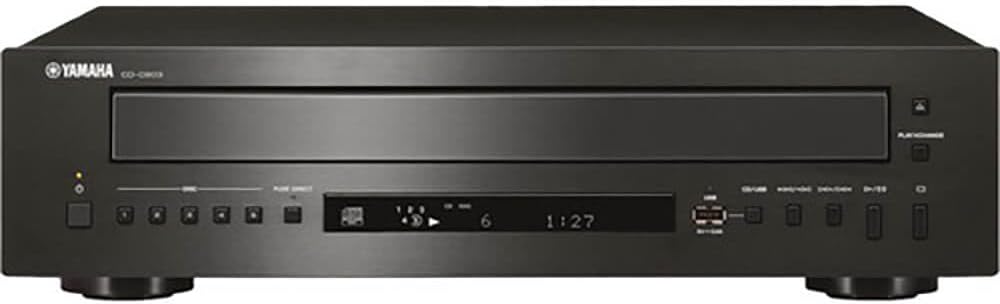


The Yamaha CD-C603 earns the Editor's Choice position because it combines a genuinely useful five-disc changer with features rarely found on a dedicated audio CD deck. Its 4.2 rating reflects a generally well-received balance of playback performance, disc handling, and modern connectivity. The front USB port and support for MP3, WMA, AAC, WAV, and FLAC files make it more versatile than a changer limited to physical audio CDs.
We may earn a commission when you buy through this link, at no additional cost to you.
The fully opening tray is especially convenient because it exposes all five positions and allows four discs to be replaced while the fifth continues playing. Yamaha calls this PlayXchange, and it directly addresses the main inconvenience associated with carousel-style changers. The unit also uses a floating laser pickup mechanism, intelligent digital servo, and short signal paths. Those features indicate attention to both mechanical reliability and the path between the disc and the output stage.
Its RCA and optical outputs provide practical options for connecting to an amplifier or receiver. USB files can be played at up to 96 kHz and 24-bit in WAV or FLAC format, although the useful result still depends on the source material, the connected system, and the listener's playback chain. As a dedicated CD changer, it is more focused than a general DVD player and avoids unnecessary video functions for listeners who only want music.
The CD-C603 is the strongest all-around choice for someone who wants a five-disc library, quick access to multiple albums, and convenient playback from locally stored digital files. It is particularly attractive when a shelf space is limited and a full-size component would be undesirable. The main reason to consider a less expensive alternative is simple needs: if physical CDs are the only source and advanced file compatibility is unnecessary, a basic carousel can offer a more streamlined experience.
The ability to change four discs while the fifth continues playing is the standout practical advantage. This reduces interruptions and makes the unit well suited to long listening sessions, parties, or background music throughout the home.
Front-panel USB playback supports a broad range of file formats, while RCA and optical outputs provide familiar connections to existing audio equipment. It bridges physical media and locally stored digital music without introducing video playback into the equation.
We may earn a commission when you buy through this link, at no additional cost to you.
The Onkyo DXC390 is a technically ambitious six-disc changer that earns a place near the top of this guide despite the keyword focusing on five-disc models. Its 4.2 rating reflects a favorable reception for playback quality, useful controls, and a substantial disc capacity. For a listener who owns a broad CD collection, the extra disc may deliver more practical value than choosing solely on the nominal five-disc label.
We may earn a commission when you buy through this link, at no additional cost to you.
Its 192 kHz, 24-bit audio DAC and Direct Digital Path are designed to keep the digital-to-analog stage straightforward. The listed frequency response extends from 5 Hz to 20 kHz, while the signal-to-noise ratio and dynamic range are both specified at 96 dB. Channel separation is listed at 92 dB. These are useful technical indicators for comparing the deck with conventional CD players, although they do not replace listening in the intended system.
Mechanical versatility is another strength. The unit can remove and replace five CDs while another continues playing, and its 40-track programming system works with six repeat modes, including entire disc, all discs, random tracks, programmed tracks, random memory, and single-track repeat. The remote control and brushed hairline aluminum front panel give it a conventional audiophile component appearance, while the dimensions suggest it will need a dedicated shelf.
This Onkyo is best for someone who values a high-capacity changer, digital-audio specifications, and flexible playback programming more than USB file support or a video output. Its six-disc capacity and broad playback modes distinguish it from the more compact five-disc alternatives. The main compromise is its larger physical footprint and lack of network or file connectivity in the supplied specifications.
A 192 kHz, 24-bit DAC, Direct Digital Path, and 96 dB dynamic range form the technical core of this player. These specifications make the DXC390 a compelling match for listeners who want a dedicated analog-output CD component.
Forty-track programming and six repeat modes make the changer adaptable to albums, mixes, and extended listening. Direct disc and track controls reduce the need to navigate deeply nested playback menus.
We may earn a commission when you buy through this link, at no additional cost to you.
The Onkyo DX-C390-B is a six-disc carousel changer with a 4.1 rating and a clear emphasis on flexible playback rather than connected audio features. It supports audio CDs, MP3 CDs, CD-R, and CD-RW media. Five discs can be changed without stopping the current selection, allowing the sixth disc to continue while the other positions are refreshed.
We may earn a commission when you buy through this link, at no additional cost to you.
Its 24-bit, 192 kHz DAC and VQA conversion technology position it as a dedicated high-performance audio component. Optical and coaxial digital outputs are included, which can suit receivers and DACs that accept digital signals. The device is classified as a HiFi CD player, and its repeat options cover all discs, an entire disc, random tracks, memory tracks, random memory, a single folder, and a single track.
The most important practical issue is power compatibility. The supplied information distinguishes a North American model rated for AC 120 V, 60 Hz from other versions rated for AC 230 V, 50 Hz, with other regions using AC 220–230 V, 50/60 Hz. A buyer should inspect the rear-panel marking and confirm that the unit matches local power before operation. The remote uses two AA batteries, and standby consumption is listed at 4 W.
This model is a good fit for someone who primarily listens to physical discs but wants a larger library and extensive program functions. Compared with the Yamaha CD-C603, it offers more carousel capacity but lacks USB file playback. Compared with the five-disc Technics and TEAC, it may appeal to buyers who consider six-disc flexibility worthwhile. Confirming voltage and regional compatibility is essential.
The ability to replace five discs while another continues playing is a meaningful convenience in a six-disc carousel. It supports continuous music during library updates and reduces the need to queue individual selections after every change.
North American and international versions use different voltage standards. Checking the rating on the rear panel before connecting the unit helps prevent an incorrect power connection and makes setup more predictable.
We may earn a commission when you buy through this link, at no additional cost to you.
This renewed Yamaha CD-C603 listing carries a 4.6 rating, the highest customer rating among the ten products in the comparison. It centers on the same five-disc CD changer design as the standard Yamaha model, offering buyers an alternative route to that well-regarded platform. The renewed designation is the critical distinction because the condition, warranty details, and included accessories may differ from a new unit.
We may earn a commission when you buy through this link, at no additional cost to you.
The supplied product data identifies auxiliary connectivity and MP3 audio format support. Because the listing refers to the Yamaha CD-C603, it may also share the standard model's wider USB and disc-playback capabilities, but shoppers should verify the exact contents and condition before assuming every feature is included. This caution is particularly important for a multi-disc mechanism, where transport noise, loading behavior, and physical wear are more relevant than they would be with a simple media player.
A renewed multi-disc changer can make sense for a secondary room, a vintage-style audio system, or a buyer who wants the established design at a lower acquisition cost. Its 4.6 rating suggests a favorable response, although ratings do not reveal the distribution of cosmetic defects, operational issues, or accessory differences. The most important checks are whether the tray loads reliably, every disc position is detected, USB playback works if expected, and the original remote is included.
This is a strong option for a informed buyer who is comfortable evaluating a renewed component. It may be especially appealing because the five-disc format closely matches the category and the rating is notably strong. However, the standard CD-C603 listing offers a more detailed and transparent feature description. If warranty certainty, exact accessory inclusion, or the newest condition matters most, compare the renewed and standard listings carefully before deciding.
The 4.6 rating is encouraging, but renewed products should be evaluated as individual items. Confirming the disc mechanism, display, controls, cables, remote, and warranty can prevent disappointment.
The renewed listing centers on Yamaha's capable five-disc changer platform. It suits listeners who recognize the model and value its physical media handling while seeking a renewed route to ownership.
We may earn a commission when you buy through this link, at no additional cost to you.
The Sony DVP-NC85H/B is a five-disc DVD/CD changer that extends the category into home video. Its 3.8 rating places it behind the dedicated audio models in customer response, but its feature set serves a distinct purpose. It is designed for someone who wants a single component capable of handling a physical media collection containing both music and video.
We may earn a commission when you buy through this link, at no additional cost to you.
HDMI output can provide 720p or 1080i upscaling, while Dolby Digital and DTS 5.1-channel output supports compatible receivers and speaker systems. That makes the unit more relevant in a home theater setup than in a straightforward two-channel music system. It is also a progressive-scan DVD player, so it can be useful for a television setup that predates widespread streaming and still relies heavily on discs.
The multi-disc resume function is a particularly relevant feature in a changer. It can return playback to a disc and position after an interruption, which is helpful for longer movies, concerts, or multi-session listening. The five-disc mechanism also reduces the need to swap media constantly, although buyers focused only on music may not need the additional video circuitry or control complexity.
This Sony is best for a listener who also watches physical video and wants one device to cover both tasks. It may also appeal to buyers who already own an older television or receiver with HDMI and want an easy disc-based source. For a dedicated stereo setup, the Yamaha CD-C603 or Technics SL-PD688 may be more direct choices because their focus remains on music playback and analog or digital audio performance.
The five-disc DVD/CD mechanism serves both audio and video libraries. This consolidation can simplify an older home theater or reduce the number of separate media components connected to the same television and receiver.
Multi-disc resume supports continuity across a long disc, while 720p and 1080i upscaling provides a practical video path for compatible HDMI displays. These are useful additions for a disc-centered home entertainment setup.
We may earn a commission when you buy through this link, at no additional cost to you.
The Technics SL-PD688 is the premium audiophile choice in this guide and holds the highest supplied rating at 5.0. It is a five-disc rotary changer designed as a dedicated music component rather than a general media player. For listeners who want focused CD playback, a substantial rotary mechanism, and strong published conversion specifications, it is one of the most compelling options listed.
We may earn a commission when you buy through this link, at no additional cost to you.
The MN66271RA digital converter uses one-bit MASH technology, a distinctive approach associated with high-resolution CD playback. The supplied specifications list a 100 dB signal-to-noise ratio, 92 dB dynamic range, and total harmonic distortion of 0.007%. Together, these figures describe a converter designed to minimize noise and unwanted harmonic content in the analog output stage.
The rotary changer format is a key part of its appeal. Rather than relying on a linear tray or a rotating carousel in a more conventional enclosure, the model uses a five-disc rotary system. That mechanical distinction can make it especially appropriate for a dedicated listening room, where the changer is likely to remain connected and a carefully matched system matters more than compactness or file connectivity.
This Technics model is the recommendation for an audiophile who primarily listens to CDs, already has quality amplification and speakers, and wants a changer with a high rating and strong technical specifications. It is not aimed at someone who needs USB, streaming, video, or wireless functions. Its narrow specialization is not a flaw; it is the reason the model can focus on the act of playing physical audio discs.
The absence of video and network features keeps the SL-PD688 focused on one job: retrieving and playing five-disc music collections. That specialization is attractive when it will live permanently in a carefully assembled stereo system.
A 100 dB signal-to-noise ratio, 92 dB dynamic range, and 0.007% total harmonic distortion present a strong technical foundation. The one-bit MASH converter further differentiates it from conventional multi-bit DAC implementations.
We may earn a commission when you buy through this link, at no additional cost to you.
The Sony DVP-NC625/B is a five-disc DVD/CD changer designed for listeners who still maintain a collection of recorded movies, music, and writable discs. Its 4.0 rating reflects a solid general-purpose design that prioritizes broad disc compatibility and video output options. It is a compelling choice for legacy home theater equipment that does not require HDMI.
We may earn a commission when you buy through this link, at no additional cost to you.
Supported media includes DVD-Video, DVD-R, DVD-RW, DVD+R, DVD+RW, CD-R, CD-RW, and MP3 CD. Precision Drive 2 with Dynamic Tilt Compensation is intended to improve readability on damaged discs, a useful feature for older collections that may contain imperfectly recorded or physically worn media. The changer therefore serves as a media librarian as much as a music player.
Video performance centers on a 12-bit video DAC with 108 MHz processing. Component, S-Video, and composite outputs provide compatibility with a wide range of older displays and receivers. Dolby Digital and DTS 5.1-channel digital surround decoding and output can support a compatible home theater system. The unit measures 16.9 by 3.78 by 16.1 inches, so it has a noticeably deep, low-profile component design.
This Sony is best for a household that wants one five-disc mechanism for both audio and video and whose equipment uses legacy video connections. It is less suitable for a modern television-centered system that prioritizes HDMI, streaming, or a small footprint. A dedicated audio changer such as the Yamaha CD-C603 or Technics SL-PD688 may be easier to integrate with a stereo amplifier and speakers.
Writable DVD and CD formats make the changer useful for archives, recordings, and mixed collections. MP3 CD support adds another layer of flexibility for listeners who created compressed music discs.
Dynamic Tilt Compensation supports readability on damaged media, while component, S-Video, and composite outputs fit established AV equipment. These features make the player a specialist for legacy disc libraries.
We may earn a commission when you buy through this link, at no additional cost to you.
The TEAC PD-D2610 is the budget-focused choice in this comparison, offering a five-disc carousel with a practical set of playback and programming features. Its 4.0 rating indicates a generally positive response. It does not try to be a video player, streamer, or network device, which makes it a straightforward option for someone who wants dependable access to physical CDs in a traditional stereo setup.
We may earn a commission when you buy through this link, at no additional cost to you.
The changer handles CD, CD-R, CD-RW, and MP3 discs, so it is not restricted to factory-pressed audio CDs. A fluorescent display includes a music calendar, helping listeners see selected tracks across multiple discs. The 10-digit direct access keys are available on both the front panel and remote, which makes it easy to jump directly to a numbered track without stepping through a long playlist.
Playback programming includes 32-selection random memory, and the one-bit digital-to-analog converter uses eight-times oversampling. The controls are tailored to physical media rather than touchscreens or app-based navigation. Since the supplied specifications do not list USB, HDMI, or digital audio outputs, buyers should confirm the connections they need before selecting it, particularly if their receiver depends on optical, coaxial, or USB input.
The PD-D2610 is best for a straightforward two-channel system, a secondary listening area, or a buyer who prioritizes a five-disc carousel and direct track selection over modern connectivity. It is also a logical choice for listeners with a mixed collection of CDs, rewritable discs, and MP3 discs. Its limitations are mostly about modern features rather than core CD playback, making it a focused and economical option.
The music calendar and 10-digit direct access keys make it easy to locate a specific selection across five discs. Front-panel and remote controls provide practical operation without requiring a screen-based interface.
CD-R, CD-RW, and MP3 playback plus 32-track random memory cover the essentials many listeners need. The result is a purpose-built changer without the cost and complexity of video or network features.
We may earn a commission when you buy through this link, at no additional cost to you.
The Bose Acoustic Wave Music System with 5-CD Changer II is different from the standalone decks in this guide because it arrives as an integrated all-in-one system. Its 3.6 rating is the lowest among the listed products, but the comparison is not entirely like-for-like. A buyer is not only evaluating a five-disc changer; they are also considering the main CD-3000 unit, its waveguide technology, the included remote, and the broader Bose ecosystem.
We may earn a commission when you buy through this link, at no additional cost to you.
The changer supports continuous playback of five CDs in normal, random, and repeat modes. It can load and unload discs without interrupting the current music, preserving the central convenience sought from a multi-disc mechanism. The system is designed to work as a cohesive unit, allowing the changer to sit separately while the Acoustic Wave Music System handles playback.
The supplied information states that the CD-3000 plays regular CDs, while the 5-CD Changer II adds regular disc, MP3, CD-R, CD-RW, SoundTouch streaming, Alexa, AM/FM radio, and TV functions through one credit-card-sized remote. Optional Bose SoundTouch 10, 20, or 30 wireless speakers can be added for enhanced stereo or multi-room listening when paired with the appropriate Bose Wireless Audio Adapter.
This is the right choice for a buyer who wants a complete, relatively simple household music system and accepts Bose's integrated approach. It offers more whole-system functions than a dedicated component changer and can be expanded with compatible wireless speakers. A listener shopping strictly for a standalone analog CD deck may find a dedicated Onkyo, Yamaha, Technics, or TEAC model easier to integrate and compare.
The changer and Acoustic Wave Music System operate as a coordinated package, simplifying setup for users who want music, radio, TV, and connected services in one place. The five-disc mechanism adds continuous access to physical media.
Compatible SoundTouch wireless speakers can extend stereo or provide music in additional rooms. The option is valuable for households that want a single control source and flexible listening locations.
We may earn a commission when you buy through this link, at no additional cost to you.
The Yamaha CDC-645 is a used five-disc changer/player offered with an explicit condition description. It is described as being in good condition with some surface blemishes, and its 3.5 rating is the lowest among the ten products. For a buyer seeking an established five-disc mechanism at a reduced acquisition cost, it is a relevant secondhand option, but it requires a more cautious purchase process.
We may earn a commission when you buy through this link, at no additional cost to you.
The supplied description highlights natural-sounding disc playback and straightforward five-disc changer functionality. Beyond that, the listing does not provide a detailed list of outputs, supported file formats, dimensions, or playback modes. Buyers should therefore request or verify photographs, check the model manual, and confirm that the exact connectors and functions meet their needs. A used component can have a capable internal design while still lacking the conveniences of newer models.
The visible surface blemishes are not necessarily signs of internal wear, but they do affect presentation and resale value. More important for a changer are the loading mechanism, motor operation, tray or carousel movement, laser pickup response, display, and remote function. A careful buyer should also look for skipping, grinding noises, alignment problems, and inconsistent disc detection across all five positions.
The CDC-645 makes most sense for a patient enthusiast who understands a specific older model, has a suitable stereo system, and can accept an aesthetic-condition compromise. It is less suitable for someone seeking a modern USB-capable, network-enabled, or video-capable changer. A new five-disc alternative offers better documentation and likely more predictable condition, while the used Yamaha offers a path into an established component at potentially lower cost.
The listing openly notes surface blemishes, so buyers should treat the appearance as part of the product's value proposition. Cosmetic wear is separate from function, but it matters most to collectors or buyers who intend to resell the unit later.
Check all five disc positions, the loading motor, display, buttons, outputs, and remote before finalizing a purchase. Confirming the exact electrical and connection requirements is also essential for an older component.
We may earn a commission when you buy through this link, at no additional cost to you.
The right changer depends on how you listen, what media you own, and how the component must connect to your system. Capacity, playback behavior, output options, condition, and control style should be evaluated together rather than treating disc count as the only deciding factor.
A five-disc changer is ideal for a compact physical music library, but closely related products may hold six discs instead. The Onkyo DXC390 and DX-C390-B both provide six positions, while the Yamaha CD-C603, Technics SL-PD688, TEAC PD-D2610, and the featured Sony models use five. Capacity should be considered alongside footprint and mechanism design because an extra position can make a carousel larger or change how many discs can be changed while one continues playing.
In short, verify the number of discs rather than relying on the search term or product name alone.
Carousel, rotary, tray, and fully opening tray designs create different playback habits. A carousel is visually compact and often familiar, while a rotary system can feel substantial and dedicated. The Yamaha CD-C603 uses a fully opening tray and allows four discs to be replaced while the fifth continues playing. The Onkyo models can change five discs during playback. Buyers who frequently refresh a mixed library should pay close attention to how many positions remain available during playback.
In short, choose the mechanism that matches your listening habits rather than treating every multi-disc loader as equivalent.
Factory-pressed audio CD support is universal across the featured dedicated changers, but not every model handles the same range of recorded or compressed media. The TEAC supports CD-R, CD-RW, and MP3 discs. Both Onkyo models support MP3-encoded CDs, CD-R, and CD-RW. The Yamaha CD-C603 adds USB playback for MP3, WMA, AAC, WAV, and FLAC files. If your collection includes burned discs, homemade compilations, or locally stored files, verify the exact formats rather than assuming compatibility.
In short, check the physical disc and file formats in your collection against the manufacturer's supported media list.
A standalone stereo changer should ideally offer the analog or digital connections required by your amplifier or receiver. The Onkyo DXC390 and DX-C390-B list optical and coaxial digital outputs, and the Yamaha CD-C603 lists RCA and optical outputs. The Technics and TEAC listings do not provide a complete output specification, so buyers with specialized connections should verify them. The Sony DVD/CD changers use HDMI or legacy video outputs and are intended for a television setup rather than a dedicated audio chain.
In short, inspect every rear-panel connection before ordering, especially when your system has unusual requirements.
Signal-to-noise ratio, dynamic range, total harmonic distortion, and DAC design can help distinguish dedicated audiophile decks from general media players. The Technics lists a 100 dB signal-to-noise ratio, 92 dB dynamic range, and 0.007% total harmonic distortion. The Onkyo models use 24-bit, 192 kHz conversion, while the Yamaha emphasizes a short signal path and floating laser pickup mechanism. Published specifications do not guarantee the perceived result in every room, but they provide a useful framework for comparison.
In short, favor clear technical information and a converter design that fits your system, without assuming specifications alone determine sound quality.
A useful changer should make it easy to find and repeat music. The Onkyo DXC390 supports 40-track programming and six repeat modes, while the DX-C390-B includes single-folder and single-track options. The TEAC offers 10-digit direct access keys and a 32-selection random memory program. Remote control is standard on several models, but remote layouts vary in readability. Buyers should decide whether they need simple disc-and-track access, random programming, folder selection, or all three.
In short, prioritize controls that make your most common listening tasks fast and intuitive.
Condition is especially important for used, renewed, and integrated products. The Yamaha CDC-645 is described as used with surface blemishes, while the renewed Yamaha CD-C603 should be checked for transport wear, accessories, and warranty coverage. The Bose package is designed around its own Acoustic Wave Music System rather than a standard amplifier connection. Regional power requirements also matter: one Onkyo listing distinguishes North American 120 V operation from 230 V international models.
In short, confirm electrical compatibility, physical condition, included accessories, and ecosystem requirements before placing an order.
The most advanced option is not automatically the most suitable. A listener with a two-channel stereo system may prefer the focused Technics SL-PD688 or Onkyo DXC390. A home theater owner may favor the Sony DVP-NC85H/B for HDMI video and surround output. A listener with locally stored digital files may value the Yamaha CD-C603's USB playback. A household seeking a complete system may find more value in the Bose package than in a standalone deck.
In short, prioritize the features you will use regularly and avoid paying for video, networking, or ecosystem functions that add little to your setup.
Before loading discs, place the changer on a stable surface with enough clearance for its tray or carousel and ventilation around the chassis. Connect the unit to the correct amplifier or receiver inputs, check the output selection on both components, and power the changer before selecting a source. Handle discs by the edges, inspect them for dirt or scratches, and place each disc label-side up in the position indicated by the tray or loading mechanism.
Use direct track access when available and take advantage of uninterrupted-change features only as the manufacturer describes. A changer may need a moment to identify a newly inserted disc before playback continues. If a disc skips or will not load, do not force the mechanism. Power the unit down, remove the disc, clean it with a soft lint-free cloth, and check the lens and tray for visible debris. For stuck discs, consult the model manual before using any cleaning solution or lubricating the internal mechanism.
For long-term care, dust the changer gently with a dry microfiber cloth and keep liquids away from vents and controls. Store discs vertically in their cases when not in use, and avoid exposing them to excessive heat, humidity, or direct sunlight. If the unit is used regularly, inspect the loading system and connections periodically. Renewed or used changers benefit from extra attention because their mechanical and cosmetic condition may already reflect prior use.
That depends on the model. The Yamaha CD-C603 can replace four discs while the fifth continues playing, while the six-disc Onkyo changers can replace five while another disc plays. The Bose 5-CD Changer II also supports loading and unloading without interrupting music. Check the exact product instructions because a generic five-disc designation alone does not confirm uninterrupted changing.
A carousel changer moves a circular or rotating disc carrier through a horizontal opening, while a rotary changer organizes discs around a rotating selection mechanism. Both can hold multiple CDs, but the layout affects the component's dimensions, access method, and how the system changes discs. The TEAC and Onkyo models use carousel-style mechanisms, while the Technics is described as a five-disc rotary changer system.
The TEAC PD-D2610 supports MP3 playback from disc, both Onkyo models support MP3-encoded CDs, and the Yamaha CD-C603 supports MP3, WMA, AAC, WAV, and FLAC files through USB. Support for MP3 CD does not necessarily imply USB support, so check each listing carefully. The supplied Technics, Bose, and Yamaha CDC-645 descriptions do not provide a complete USB playback specification.
They can be, but their primary focus is video. The Sony DVP-NC85H/B uses HDMI and provides surround decoding, while the Sony DVP-NC625/B emphasizes legacy video outputs. A dedicated audio changer such as the Yamaha CD-C603, Technics SL-PD688, or Onkyo DXC390 is usually a more natural match for an amplifier, speakers, and digital or analog audio connection.
Connect the changer's left and right audio outputs to matching analog inputs on the amplifier or receiver, then select that input. If both the changer and receiver support digital audio, an optical or coaxial connection may be available on models such as the Yamaha CD-C603 and Onkyo changers. Use the manual to identify the correct sockets and avoid connecting analog and digital outputs together unless the manual specifically instructs you to do so.
Test every disc position, the loading motor, display, buttons, remote, and all outputs. Listen for grinding, skipping, or inconsistent disc detection, and inspect the tray or carousel for alignment problems. Also verify the included accessories, warranty, and electrical requirements. The Yamaha CDC-645 is specifically described as used with surface blemishes, while the renewed Yamaha CD-C603 warrants similar condition and feature checks.
Only if the model is designed for both formats. The Sony DVP-NC85H/B and DVP-NC625/B are five-disc DVD/CD changers, while the dedicated Yamaha, Onkyo, Technics, TEAC, and Bose products are centered on audio CDs. A dedicated audio deck should not be expected to play DVDs merely because its changer holds five discs.
A five-disc changer can still add value when physical albums, burned compilations, recorded performances, or offline listening are important. It can also provide a simple, tactile alternative to app-based playback. The best model depends on whether your priority is five-disc convenience, file compatibility, video support, sound-focused specifications, or integration with an existing household system.
The Yamaha CD-C603 is the most versatile overall recommendation because it combines true five-disc convenience, uninterrupted changing, front USB playback, several file formats, and familiar audio outputs. The Technics SL-PD688 is the premium audiophile alternative for listeners who want a focused rotary changer and impressive published conversion specifications. The TEAC PD-D2610 is the straightforward budget choice, especially for basic stereo listening, recorded discs, and direct track access.
The other products serve more specialized needs. The Onkyo changers offer six-disc capacity, strong digital specifications, and generous programming. The Sony models make sense when DVDs and video are central, while the Bose package provides a complete household system rather than a standalone deck. The renewed and used Yamaha listings may reward informed buyers, but their condition and included accessories deserve careful verification.
Before purchasing, confirm the actual disc capacity, supported formats, rear-panel connections, power requirements, condition, and warranty. Ratings provide useful context but cannot replace compatibility checks or careful inspection. Current prices, availability, and listing details can change, so review the latest product information before buying the model that best fits your listening system.
