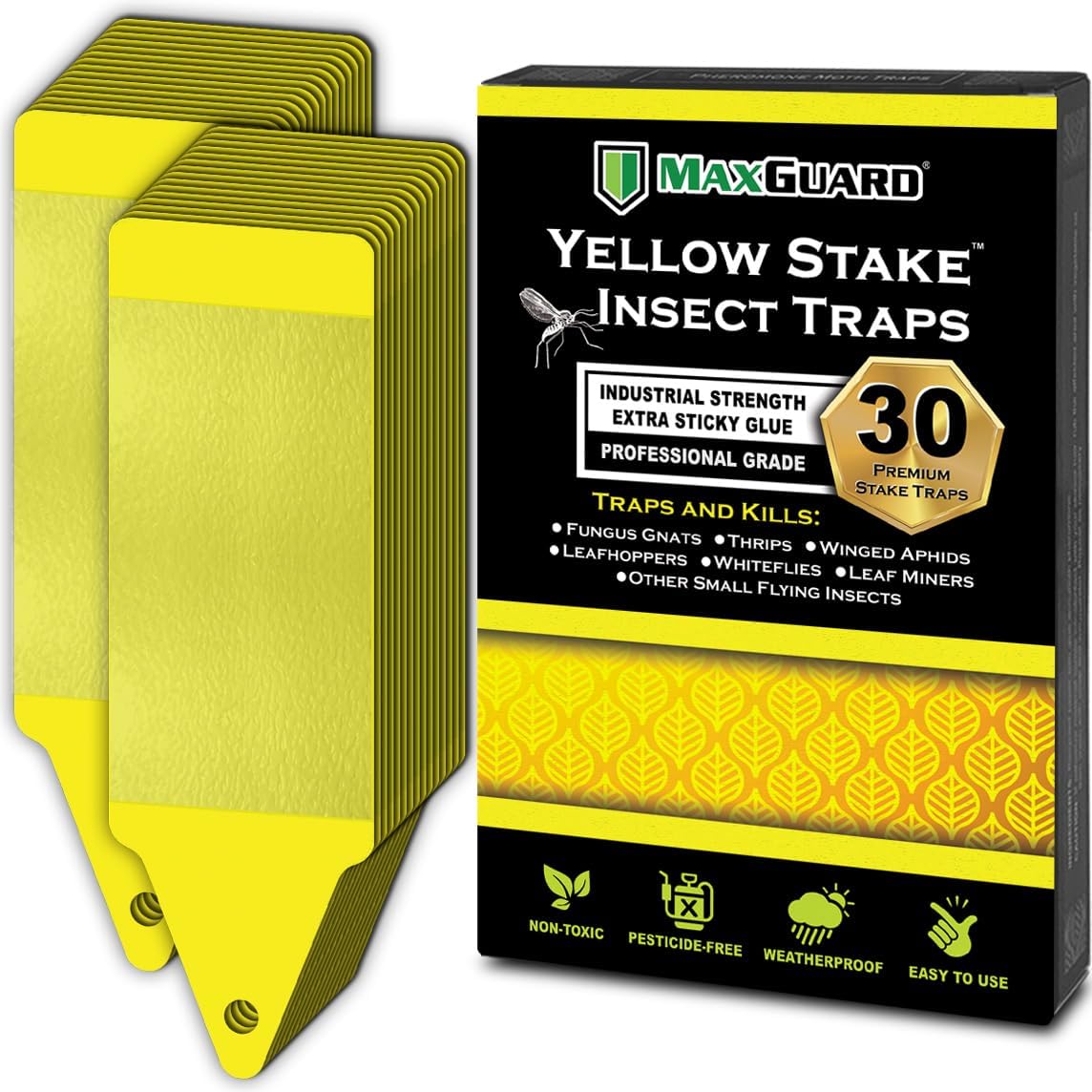
MAXGUARD Yellow Stake Sticky Traps
4.5Editor score
Thirty stake-style traps included
Dual-sided industrial-grade adhesive
Effective for up to six months
Discover the best Cucumber Beetle Traps for gardens, farms, and greenhouses, with expert comparisons of lures, coverage, placement, and durability today.
Cucumber beetle traps can help gardeners monitor and reduce striped, spotted, and western cucumber beetle activity without relying immediately on broad-spectrum sprays. The most useful options combine an attractive color or species-specific lure, dependable adhesive, sturdy mounting options, and enough coverage to remain useful throughout the active growing season.
This guide compares ten traps based on the information supplied for each product, including target pests, lure type, trap format, pack quantity, placement guidance, material claims, and intended garden settings. It covers dedicated cucumber beetle traps alongside general yellow sticky traps and Japanese beetle traps that may be useful in mixed pest-control programs.
Each review explains where a product fits, while the comparison table and buying guide help narrow the field. The top picks emphasize species specificity, monitoring flexibility, and convenient garden-wide deployment. Product details and availability can change, so readers should verify the current listing and instructions before purchasing.
4.5Editor score

3.6Editor score
4.4Editor score
The comparison below evaluates all ten products by target pest, trap design, quantity, placement method, and practical use. Only the VivaTrap is formulated specifically for multiple cucumber beetle species, while the remaining options provide color-based monitoring or are designed primarily for Japanese and Oriental beetles.



The VivaTrap VT-103 is the only trap in this group explicitly formulated for cucumber beetles, giving it a clear advantage for readers whose main concern is striped and spotted cucumber beetle activity. Its multi-pheromone lure is described as attracting both male and female beetles across four named species. The product has a 3.6 rating, so its specialized design is more compelling than its overall customer feedback.
We may earn a commission when you buy through this link, at no additional cost to you.
Each pack contains two extra-large wet-glue traps, two lures, and twist ties, making it a self-contained hanging setup. The stated 30-day lure life is appropriate for monitoring and suppression during a substantial portion of the beetle-active season. CCOF approval also makes the trap relevant to gardeners and producers seeking options compatible with organic farming practices.
The main drawback is limited scale. Two traps may be adequate for a small garden or a carefully managed greenhouse, but a larger farm may need multiple packs to establish useful coverage. Its 3.6 rating also warrants checking recent customer feedback, especially when comparing it with highly rated general-purpose yellow traps that provide much larger quantities.
This is the strongest recommendation for a gardener who specifically wants cucumber beetle pheromone attraction rather than relying only on yellow color. Buyers should place the traps according to the included instructions, keep the adhesive surfaces accessible, and replace the lures at the interval specified by the manufacturer.
The lure targets male and female striped, western striped, spotted, and western spotted cucumber beetles. That specificity makes the VT-103 more focused than general sticky cards, which capture a broad mix of flying plant pests.
Two traps, two lures, and twist ties are included, reducing the need for separate accessories. The wet-glue format is intended to hold captured beetles securely while allowing the trap to be suspended near susceptible vegetation.
We may earn a commission when you buy through this link, at no additional cost to you.
The Catchmaster GRO Regular pack combines a large quantity with a 4.5 rating, making it an attractive option for systematic monitoring across a garden, farm, greenhouse, or hydroponic growing area. Its bright yellow traps are designed for numerous crawling and flying plant pests rather than cucumber beetle pheromones, so it functions as a broad surveillance and trapping tool.
We may earn a commission when you buy through this link, at no additional cost to you.
The 72-pack allows gardeners to distribute traps through all three recommended canopy zones: below, within, and above the foliage. Double-sided adhesive gives each card two capture surfaces, while wall, pathway, stake, and plant-tie placement options make the traps adaptable to different crops and structures. The product is described as odorless, water-resistant, UV-resistant, and mess-free.
Although the cards can remain useful for up to one year under suitable conditions, that estimate depends on environmental conditions and a clean adhesive surface. Dust, foliage contact, rain, and accumulated insects can reduce performance. Because the traps are not cucumber-beetle-specific, they may capture many other insects without directing beetles toward a dedicated lure.
The product is best for gardeners who want broad monitoring and a large number of placement points. Rather than relying on one or two intensely targeted traps, users can establish a distributed network and compare pest activity around different plants, making this one of the most flexible options in the roundup.
A large quantity makes it practical to place traps at multiple heights and around separate beds. This distribution can reveal where flying pest activity is concentrated and help guide where additional pest-management attention may be needed.
The cards may be placed against walls, staked into soil, or tied to plants and trees. That flexibility suits mixed environments ranging from houseplants and greenhouses to outdoor gardens and composting areas.
We may earn a commission when you buy through this link, at no additional cost to you.
MAXGUARD's stake format makes it one of the easiest products here to deploy around individual plants. The 30 traps come with a simple garden-oriented shape, dual-sided adhesive, and enough mounting flexibility for both potted plants and garden beds. Its 4.5 rating places it alongside the strongest general-purpose options in the guide.
We may earn a commission when you buy through this link, at no additional cost to you.
Removing the backing and inserting the stake into soil or a pot is a straightforward setup, while supplied twist ties allow alternate hanging placement. The adhesive is described as industrial grade and three times thicker than standard traps, with a stated useful life of up to six months. The product is toxin and insecticide free, making it appealing for organic gardening and farming.
The primary limitation is that yellow color and sticky adhesive do not provide the focused attractant mechanism of the VivaTrap. The stake can also be less convenient where plants are densely rooted or where a trap needs to sit above the canopy. Users should follow the instruction to replace a trap when it becomes full or otherwise unusable.
This is a practical choice for home gardeners who want an uncomplicated way to monitor whiteflies, aphids, leaf miners, fungus gnats, and other flying insects. Its 30-count pack provides a useful balance of deployment volume and straightforward storage, while the stake design keeps the trap close to plant level.
The stake inserts directly into a pot or garden bed after the backing is removed. A twist tie provides a hanging alternative when a freestanding stake would be inconvenient.
A stated service life of up to six months makes each trap suitable for monitoring across much of a growing cycle. Actual performance depends on the trap remaining clean and the adhesive surface not becoming saturated.
We may earn a commission when you buy through this link, at no additional cost to you.
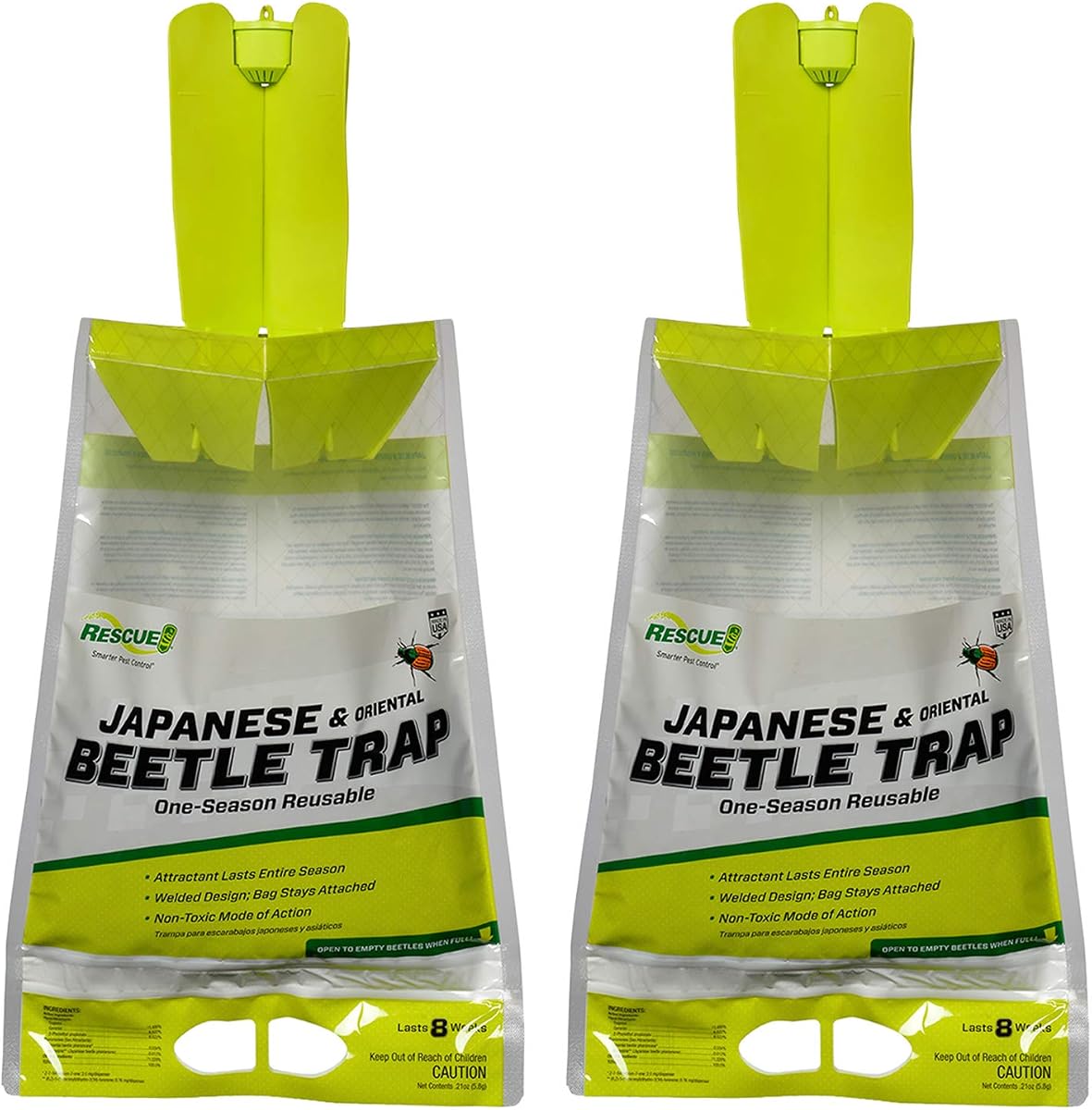
The RESCUE! Japanese Beetle Trap is a reusable, pheromone-based system designed to protect plants by drawing Japanese and Oriental beetles away from vulnerable areas. It has a 4.3 rating and uses large green panels that stun incoming beetles before they fall into an attached collection bag. Although it is not a cucumber beetle product, it can complement a broader beetle-management plan.
We may earn a commission when you buy through this link, at no additional cost to you.
The included attractant cartridge is described as lasting an entire season, while the easy-lock bottom allows the bag to be emptied and the trap reused. This makes the two-trap set a more sustainable choice for repeated seasonal use than a disposable-card format. The design is made in the USA according to the supplied product information.
Correct placement is especially important. The instructions call for setting the trap at least 30 feet from ornamental plants so the lure pulls beetles away from areas where they cause damage. This requirement can make the product less convenient in small gardens, and its target species differ from the striped and spotted cucumber beetles covered by the dedicated VT-103.
The product is best for gardeners dealing primarily with Japanese or Oriental beetles who want a reusable collection system. It should be viewed as a specialist Japanese beetle tool rather than a direct answer to a cucumber beetle infestation, particularly where space is limited.
The easy-lock collection bag can be emptied and reused. A season-long attractant cartridge further reduces the need to replace the core trap assembly each year.
Positioning the trap well away from ornamentals helps keep attracted beetles from concentrating on vulnerable foliage. This makes trap placement an essential part of the product's effectiveness.
We may earn a commission when you buy through this link, at no additional cost to you.
Gideal's 20-pack is a compact yellow sticky-trap set intended for monitoring flying plant insects. It carries a 4.2 rating and targets pests including whiteflies, fungus gnats, blackflies, thrips, fruit flies, and midges. It does not use a cucumber beetle pheromone, but its bright visual attractant and dual-sided adhesive can help a gardener gauge general insect pressure.
We may earn a commission when you buy through this link, at no additional cost to you.
Every card measures 6 by 8 inches, and the package includes 20 twist ties along with two trap stands. The supplied mounting options allow cards to be suspended or supported near plants, making the set suitable for houseplants, balconies, windowsills, outdoor beds, and other bright locations. The product is described as non-toxic, waterproof, and able to withstand temperature fluctuations.
Compared with larger 30-, 50-, or 72-count options, the 20-card quantity may not offer the same coverage for extensive farms or greenhouses. It also lacks a dedicated attractant, so it should not be presented as a targeted cucumber beetle solution. The cards will need regular inspection and replacement when insects or debris cover the adhesive.
This is a practical pick for a home garden or indoor growing area that needs a manageable number of monitoring cards. Its inclusion of twist ties and stands improves setup convenience, while the bright yellow design helps position traps where flying pests are likely to encounter them.
Twist ties and two stands allow the cards to be arranged in different ways without requiring a separate mounting system. This is particularly useful for balconies, windowsills, containers, and small garden plots.
The yellow cards provide a visible indication of which flying insects are present. They can be placed at plant level or near high-traffic pest areas to help identify where monitoring and cultural controls should be concentrated.
We may earn a commission when you buy through this link, at no additional cost to you.
The Faicuk 20-pack is a flexible yellow sticky-trap option with a 4.4 rating. Its most useful distinguishing feature is that each 6-by-8-inch card can be cut to any size or shape, allowing gardeners to fit traps into compact plant areas or create custom monitoring panels. Wire ties are included for hanging.
We may earn a commission when you buy through this link, at no additional cost to you.
Its listed target pests include aphids, leaf miners, fungus gnats, thrips, whiteflies, blackflies, mosquitoes, midges, and other flying insects. The product uses non-toxic material and bright yellow color to attract insects to the adhesive surface. Its ability to show the number and types of captured pests makes it useful as an early-warning tool as well as a general trapping method.
The cards are not designed around a cucumber beetle lure, so their role is monitoring rather than species-specific targeting. Cutting the cards requires an extra step, although it adds flexibility for unusual placements. As with all surface traps, dirty or crowded adhesive becomes less effective.
This product fits gardeners who want to customize trap dimensions and inspect catches regularly. It is especially suitable for mixed houseplant collections, small indoor gardens, and compact outdoor plots where standard 6-by-8-inch cards may be inconvenient.
Each card can be trimmed to match the available space. This makes it possible to use a smaller trap on a crowded windowsill or create a custom panel for a particular plant grouping.
The yellow surface makes captured insects easy to see. Gardeners can monitor catch levels and pest types before deciding whether other management steps are needed.
We may earn a commission when you buy through this link, at no additional cost to you.
This 20-count set of dual yellow sticky cards is designed for year-round indoor or outdoor monitoring, with a 4.2 rating. The product emphasizes UV-resistant adhesive along with water and heat resistance, making it relevant for gardens where ordinary cards may deteriorate under changing weather conditions.
We may earn a commission when you buy through this link, at no additional cost to you.
The cards are suitable for flying plant pests such as whiteflies, fungus gnats, blackflies, thrips, fruit flies, and midges. Their non-toxic materials are positioned as an alternative to relying heavily on chemical insecticides. Twenty twist ties support simple hanging, and the 6-by-8-inch size offers a recognizable shape for distributed monitoring.
The product is not specific to cucumber beetles and does not offer a pheromone lure. In addition, claims about weather resistance do not mean the trap remains equally effective after becoming coated with insects, dust, or plant debris. Regular inspection is important, especially in dusty or highly exposed locations.
This option works well for gardeners who want a conventional yellow monitoring card that can tolerate outdoor conditions. It is a sensible alternative to stake-style traps for locations where hanging above the plant is more useful.
UV, water, and heat resistance make the cards suitable for changing outdoor conditions. Users should still replace them when the adhesive surface becomes dirty or densely covered.
Non-toxic sticky trapping can support a broader garden pest-management strategy. It is best used alongside crop inspection, sanitation, and other appropriate cultural practices rather than as a standalone guarantee against damage.
We may earn a commission when you buy through this link, at no additional cost to you.
Garutom's 20-pack emphasizes thicker PVC construction, giving the cards a practical feel and useful rigidity for hanging. The product has a 4.1 rating and is marketed for common flying plant insects such as fruit flies, whiteflies, fungus gnats, blackflies, aphids, leaf miners, thrips, and midges.
We may earn a commission when you buy through this link, at no additional cost to you.
Each 6-by-8-inch trap has adhesive on both sides. The package includes 20 wire ties and two plastic holders, offering more placement options than a basic card-and-string set. The product is described as non-toxic, UV resistant, waterproof, and heat resistant, with the recommendation to place it in a bright area for best visibility to target insects.
The listing explicitly states that the traps are not applicable to mosquitoes, which helps set expectations about the product's intended role. It also lacks a cucumber beetle pheromone, making it a general monitoring trap rather than a targeted solution. The cards should be replaced when completely coated with insects or dust.
This is a good option for gardeners who prefer more rigid cards and want included holders for freestanding placement. It can help monitor a range of flying insects in homes, gardens, and greenhouses, particularly where bright placement is possible.
The thicker PVC material is intended to make the traps easier to handle and hang. This design can be useful in busy growing spaces where flexible cards would be inconvenient to position.
Wire ties support hanging, while two plastic holders provide an alternative for supported placement. These options make it easier to adapt the traps to containers, benches, and garden areas.
We may earn a commission when you buy through this link, at no additional cost to you.
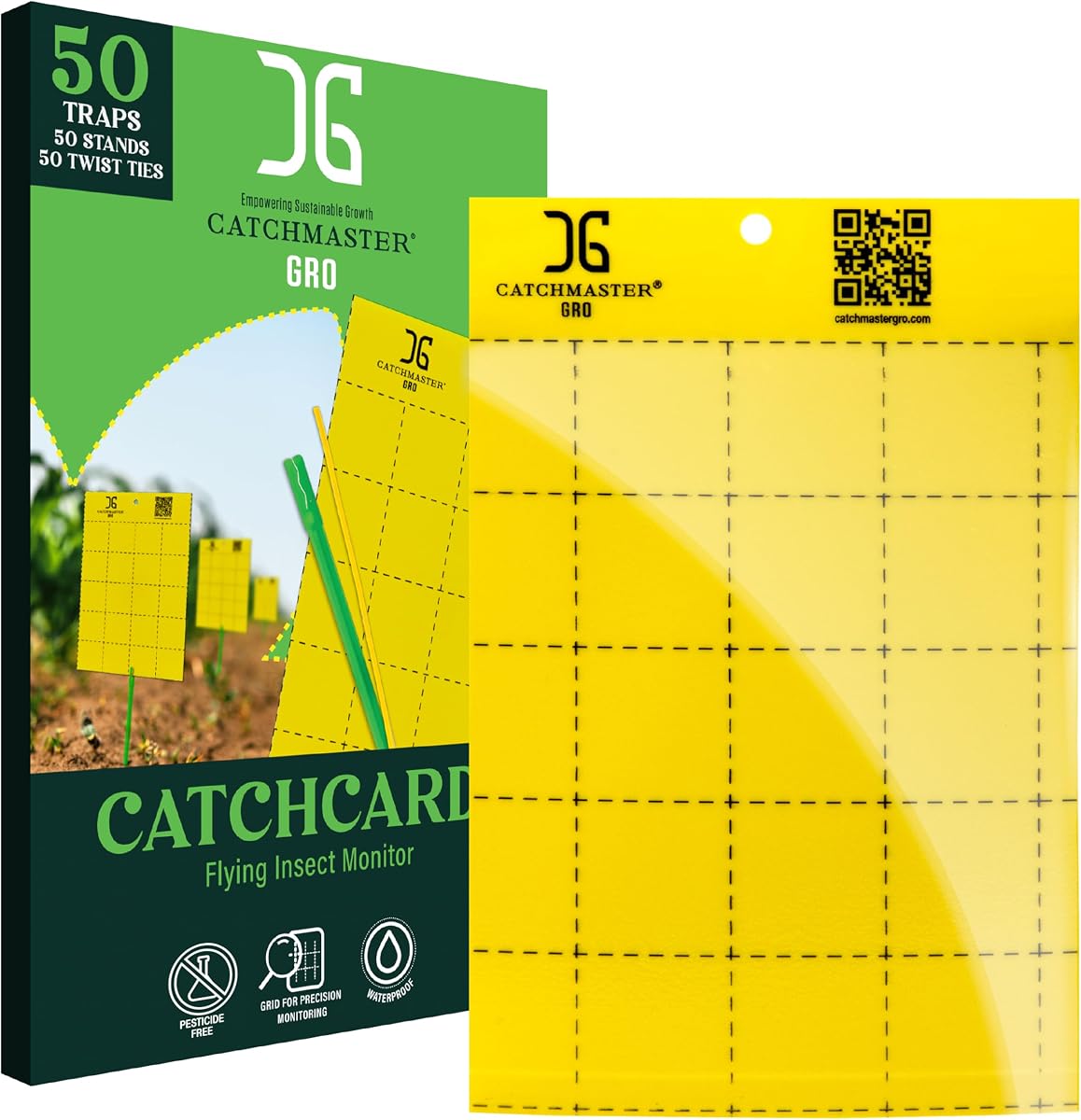
The Catchmaster GRO Large 50-pack is designed for broad pest monitoring and protection of live plants. Its 4.4 rating and large quantity make it particularly attractive for farms, greenhouses, hydroponic systems, and sizable gardens. The cards are intended for use without fly bait and rely on their yellow color and adhesive surfaces.
We may earn a commission when you buy through this link, at no additional cost to you.
Dual-sided cards can be positioned against walls, along pathways, staked into the ground, or tied around plants and trees. The suggested three-zone approach places traps below, within, and above the canopy, improving coverage across different flying heights. The product is described as odorless, water-resistant, UV-resistant, and suitable for indoor and outdoor environments.
A service life of up to one year is possible when the surface remains clean of dirt, although heavy insect capture, rain, dust, and foliage contact can shorten practical usefulness. The lack of a cucumber beetle-specific lure means it should be viewed as a general monitoring component. The large pack also requires enough storage space to keep unused cards flat and protected.
This is the best choice in the guide for buyers who prioritize quantity and a structured, garden-wide monitoring layout. It is less appropriate for someone seeking one highly focused cucumber beetle attractant, but it offers the broadest general-purpose coverage among the products reviewed.
Placing cards below, in the middle of, and above the canopy creates a layered monitoring system. The approach can help gardeners detect insects at different flight heights and maintain consistent coverage across larger growing areas.
Because the cards are intended for use without fly bait, setup remains straightforward. Users can focus on placement and inspection instead of preparing or replacing a separate bait component.
We may earn a commission when you buy through this link, at no additional cost to you.
The Catchmaster Japanese Beetle Trap set is a larger outdoor system combining dual sex pheromone with a floral or food fly bait. Its 4.1 rating reflects a product designed for Japanese beetles rather than cucumber beetles, but it offers a substantial six-trap package and a stated coverage area exceeding 5,000 square feet.
We may earn a commission when you buy through this link, at no additional cost to you.
Each trap is assembled by joining the vanes into a cross, attaching the collection bag, and adhering the bait pack to a vane. The included lid helps prevent rainwater from filling the bag. Hourglass-shaped disposable bags are designed to retain captured beetles securely, while the dual lure system is intended to draw both males and females away from ornamentals, fruit trees, vegetables, and flowers.
Placement guidance calls for hanging traps 10 to 30 feet from protected plants, 3 to 5 feet above the ground, in a sunny location, ideally on the upwind side of the garden. These distances and environmental conditions matter. Although the traps are long-lasting, the bags must be replaced when full, so the setup is less reusable than the RESCUE! bag-style product.
This system is best for broad Japanese beetle control in a spacious garden or landscape. It should not be represented as a cucumber beetle trap, but it is a useful specialist option for growers who are managing several beetle species and want a dedicated lure-based outdoor trap alongside broad yellow monitoring cards.
The dual sex lure and floral or food bait are intended to attract a wider range of Japanese beetles than a single-lure setup. This can make the system more useful in landscapes where beetle pressure is substantial.
Six hanging traps can be spaced around a garden to draw beetles away from valued plants. The stated coverage and placement guidance make this more of a landscape-scale tool than a compact greenhouse accessory.
We may earn a commission when you buy through this link, at no additional cost to you.
The right cucumber beetle trap depends on the pest species, garden size, monitoring goals, and preferred setup. Species-specific lures provide focused attraction, while yellow cards offer broader surveillance; matching the trap format to the growing space is just as important as adhesive strength.
Choose a species-specific lure when cucumber beetles are the confirmed problem. Choose yellow monitoring cards when you need broad pest visibility or are unsure which insects are present.
Use targeted lures for a known species and color traps for broad monitoring. Combining both can improve coverage without relying on a single method.
Match the pack size to the number of beds and monitoring points you can maintain. Large packs are most useful when distributed across a substantial growing area.
Choose stakes for simple plant-level placement, hanging cards for elevation, and bag traps for outdoor beetle programs. Favor a design you will inspect regularly.
Prioritize a strong adhesive surface and relevant weather resistance, but inspect traps often. Replace any card that is dirty, dried out, or fully covered.
Use stated life as a maximum guideline, not a promise. Schedule lure, bag, or card replacement according to actual catch buildup and environmental exposure.
Place traps where beetles travel, not simply beside damaged plants. Keep adhesive surfaces clear and distribute yellow cards vertically through the canopy.
Use traps to monitor and suppress pests within a broader program. Inspect crops and make management decisions based on actual activity rather than trap presence alone.
Begin by identifying the target beetles and selecting a trap that matches the space. Install dedicated cucumber beetle lures according to their instructions, and position them near the active growing area without allowing leaves to cover the adhesive. For yellow monitoring cards, place traps at several heights, including below, within, and above the canopy, and use the supplied ties, stakes, or holders.
Inspect traps regularly for catches, dust, foliage, water, and loss of adhesive. Replace a yellow card when its surface becomes dirty or too crowded to function, and follow the stated replacement interval for a lure. Bag-style beetle traps should be emptied or changed according to their design. Keep unused traps in a clean, dry place so accidental contact does not damage the adhesive.
Record where each trap is positioned and how many beetles or other insects it captures. Recheck the arrangement as crops grow, since changes in plant height and wind direction can alter trap effectiveness. Replace lures on schedule, clean reusable components only as directed, and avoid placing traps where children or pets might contact the adhesive. Traps work best as part of an integrated program that also includes regular plant inspection and appropriate cultural pest controls.
Yellow sticky traps can catch cucumber beetles and other flying insects, but their attraction is based on color rather than a species-specific pheromone. This makes them useful for monitoring broad pest activity and seeing which insects are present. A dedicated pheromone trap may be more focused for known cucumber beetle species. For dependable results, use traps alongside crop inspection and other suitable pest-management practices.
The best type depends on whether the goal is focused removal or broad monitoring. A multi-pheromone cucumber beetle trap is the most specific choice in this guide. Yellow dual-sided cards are more useful when monitoring a mixed pest population or covering many locations. Specialized Japanese beetle bag traps should be selected for Japanese beetles rather than assumed to control cucumber beetles.
The VivaTrap VT-103 specifically states that its pheromone-based attractant targets both male and female cucumber beetles. The Catchmaster Japanese Beetle Trap also describes a dual sex lure for that species. General yellow sticky cards do not select by sex; they catch insects simply because they contact the adhesive surface.
The appropriate number depends on garden size, crop density, and how many monitoring points you can maintain. A small plot may be well served by two targeted traps, while a larger garden can benefit from twenty or more yellow cards. Distribution matters more than simply adding traps, so spread them across vulnerable plants and different canopy heights instead of clustering them in one location.
Place dedicated lure traps close enough to the target area to intercept beetles but without covering the adhesive with foliage. Yellow cards work well below, within, and above the canopy. Japanese beetle bag traps should follow their specified distance from protected plants, generally downwind placement where appropriate. Check the current manufacturer instructions because placement requirements differ by trap design.
The products in this guide are described as non-toxic or as having adhesive that is not harmful if accidentally consumed, but consumption is still not recommended. Keep traps out of reach of children and animals whenever possible. Do not let pets chew on traps, and follow all handling and disposal directions included with the selected product.
Replacement depends on the product and its exposure. The VivaTrap lure is described as lasting 30 days, MAXGUARD traps as effective for up to six months, and Catchmaster cards as usable for up to one year when kept clean. Regardless of those maximum claims, replace a card when it is dirty or covered, refresh a lure on its stated schedule, and empty or change a collection bag when it fills.
Yes, traps are usually most effective as part of a broader management plan. Inspect plants regularly, identify the beetle species, remove heavily damaged material where appropriate, and use other suitable cultural or targeted controls based on the crop and severity of the problem. A clean trap is evidence of activity, not a guarantee that all beetles or future generations have been eliminated.
The VivaTrap VT-103 stands out as the most focused option because its multi-pheromone lure explicitly targets male and female striped, spotted, and western cucumber beetles. MAXGUARD offers the most convenient stake-based general monitoring format, while the Catchmaster GRO Large set provides extensive coverage through 50 double-sided yellow cards. These picks serve different priorities: targeted attraction, easy deployment, and broad surveillance.
Prioritize the target pest first, then match the trap format to the growing environment. Use yellow cards in several vertical zones when identifying general insect pressure, and use lure-based traps when a specific beetle species is known. Check adhesive condition frequently, follow replacement guidance, and remember that trapping works most effectively when supported by regular plant inspection and integrated pest management.
Product details, ratings, and availability can change, so verify the current listing before making a purchase. Compare the target species, package quantity, mounting accessories, stated service life, and placement requirements to ensure the chosen trap fits the garden and the control objective.