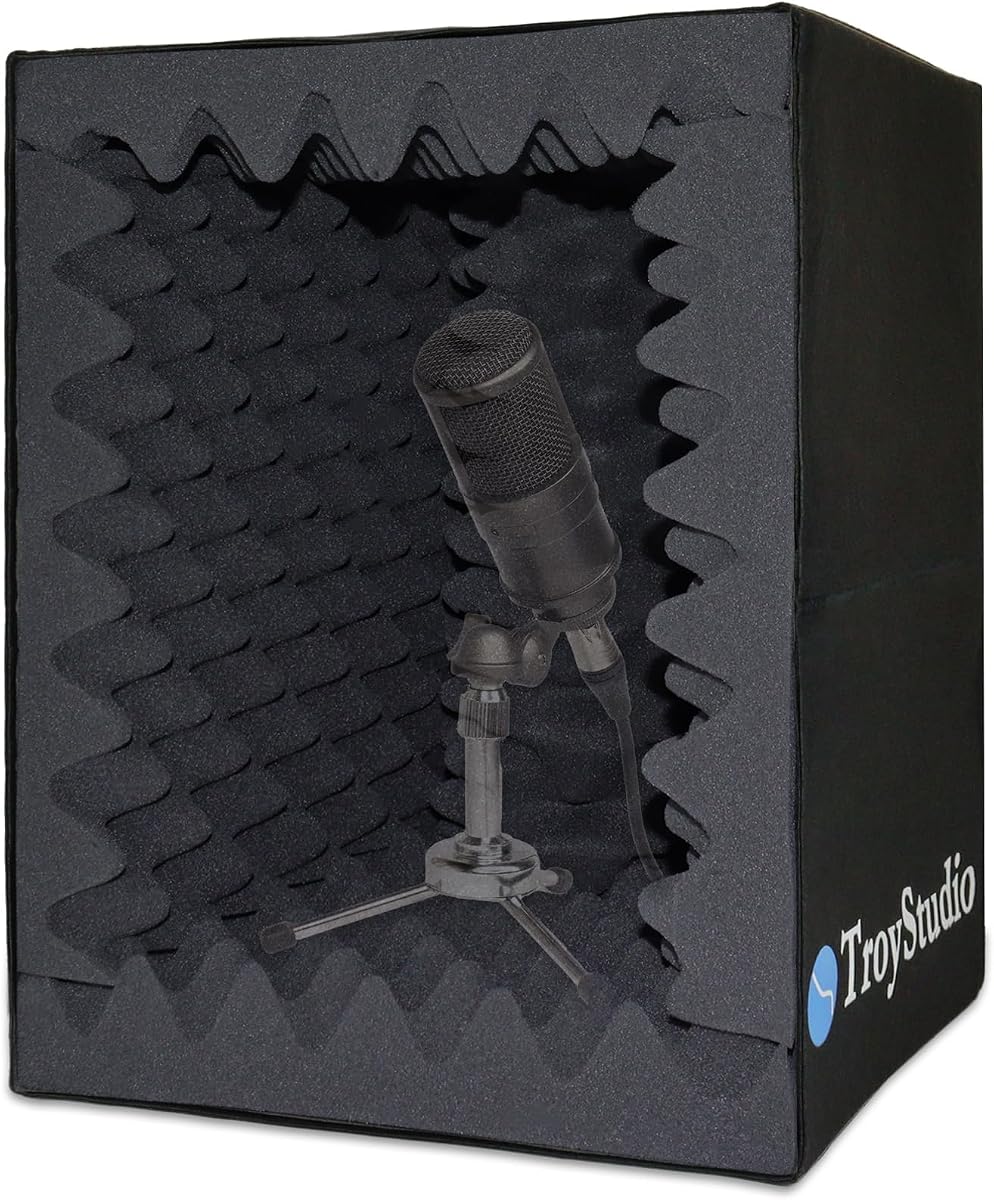
TroyStudio Portable Vocal Booth
4.3Editor score
Five dense acoustic foam panels
Foldable tabletop and stand design
Cable and microphone stand holes
Sound booths for recording create a more controlled environment for vocals, podcasts, voice-over work, and instruments. A useful booth can reduce reflections, soften echo, and limit the influence of nearby distractions, but the best choice depends on room size, portability, microphone setup, and the degree of isolation required.
The products in this guide range from compact tabletop shields to walk-in acoustic enclosures and complete microphone-stand systems. We compared the supplied specifications, dimensions, materials, included accessories, mounting options, and intended recording uses to identify which design best fits each type of creator.
The list shows which booths prioritize budget value, expansive interior space, fast folding, included stands, or a more complete workstation arrangement. Product prices and availability can change, so readers should confirm current details and fit before making a final purchase.
4.3Editor score

4.6Editor score

4.3Editor score
As an Amazon Associate we earn from qualifying purchases.
The comparison below highlights the principal differences among compact foam booths, adjustable isolation shields, microphone-stand combinations, and larger portable recording enclosures, helping readers identify the right balance of isolation, space, and convenience.

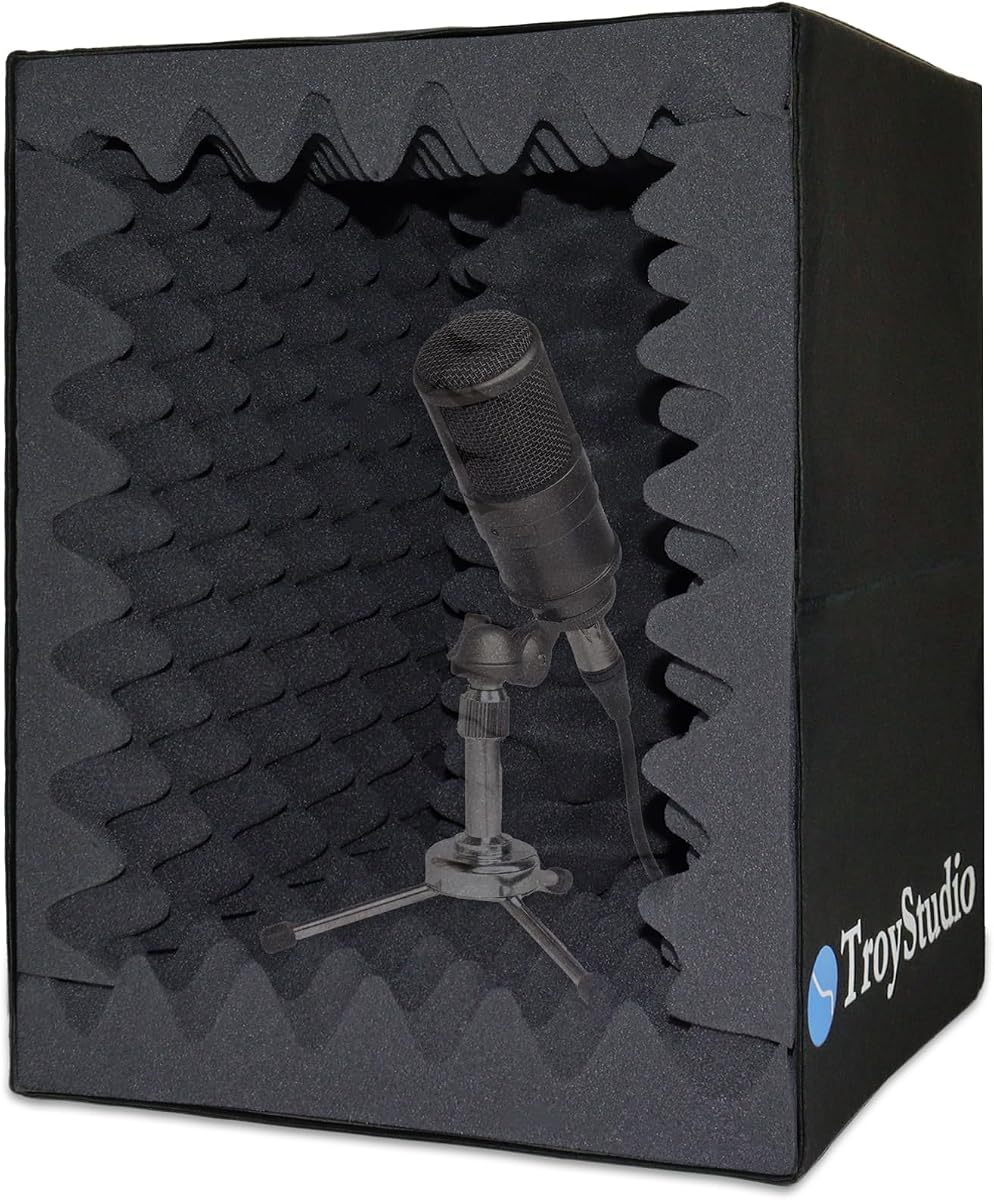


The TroyStudio Portable Vocal Booth is a compact folding enclosure rated 4.3 out of 5 by Amazon customers. Its defining feature is a five-panel cube lined with two-inch dense egg-crate foam, offering a practical way to control reflections around a closely positioned microphone without dedicating an entire room.
We may earn a commission when you buy through this link, at no additional cost to you.
The eight-by-ten-by-twelve-inch interior is suitable for a microphone and a modest amount of nearby equipment. Holes for audio cables and microphone stands support realistic home-studio use, while the table and stand-mounting options make the shield practical for podcasting, voice-over narration, audiobooks, vocals, percussion, and small instrument recordings.
The main limitation is space. This is not a walk-in booth or a roomy workstation, and the exterior dimensions add some bulk around the relatively compact interior. Its stand compatibility is also restricted to stands with a diameter below 0.86 inches, so buyers should check their existing hardware before ordering.
This is a compelling choice for creators who want focused acoustic treatment on a modest budget. The rapid folding design, low weight, thick foam, and simple installation make it especially useful for mobile voice work and small home studios, provided the available surface or stand is compatible.
The dense egg-crate lining is designed to absorb sound arriving from multiple directions around the performer. That treatment can help shorten reverberation and reduce the hollow, reflective quality often heard when recording in untreated bedrooms, offices, or closets.
The booth folds to a compact six-inch depth, includes securing bands, and is described as ready for transport. Fast assembly and disassembly make it easier to move between a home office, bedroom, and another temporary recording location.
We may earn a commission when you buy through this link, at no additional cost to you.
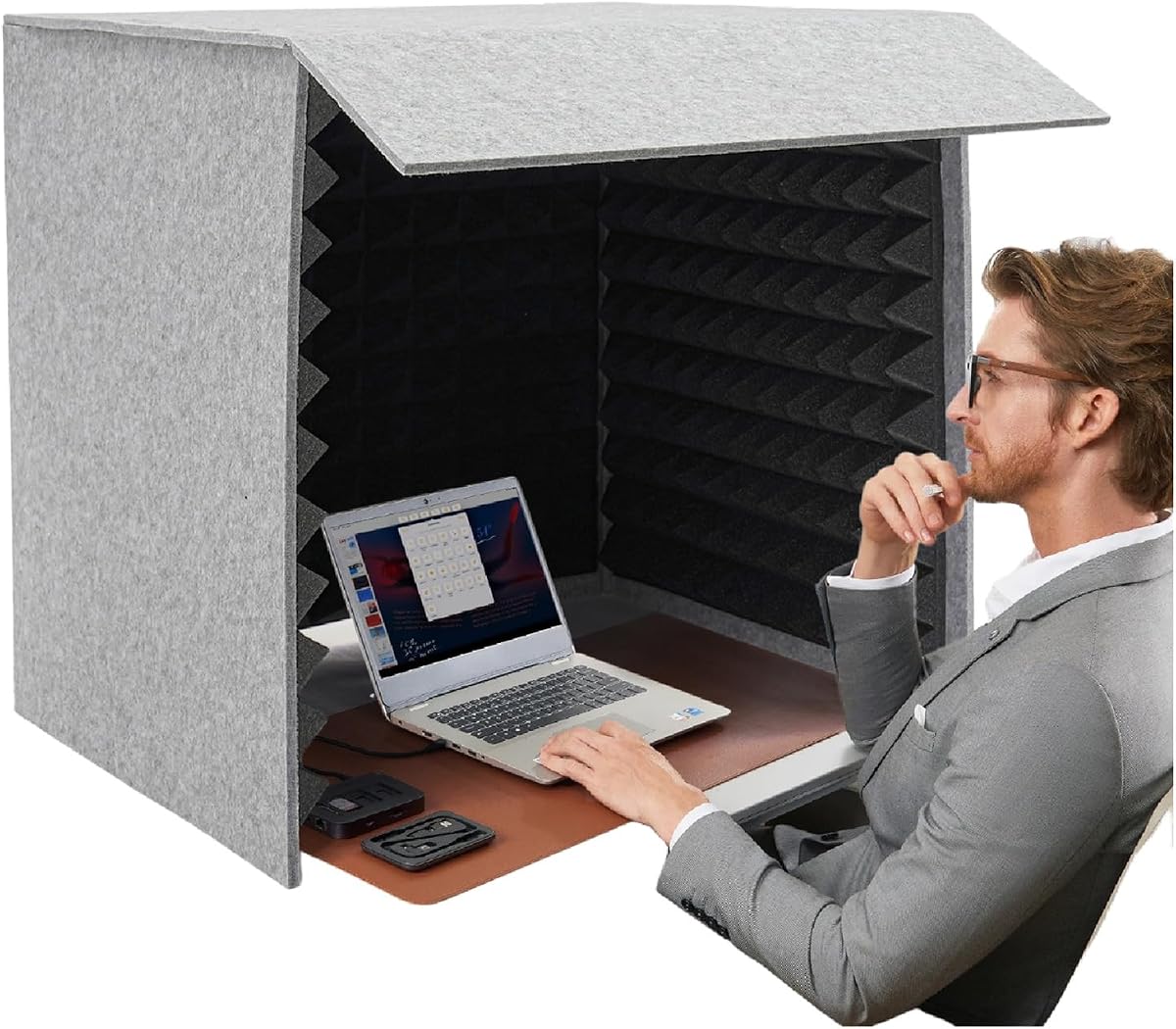
This foldable desktop soundproof cover offers a much larger interior than compact microphone shields, with a 23.62-inch cube providing room for a microphone and a laptop. It is intended for creators who want a semi-enclosed recording area without converting a full room into a studio.
We may earn a commission when you buy through this link, at no additional cost to you.
Its construction combines high-quality sound-absorbing sponge with dense polyester panels. A double-layer design and three-sided semi-enclosed layout are intended to reduce noise and echo, while the absence of a metal frame is designed to avoid adding resonance to the recording environment.
The trade-off is weight and bulk. At 12.56 pounds, the cover is still portable according to the product description, but it is less convenient for frequent carry-on-style mobility than the two-pound TroyStudio shield. The listing also does not provide a customer rating, making direct user-feedback comparison more difficult.
This booth is best for home studios, game rooms, offices, and creators who need more working space than a conventional isolation shield provides. It is particularly attractive when a laptop, microphone, and script need to coexist within the enclosure.
The broad three-sided layout creates a more recognizable booth around the recording position. Its larger proportions can be useful for voice actors, streamers, and podcasters who prefer a dedicated enclosure rather than a small panel wrapped closely around a microphone.
The detachable, foldable structure allows the enclosure to be stored away when it is not needed. Dense polyester and sponge materials also avoid the metal-frame resonance concern highlighted in the supplied product information.
We may earn a commission when you buy through this link, at no additional cost to you.
This portable recording booth uses a 33-by-33-inch footprint and 79-inch height to create a substantially larger recording environment than desktop shields. Its 3.5 customer rating reflects a less universally positive reception, but the supplied specifications reveal a well-equipped mobile enclosure.
We may earn a commission when you buy through this link, at no additional cost to you.
Thickened acoustic blankets are designed to reduce reverb, echo, and ambient noise. A snap-together frame, hook-and-loop straps, an adjustable phone or tablet mount, and a storage shelf create a practical recording station without requiring a permanent studio installation.
Its greatest disadvantage is physical scale. Even though the booth breaks down and fits into a carry bag, the 33-inch footprint still needs meaningful floor or desk space, and the 79-inch height cannot be treated like a small tabletop accessory. The lower rating also warrants checking recent customer feedback for details not visible in the listing.
The design suits podcasters, streamers, musicians, and voice-over creators who want enough room to stand or sit naturally. It is especially appealing for dorm rooms, apartments, and home offices where a larger controlled recording space is needed.
The adjustable device mount can hold a phone or tablet for reference material or remote sessions, while the shelf provides a place for scripts, cables, and a microphone. These additions make the enclosure function more like a compact recording workstation.
The tool-free frame and hook-and-loop blanket attachment system support rapid setup and breakdown. Once disassembled, the included carry bag makes the booth more manageable for creators who record in different locations.
We may earn a commission when you buy through this link, at no additional cost to you.
The Voctent Portable Vocal Booth combines a 4.6 customer rating with a 360-degree enclosure, making it one of the strongest all-around selections in the guide. It is built for singers, voice actors, rappers, podcasters, and other performers who want isolation from several directions rather than only front and side reflection control.
We may earn a commission when you buy through this link, at no additional cost to you.
Its genuine acoustic blankets use sound-absorbing cotton and dense fabric, and the manufacturer states that they are twice as thick as competing blankets. The listing claims reverb and noise reduction of up to 87%, while the enclosed shape is intended to produce a drier and more controlled vocal sound.
Unlike simpler shields, this model includes an audio-interface tray, an iPad mount, and an LED lamp. Those accessories improve workflow but add complexity and size compared with a folding foam panel. Since the booth is a complete mobile system rather than a minimal enclosure, buyers need adequate room for assembly and transport.
This is the strongest recommendation for creators who prioritize comprehensive isolation and a polished, self-contained recording setup. The customer rating, thick materials, 360-degree configuration, and included accessories support a higher-end recommendation for serious home-studio work.
The full enclosure is a major difference from conventional shields that leave one or more sides open. Surrounding the recording position can reduce opportunities for room reflections and outside sound to reach the microphone.
The audio-interface tray, tablet or iPad holder, LED lamp, and carrying bag turn the enclosure into a ready-to-use production system. These features are particularly valuable for performers who already have a microphone and interface but want a more organized mobile workspace.
We may earn a commission when you buy through this link, at no additional cost to you.
The XTUGA MIS02 is a classic folding microphone isolation shield with a 4.3 customer rating. It offers more positional flexibility than a fixed cube, allowing performers to choose a three-panel or five-panel arrangement according to the room and their preferred microphone placement.
We may earn a commission when you buy through this link, at no additional cost to you.
The shield relies on three layers of material, including triangular high-density thickened sponge reflectors, to reduce the propagation of interfering sound waves. Its foldable top helps limit sound entering from above, while the reflection and absorption areas are intended to improve external-noise control.
It is not a fully enclosed booth, so the degree of isolation naturally depends on the room, positioning, and the angle of every panel. Adjustable geometry can also introduce gaps if the folds are not arranged carefully, and the hinged construction requires more attention than a rigid enclosure.
This product is a strong fit for podcasters, vocalists, and home-studio users who value configurability over walk-in space. It is particularly useful when the microphone position changes regularly or when a shield must adapt between desktop and stand-mounted configurations.
Using three panels creates a more open recording position, while five panels offer broader reflection control. The ability to alter the arch and panel angles makes it easier to accommodate unusual desks, microphone arms, and constrained room layouts.
High-density sponge reflectors and an absorptive top form several surfaces around the microphone. This layered approach can improve vocal clarity in rooms where direct wall reflections are the main problem, although it cannot reproduce the enclosure of a full booth.
We may earn a commission when you buy through this link, at no additional cost to you.
The larger TroyStudio Portable Vocal Booth expands on the folding-cube concept with a 12-by-14-by-16-inch interior. It retains the 4.3 customer rating and the same general focus on thick foam, quick setup, and broad compatibility found in the more compact model.
We may earn a commission when you buy through this link, at no additional cost to you.
Five high-density, two-inch-thick egg-crate foam pieces line the interior, while a reinforced backing panel helps prevent the structure from becoming flimsy. The product description states that the room-reverb protection reaches 92.7%, creating a drier sound and improving recording clarity.
Compared with the smaller TroyStudio booth, this version offers substantially more usable interior space but weighs four pounds and folds to a deeper form. As with the compact version, microphone stands must have a diameter below 0.86 inches, and incorrect assembly may create stability issues.
This model is well suited to home studios and temporary vocal booths that need more room than a small desktop shield. It remains a compelling option for voice actors, podcasters, and musicians who value the rapid setup of a self-contained acoustic enclosure.
The larger internal dimensions provide additional space for a microphone, compact stand, and related equipment. That makes the booth more comfortable for creators who felt constrained by a tight reflection-filter arrangement.
A special backing panel and five dense foam sections are intended to resist sagging and preserve the enclosure's shape. Elastic bands included with the shield case help keep the panels compact and secure when the booth is folded.
We may earn a commission when you buy through this link, at no additional cost to you.
This microphone stand and isolation shield provides a complete support system rather than requiring creators to choose a stand separately. Its 4.4 customer rating reflects a favorable reception, while the long adjustable stand and weighted base support both seated and standing recording positions.
We may earn a commission when you buy through this link, at no additional cost to you.
The foldable shield uses an acoustic sandwich design consisting of a sound-reflective layer, a precision filter layer, and an absorption layer. High-density acoustic foam is mounted on an ABS backing, and the listing states that dual blocking zones reduce ambient noise by 87% and provide 26 decibels of reduction.
Although it is described as a microphone stand with an isolation shield, it does not create the same 360-degree enclosure as a full vocal booth. The microphone is not included, and the shield's effectiveness still depends on placement relative to the room's reflective surfaces and noise sources.
This is an excellent choice for voice-over, podcast, streaming, and broadcast setups where a stable, height-adjustable stand is wanted. The included adapters and dual mounting arrangements also make it versatile for existing boom arms and desktop configurations.
The weighted triple-leg base reduces tipping risk, while the 42-to-71.5-inch adjustment range supports performers who alternate between seated and standing positions. A secure screw-locking clamp holds the shield in position.
The reflective, filtering, and absorbing layers serve different acoustic roles. Combined with the foam face and ABS backing, the sandwich construction gives the shield a more substantial structure than a single-layer foam screen.
We may earn a commission when you buy through this link, at no additional cost to you.
The Voctent Portable Home Studio Booth is designed for creators who want more physical freedom than a desktop shield can offer. Its 33-by-33-inch footprint and 6-foot-8-inch internal height create a room-like recording area, and its 4.3 customer rating reflects generally positive feedback.
We may earn a commission when you buy through this link, at no additional cost to you.
A key feature is the gap-sealing design, which draws the fabric walls snugly against the frame to improve isolation consistency. The dual-purpose blankets combine a polyester shell, cotton fill, and non-woven liner to enhance dampening. A black exterior and light interior also create a practical appearance for reading scripts and filming.
This premium model is less convenient for spontaneous tabletop recording than compact shields. The square footprint needs open floor space, and a six-foot-eight-inch interior height provides room to work standing, sit comfortably, or use a larger recording arrangement rather than simply positioning a microphone in a small cube.
The booth is a strong recommendation for voice actors, podcasters, singers, rappers, and e-learning producers who want a dedicated mobile room. Clamps, a device holder, and an interface tray support a complete setup, while the travel duffel simplifies breakdown and storage.
The internal height allows creators to work in a more natural standing or seated posture. That additional freedom is valuable for vocal performance, live streaming, audition recordings, and demonstrations that would feel cramped inside a tabletop enclosure.
Engineered closure helps avoid open seams that could undermine isolation. The bright interior is also more suitable than a dark enclosure for consulting printed scripts during a recording session.
We may earn a commission when you buy through this link, at no additional cost to you.
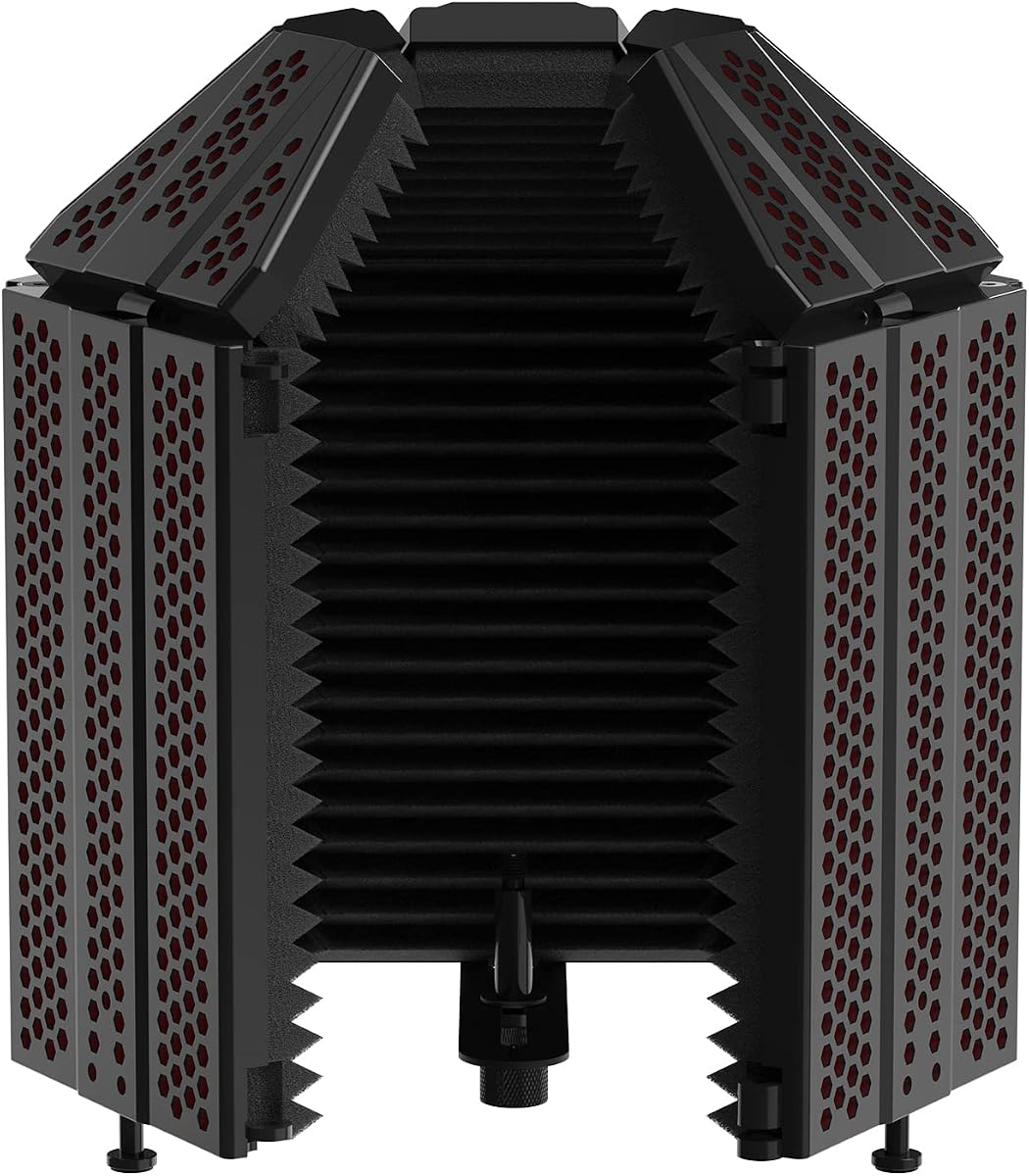
The six-sided low-stand isolation shield combines a 4.3 customer rating with an adjustable, foldable design aimed at reducing background noise and echo. It offers broader panel coverage than a simple three-sided shield while remaining more compact than a fabric enclosure.
We may earn a commission when you buy through this link, at no additional cost to you.
High-density acoustic foam and a sturdy metal frame are used to create the reflective and absorptive surfaces. The panels can be adjusted to different angles, and the whole structure folds for storage or transport. It is compatible with standard microphone stands and desktop arrangements.
The low-stand format limits microphone height and may not suit performers who require a tall stand or who want to move freely inside an enclosure. Because it remains open at the back and sides, it cannot match the isolation potential of a full 360-degree booth.
This product is a versatile middle ground for podcasting, voice-over, gaming, broadcasting, and home-studio work. It is especially helpful for users who want more adjustable coverage than a flat screen but do not need the space or material investment of a walk-in booth.
Each panel can be angled to suit the microphone and the available room. This allows the shield to be opened for comfort or closed into a more reflective enclosure when stronger control is needed.
The folding frame and light construction make the shield easier to move than a large fabric booth. It does not include a microphone or stand, so existing equipment can be used if its dimensions are compatible.
We may earn a commission when you buy through this link, at no additional cost to you.
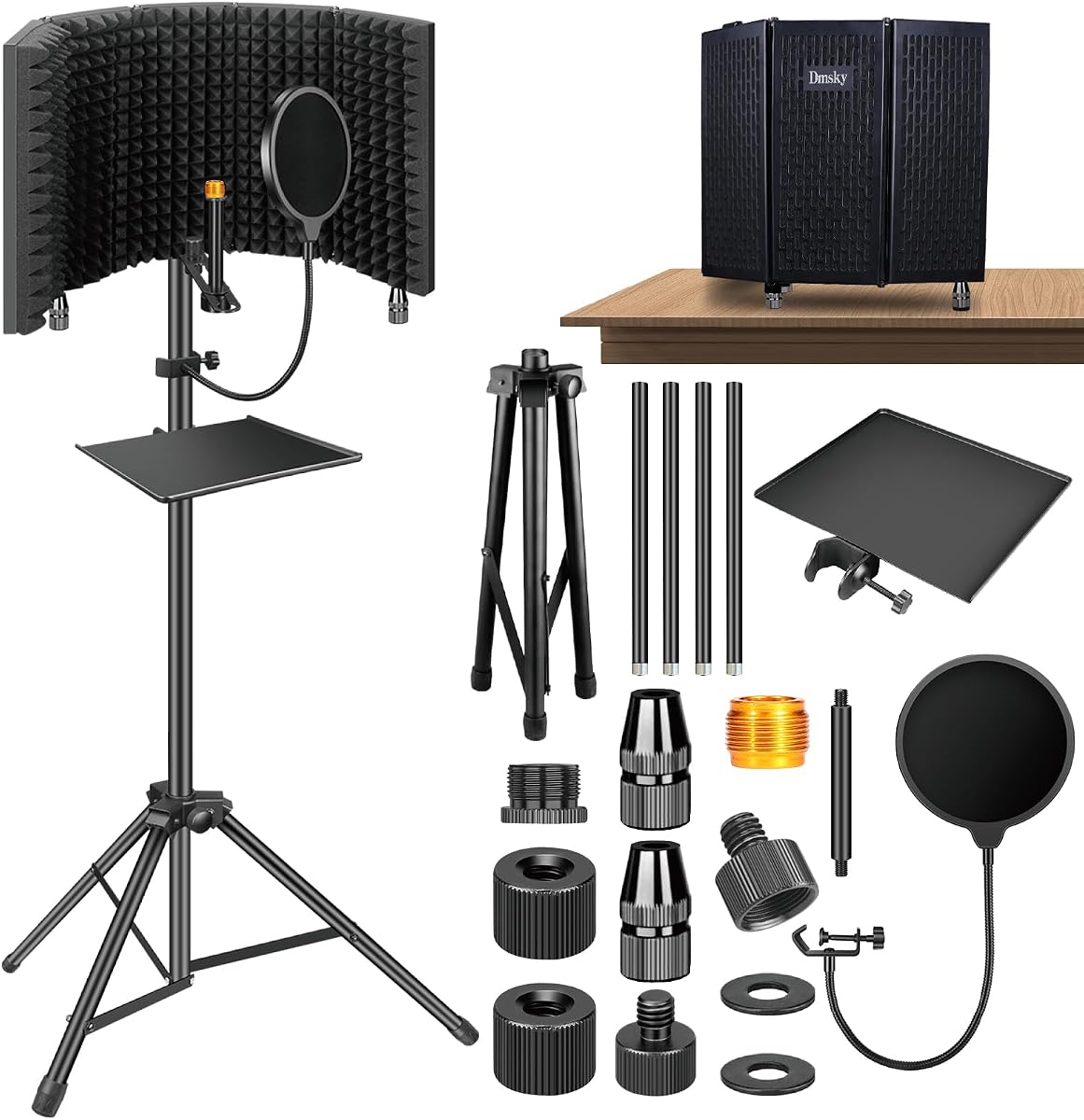
The Dmsky Microphone Isolation Shield with stand combines a 4.6 customer rating with an unusually broad accessory package. It includes a five-panel shield, an adjustable steel tripod stand, a pop filter, adapters, and a storage tray, making it convenient for new creators building a recording setup.
We may earn a commission when you buy through this link, at no additional cost to you.
The shield uses three insulation layers described as reflective, filtering, and absorbing. High-density acoustic foam helps reduce bounced sound and interference, while the five folding panels can be adjusted through 180-degree positions to suit the recording environment.
The included steel stand reaches 78.7 inches and adjusts from 42 to 71.5 inches for the shield position. A heavy-duty tripod improves stability, while the desk clamp and boom adapter allow alternative mounting. The listing warns that the upgraded stand tube differs from the product image, which may cause confusion during unboxing.
This is a strong recommendation for podcasters, singers, broadcasters, and home-studio users who want a complete support system in one package. The included pop filter and tray are particularly useful, although buyers should review the updated stand-tube details carefully.
The included pop filter, universal adapters, and storage tray eliminate the need to purchase several basic accessories separately. This makes the package attractive for first-time creators assembling a functional home vocal station.
The shield can be fixed to a desktop, attached to a boom, or used with the included floor stand. Its broad height range accommodates both seated narration and standing performances.
We may earn a commission when you buy through this link, at no additional cost to you.
Choosing a sound booth for recording means balancing isolation, usable space, portability, construction, and workflow. The most suitable option depends on the type of source being recorded and the acoustic problems present in the recording location.
Folding microphone shields are the simplest format and work well for vocals, narration, and podcasts recorded at a desk. Box-shaped foam booths add a more defined enclosure without requiring much floor space, while portable fabric booths create a walk-in or semi-walk-in environment for greater movement and broader background control. A desktop cover is another option when a laptop and microphone need to share the enclosure.
In short, choose a shield for close microphone work, a compact booth for a defined vocal position, or a large enclosure for a complete mobile studio.
A foam panel primarily addresses reflections and echoes around the microphone, whereas an enclosed booth can also make it harder for outside sound to enter from multiple directions. The supplied products make different claims, including 87-percent ambient-noise reduction, 92.7-percent room-reverb protection, and 26-decibel isolation. These figures may use different testing conditions and should be considered product-specific rather than directly interchangeable.
Prioritize full enclosure and dense layered materials for a noisy room; use an adjustable shield when direct reflections are the main concern and the recording environment is already reasonably quiet.
Interior dimensions determine whether the booth holds only a microphone or can accommodate an audio interface, tablet, script, phone, compact stand, or other accessories. Very small shields can place a microphone too close to acoustic surfaces, while larger booths take up more room and may require dedicated floor space. Measure both the usable interior and the final folded or assembled footprint before purchasing.
Choose enough room for the equipment you will actually use, not merely the largest dimensions stated in the listing. Leave clearance for airflow, cable routing, and comfortable microphone positioning.
Portable booths range from lightweight folding shields that fit in a suitcase to larger fabric systems that break down into travel bags or duffels. Weight, folded thickness, assembly time, and the number of loose components all affect how often a creator can realistically move the booth. Tool-free frames and hook-and-loop straps are particularly convenient for setup in unfamiliar spaces.
Frequent mobile recording favors the lightest manageable design. A permanent or occasional home setup may justify a larger booth for the added isolation and workspace.
Dense acoustic foam, layered blankets, reflective surfaces, and filtering layers can all play different roles in controlling a recording space. Foam is useful for breaking up reflections, while dense fabric and cotton-filled blankets can provide broader dampening across larger surfaces. The TroyStudio booths emphasize two-inch dense egg-crate foam, the Dmsky and stand-mounted shield use layered constructions, and the Voctent models use thick acoustic blankets.
Look for multiple complementary layers when the room is difficult, but pay attention to structural support. A well-backed panel is more likely to retain its shape and acoustic position over repeated sessions.
Some booths can sit on a table, attach to a microphone stand, clamp to a desk, or connect to a boom arm. Others are freestanding fabric structures. The two TroyStudio models accept stands with a diameter below 0.86 inches, while the Dmsky package includes adapters for common 3/8-inch and 5/8-inch fittings. The XTUGA and low-stand shield also allow different desktop and stand arrangements.
Check the dimensions of your current stand, clamps, and tabletop before ordering. A complete stand package may be more convenient than finding a compatible support separately.
Included accessories can determine how quickly a creator can begin recording. The Dmsky package includes a pop filter, adapters, and tray, while the larger Voctent models provide device holders and an audio-interface tray. The 33-by-33-by-79-inch booth also includes an adjustable phone or tablet mount and storage shelf. A carrying case, lamp, or table adds convenience but can also increase the amount of equipment to store.
Prioritize accessories that solve a real workflow need. Useful additions are more valuable than numerous small parts that will rarely be used.
A booth that is difficult to assemble may remain folded in a closet, while a fast setup encourages regular use. The smaller TroyStudio booth is described as assembling within one minute and disassembling in 20 seconds, and the fabric booths use tool-free frames or hook-and-loop straps. Conversely, larger enclosures need more floor area and may take longer to arrange correctly.
Practice the setup in the intended room. Allow time to position panels, route cables, confirm stand stability, and adjust the microphone before recording.
Choose a stable recording position away from obvious noise sources such as televisions, busy hallways, HVAC vents, and windows. Place the microphone in the center of the shield or enclosure, maintain a consistent distance from the foam or fabric, and route cables through the provided openings without creating gaps. For a full booth, close every panel and secure the fabric evenly so the enclosure does not develop loose seams.
After positioning the microphone, make a short test recording and listen for remaining reverb, reflections, background noise, and proximity effects. Adjust the distance, panel angles, stand height, and enclosure position rather than correcting multiple problems in post-production. Keep the microphone consistent between takes, and use headphones when monitoring to prevent sound from the booth from entering the recording.
Care for the booth by following the manufacturer's assembly instructions, avoiding sharp objects against the foam, and preventing excessive tension on hinges, straps, and blanket edges. Fold or roll protective panels only as directed, keep the interior dry, and clean the surface gently. Store a large fabric booth in its included bag when possible and inspect connectors, clamps, adapters, and frame pieces before every mobile session.
A portable booth can significantly improve recordings made in a reflective or mildly noisy room by controlling echoes and reducing some background sound. It cannot replicate the construction, isolation, and room correction of a professional studio. The improvement will be most noticeable when the microphone is positioned correctly and the enclosure is assembled without gaps.
A microphone shield is an open-sided or partially folded screen that places absorptive surfaces around the microphone. A vocal booth is a more enclosed structure with walls, a roof, and often a workstation area. Shields are easier to transport and less restrictive, while booths generally provide broader reflection and noise control.
No. A larger booth can provide more usable space and a greater sense of enclosure, but it also requires more room to assemble and store. A compact foam booth may be more effective for a creator who records a single narrator in a small home office. Prioritize placement, material quality, and correct microphone distance over size alone.
No product should be expected to remove every external sound completely. Foam shields mainly reduce reflections, while enclosed booths can reduce additional background noise, especially when their walls and openings are properly sealed. Heavy bass, low-frequency rumble, and sound entering through gaps are more difficult to control than midrange room reflections.
Additional room treatment can help, particularly when a portable booth is used in a highly reflective or noisy location. Placement matters: a booth surrounded by bare walls and hard furniture will still interact with the room. Thick curtains, rugs, shelves, and other absorptive furnishings can improve the overall result, although they are not necessary for every recording.
The booth is generally compatible with common vocal microphones, condenser microphones, USB microphones, phones, and recorders, subject to the dimensions and mounting options of the selected model. Match the microphone to the recording goal and room rather than assuming the booth will compensate for a poor microphone choice. Also confirm that any included adapter matches the stand or boom connection.
There is no universal distance because wall proximity affects reflection, proximity effect, and perceived sound. Begin with the microphone near the center of the shield, make a test recording, and move it inward or outward while listening. Avoid placing the microphone so close to a dense foam surface that it becomes boxed-in or overly bass-heavy.
Remove loose accessories, detach the microphone and stand if applicable, and follow the folding sequence in the product instructions. Use the included bands, case, bag, or travel duffel where provided, and avoid placing sharp equipment inside the enclosure. Allow the foam and fabric to unfold and recover fully before using the booth again.
The TroyStudio Portable Vocal Booth offers the strongest budget-oriented balance of thick foam, quick folding, and flexible mounting. The Voctent Portable Vocal Booth stands out as the editor's choice for its 360-degree enclosure, customer rating, thick blankets, and complete accessory package, while the larger Voctent Home Studio Booth provides the most spacious premium recording environment.
For most creators, the most important priorities are the type of room being treated, the available recording space, and whether a compact shield or full enclosure is practical. Read the dimensions, stand requirements, included components, and acoustic claims carefully, and choose a design that will be used rather than one that offers the most features without fitting the workspace.
Current prices, ratings, availability, and product configurations can change over time. Before ordering, confirm the latest listing details, customer feedback, dimensions, and accessory contents, and make sure the selected sound booth is compatible with the microphone, stand, and recording space already in use.