
YOTNUS 11-Inch Heated Base
4.4Editor score
125W thermostatically controlled heating
Works with many waterer styles
IPX5 sealed galvanized housing
Six-foot outdoor-rated power cord
This Chicken Water Heater guide compares ten winter waterers for capacity, thermostat control, durability, weather resistance, safety, and ease of use in 2026.
A chicken water heater keeps drinking water available when cold weather threatens to freeze a flock’s supply. The right unit matches your waterer’s material and capacity, operates safely outdoors, and uses thermostatic control without making the water dangerously hot. The best models also simplify cleaning, placement, and year-round water access.
We compared ten heaters using the specifications and feature details provided for each product. The list covers compact bases, complete fountains, submergible tank heaters, and higher-capacity units with nipples. Heating wattage, activation temperatures, cord length, waterer compatibility, housing materials, and weather resistance are central to the comparison.
Each review identifies the product’s most useful traits, practical limitations, and the type of flock or setup it suits best. Ratings reflect the supplied customer feedback rather than personal testing. Product availability, configurations, and prices can change, so verify the current listing and fit before purchasing a winter water heater.
4.4Editor score

4.6Editor score

4.3Editor score
This side-by-side comparison shows whether each heater is a standalone waterer, a base for an existing container, or a submergible tank warmer, while also highlighting its capacity, heating system, and intended outdoor setup.


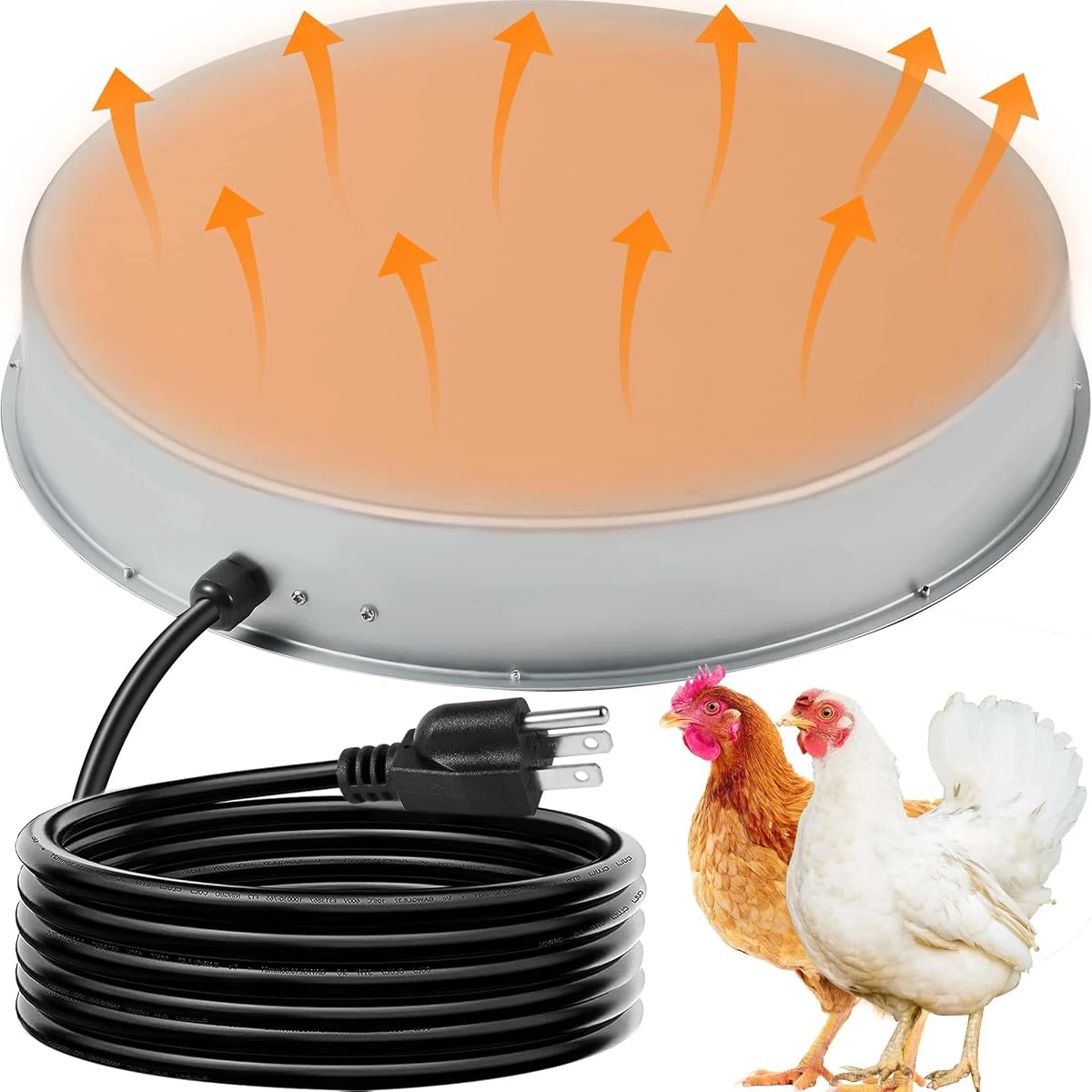


The YOTNUS Chicken Water Heater for Winter is an 11-inch heated base rated 4.4 out of 5 by customers. It offers a practical combination of 125W heating, automatic thermostatic operation, and broad compatibility, making it a sensible starting point for owners who already have a suitable poultry waterer.
We may earn a commission when you buy through this link, at no additional cost to you.
The base is designed to support galvanized steel, plastic, and metal waterers, including many five-gallon styles. Its thermostat begins heating around 35°F and stops around 77°F, which helps preserve liquid water without continuously running the element. A six-foot cord gives the setup some flexibility, while the IPX5-rated sealed bottom and galvanized housing add useful protection against moisture, dirt, and seasonal outdoor exposure.
The main limitation is that this is a heater base rather than a complete fountain. Buyers need to confirm the diameter, shape, and stability of their existing waterer before ordering. It also offers less integrated drinking functionality than complete fountains with nipples, but that trade-off keeps the setup focused and potentially less costly. Cleanability is aided by the smooth housing surface.
This is a good choice for backyard chicken keepers, duck owners, and other small-flock households that want dependable freeze protection without replacing the entire waterer. It is particularly useful when the flock already uses a compatible container and the owner wants a straightforward, automatic way to reduce early-morning ice breaking.
The built-in thermostat cycles the heating element according to the detected temperature. That approach supports unattended winter use while reducing unnecessary operation during warmer periods.
The galvanized housing, sealed IPX5 bottom, and six-foot cord suit a coop or run where splashing and damp bedding are likely. Placement away from the water itself improves electrical safety.
We may earn a commission when you buy through this link, at no additional cost to you.
The Farm Innovators Thermostatically Controlled Heated 3 Gallon Plastic Outdoor Year Round Hanging Water Fountain has a customer rating of 4.2. It combines a three-gallon reservoir with a built-in heater, making it a convenient option for keepers who want one hanging unit rather than a separate base and water container.
We may earn a commission when you buy through this link, at no additional cost to you.
Its claimed freeze protection extends to 0°F, and the thermostat operates the warmer only as needed. The fountain measures 20 by 13.5 by 13.5 inches and weighs 2.63 pounds, giving buyers a clear sense of its proportions before purchase. Its hanging design helps keep the drinking supply elevated and makes refilling easier, while durable plastic construction is suited to outdoor use.
As an all-plastic fountain, it is a different choice from metal or stainless heated bases. Plastic can be lighter and easier to reposition, but it may show scratches or wear over long periods of outdoor service. The product also depends on a stable hanging location, and its exact drinking mechanism is less prominently detailed than the nipple systems featured by some complete waterers in this list.
Choose this fountain for small backyard flocks that want simple hanging placement, year-round watering, and thermostat-controlled freeze protection in one package. It is most appropriate when a secure overhead support is available and the flock reliably uses the fountain’s included drinking design.
Because the reservoir and heater are combined, this option reduces the number of separate parts in the coop. It is easier to introduce as a complete watering station than a base requiring a matching container.
Elevation can reduce bedding contamination and makes the water supply easier to inspect. A sturdy support is still necessary, especially when the fountain is full.
We may earn a commission when you buy through this link, at no additional cost to you.
The 62W Metal Chicken Water Heater for Winter carries a 4.6 customer rating, the highest among the supplied products. Its 13-inch stainless steel base combines broad waterer compatibility with a sturdy structure that is listed as supporting more than 120 pounds.
We may earn a commission when you buy through this link, at no additional cost to you.
The heater is compatible with plastic, metal, glass, and ceramic waterers within the one-to-five-gallon range. Its sensor initiates reheating below 35°F, brings the water toward approximately 68°F, and stops once the insulated base has done its work. A six-and-a-half-foot cold-resistant cord and plug-in setup make it convenient for owners who do not want a complicated installation.
The claimed uses extend beyond chickens to ducks, geese, turkeys and other small animals, giving it broad appeal for mixed farmyards. As a base-only product, it does not eliminate the need for a suitable reservoir or drinking nipples. Its lower 62W rating also means it should be matched carefully to the waterer and expected conditions rather than treated as a universal heater for every container.
This is an appealing choice for backyard flocks seeking a durable base with minimal setup. It works especially well for owners with a one-to-five-gallon waterer who value stainless steel construction, flexible material compatibility, and straightforward thermostat-controlled winter operation.
The thick stainless steel base is designed to resist rust and cracking while supporting a filled container. Its 13-inch footprint makes careful waterer measurement essential before purchase.
The heating approach can serve waterers used by poultry, waterfowl, and other small animals. This flexibility is valuable for barns and farms that keep several species together.
We may earn a commission when you buy through this link, at no additional cost to you.
The Upgraded 500-Watt Chicken Water Heater is a submergible cast aluminum de-icer rated 4.3 by customers. Unlike purpose-built poultry bases, it can heat water in containers ranging from five to 50 gallons, making it useful for livestock tanks, troughs, buckets, and even a winter bird bath.
We may earn a commission when you buy through this link, at no additional cost to you.
Its cast aluminum body is designed for use in plastic, metal, and foam containers. A black Teflon coating helps resist mineral deposits and corrosion, which is especially useful where water is hard. The built-in thermostat activates as water approaches freezing and shuts the element off near 90°F. At 500 watts, it has substantially more heating output than the 62W and 125W bases in this guide.
This versatility comes with important placement considerations. The unit must be properly submerged and positioned according to its manual, and the product information specifically recommends a GFCI outlet in a weatherproof location. It is not intended to replace a drinking fountain or provide nipples. Very large livestock tanks may also need more than one heating strategy if conditions become severe.
Choose this de-icer for large outdoor containers, mixed farm water systems, or keepers who already have a suitable drinking setup and need freeze protection beneath the surface. It is less convenient for a standard poultry waterer than a dedicated heated base, but it offers exceptional container-size flexibility.
The black Teflon coating helps limit calcium accumulation and corrosion. This coating can simplify maintenance compared with an uncoated element in mineral-rich water.
A 500W element gives this unit more heat than the smaller poultry bases. Proper submersion, container clearance, and protected electrical connections remain essential.
We may earn a commission when you buy through this link, at no additional cost to you.
The Farm Innovators HP-125 Heated Base is a focused heater for double-wall metal poultry founts. Its 4.4 customer rating reflects a straightforward product with a clear purpose: helping metal founts remain unfrozen during cold weather in coops, pens, and runs.
We may earn a commission when you buy through this link, at no additional cost to you.
The 125W element activates below 35°F and the product is listed as helping prevent freezing in temperatures as low as 10°F. A protective bottom cover shields the heating element from dirt and debris, an important consideration for units placed on the ground or near bedding. Because its design is specifically centered on metal poultry founts, it provides a more focused fit than universal bases.
Compatibility is the central trade-off. Owners with plastic waterers cannot assume this base will support or heat them properly. Conversely, those who own a compatible double-wall metal fount can benefit from a relatively simple base that automatically responds to cold temperatures without adding another reservoir to the setup.
This heater base is best for established flocks using Farm Innovators-style metal poultry founts and seeking dependable freeze protection. It is a practical choice when the existing waterer matches the specified design and the owner wants to keep the familiar drinking system rather than replace it.
The thermostat activates below 35°F, allowing the element to focus on the conditions that matter. This supports consistent winter water without manual switching.
The protective bottom cover helps isolate the heating element from dirt and debris. Routine inspection remains important, especially in muddy or dusty runs.
We may earn a commission when you buy through this link, at no additional cost to you.
The 14.6-Inch 125W Chicken Water Heater Base has a customer rating of 4.2 and emphasizes stability for larger waterers. Its enlarged footprint is intended to support three-to-five-gallon containers without the tilting that can accompany undersized bases.
We may earn a commission when you buy through this link, at no additional cost to you.
The thermostat begins heating below 35°F and stops after nearby temperatures rise to approximately 77°F. That control cycle is designed to preserve drinkable water without scalding birds. A galvanized steel heating surface is compatible with plastic or iron waterers, and the six-foot cord gives owners room to position the base away from wet bedding.
The product information draws attention to an important operating condition: a plastic waterer should not be placed on the heating base without water. This protects the container from direct heat exposure. The base also cannot make the water hot; its objective is freeze prevention rather than warm drinking water. Buyers should allow sufficient clearance around the waterer for heat transfer.
This is a sensible option for owners of larger plastic or metal poultry waterers who prioritize a stable platform. It suits chicken, turkey, duck, pigeon, rabbit, pig, and pet setups, although the water itself must be supplied separately.
The 14.6-inch footprint provides a larger support area than many compact heated bases. That extra stability is useful with waterers holding several gallons of water.
The 77°F shutoff threshold prevents the element from running continuously at higher temperatures. Water is intended to remain drinkable rather than become bathwater warm.
We may earn a commission when you buy through this link, at no additional cost to you.
The 125-Ounce Heated Water Bowl has a 4.6 customer rating and provides a different drinking format from enclosed poultry fountains. Its open bowl is designed for chickens, geese, ducks, and other animals that drink readily from an open container.
We may earn a commission when you buy through this link, at no additional cost to you.
The bowl holds 3.7 liters, or 125 ounces, and its automatic heating function is described as maintaining water or food between 41°F and 100.4°F after power-up. The heating element is sealed inside a BPA-free plastic casing, while the 6.56-foot abrasion-resistant cord is intended to withstand outdoor animal environments.
This model should not be confused with a fully submergible tank heater. Its instructions recommend keeping the bowl from being immersed, unplugging it when empty, and placing it in a sheltered area to limit wind damage. Continuous operation should also be evaluated against local conditions, since wind can increase heat loss and keep the thermostat working harder.
The bowl is well suited to keepers seeking a simple, visible water supply rather than nipple drinkers. It is especially useful for waterfowl, small farm animals, and situations where open access is important. Providing some wind protection and checking the cord regularly will help it operate safely through winter.
An open bowl lets birds drink naturally without learning a nipple mechanism. That makes it a practical transition for flocks accustomed to open dishes or troughs.
The waterproof casing isolates the heating element from the water and surrounding weather. A sheltered placement still improves cord safety and reduces wind-driven heat loss.
We may earn a commission when you buy through this link, at no additional cost to you.
The Lilyang Heated Chicken Waterer is a three-gallon unit with a 250W thermostat-controlled heating plate. It is intended for backyard flocks and small farms and is described as suitable for around ten chickens or thirty chicks for approximately two to three days.
We may earn a commission when you buy through this link, at no additional cost to you.
The product has a distinctive seasonal design. Its detachable heating plate can be installed during cold months and removed in warmer weather, allowing the same waterer to serve as a conventional three-gallon unit. A removable lid, adjustable legs, and a 6.5-foot cold-weather cord support flexible placement, while cast aluminum is used to protect the plastic base from direct heat exposure.
The thermostat activates at 35°F and turns off around 70°F. The listing notes that the function is intended to melt ice rather than heat the water to a high temperature, which should set realistic expectations in very cold weather. The three-gallon reservoir also fills more quickly than larger units, so it may need attention in hot or heavily used conditions.
This waterer is appropriate for owners who want one unit to transition between heated and unheated seasons. Its flexibility is appealing, although the 4.1 customer rating is the lowest in the group and may warrant checking recent customer feedback, warranty terms, and the complete contents before purchase.
Taking out the heating plate allows the waterer to continue serving the flock without an active winter heater. This makes the product useful across four seasons.
Included legs elevate the unit on flat surfaces, while the hanging setup offers another placement style. The correct support is important when the reservoir is full.
We may earn a commission when you buy through this link, at no additional cost to you.
The Premier 1 All-Season Heated Poultry Waterer is a three-gallon fountain designed for chickens and ducks. Its 4.3 customer rating reflects a feature-rich approach to clean water delivery, including a 100W thermostat-controlled element and three recessed nipples.
We may earn a commission when you buy through this link, at no additional cost to you.
The thermostat turns on below 40°F and off at 60°F. It is designed to keep water unfrozen rather than make it hot or even lukewarm. A hinged lid allows water to be added through a smaller opening without removing the entire lid, which is useful during severe weather. Three spare nipples are included, and the heavy-duty handle allows the unit to be carried or hung.
The detachable 16-foot electrical cord lets the owner disconnect the heating component for non-winter use, supporting the all-season concept. Nipple drinkers can also reduce the introduction of bedding and debris. However, new birds may need training, and nipples can occasionally clog or leak. Ducks trained on horizontal nipples may use it, but the manufacturer recommends providing another water source where they need to submerge their heads.
This premium-style waterer suits established flock owners who value refill convenience, clean delivery, and one unit for multiple seasons. It is less suitable for waterfowl as the only source, but for chickens it offers a thoughtful combination of heating, cleaning, and all-season utility.
The hinged quick-fill cap lets a hose or watering can add water without removing the insulated lid. This reduces exposure and effort during freezing conditions.
Recessed nipples help keep water cleaner than an open bowl. Owners should inspect them periodically and use the supplied spares if debris causes slow leaks.
We may earn a commission when you buy through this link, at no additional cost to you.
The Eggluuz Heated Chicken Waterer combines a five-gallon reservoir with eight horizontal nipples. Its 4.3 customer rating makes it a strong high-capacity option for larger chicken groups or owners who want fewer refills and multiple drinking points.
We may earn a commission when you buy through this link, at no additional cost to you.
The built-in thermostat turns on below 35°F and off near 77°F. Side-mounted, drip-free nipples are designed to continue delivering water in sub-zero conditions, while the removable anti-roost lid helps discourage birds from standing on top and depositing droppings. The reservoir can also be used with foldable adjustable legs for different chicken sizes.
The stated suitability for dry or covered outdoor areas is important. A fully covered location protects the electrical unit from rain and snow, while the five-gallon size should be matched to flock numbers and refill routines. Nipple systems can take time to train, so established drinkers will benefit more than a flock that has never used them.
This waterer is a strong choice for larger chicken coops that want generous capacity, heated automatic control, and numerous nipple stations in one unit. It combines cleaning convenience with low refill frequency, making it particularly useful where daily access to the run is limited.
Five gallons provides a larger reserve than three-gallon fountains. The reduced refill frequency is valuable during busy mornings or extended cold weather.
Horizontal side nipples create several drinking locations, helping prevent crowding around the waterer. Training and occasional nipple inspection remain part of routine care.
We may earn a commission when you buy through this link, at no additional cost to you.
The right chicken water heater depends on the existing waterer, flock size, local winter conditions, electrical setup, and preferred drinking style. Measure first, then compare heating control, capacity, materials, and maintenance needs to avoid an unsuitable match.
A heater base must fit the bottom of the waterer securely and distribute its weight without tilting. Some products are designed for general use with plastic, metal, glass, or ceramic containers, while others fit only double-wall metal poultry founts. Measure the base diameter and check whether the waterer has a flat, stable bottom. A mismatched base can leave gaps that reduce heat transfer, expose the element to moisture, or create an unstable setup as the water level changes.
Choose a base explicitly listed for your waterer’s material and shape, and confirm that the manufacturer permits the proposed combination. A wide base may be more stable but also larger and less portable.
Heater output should relate to the amount of water being protected. Products in this guide range from a 62W base to a 500W submergible de-icer, while complete fountains use 100W, 125W, or 250W systems. Larger reservoirs and harsher wind exposure generally place greater demands on a heater. The activation threshold matters too: a unit beginning at 35°F may allow more ice formation than one activating closer to 40°F, while both are intended to manage different levels of cold.
Match heating power to container size, insulation, shelter, and the coldest expected conditions. Do not assume a high wattage alone guarantees freeze protection in every setup.
Automatic temperature control is one of the most important features in a winter water heater. Most units activate around 35°F or 40°F and stop between 60°F and 90°F depending on the model. The key is that the element should run only when needed, preserving energy and limiting excessive heat. Sensor placement and container insulation also influence how effectively the cycle corresponds to the actual water temperature.
Look for a clearly stated activation and shutoff range. A wide operating cycle can be useful in a container with good insulation, but a tightly controlled base may cycle more often in exposed weather.
Outdoor heaters face rain, snow, mud, splashing, and temperature swings. Galvanized steel, stainless steel, cast aluminum, sealed heating elements, and IPX5-rated bottoms offer different degrees of protection. Plastic construction can remain durable in the right design but may show more surface wear over time. Cord length also matters because a protected electrical outlet should be reachable without placing the heater where birds can chew the cord.
Prioritize sealed components, covered or sheltered placement, and an outdoor-appropriate cord. Always follow the manufacturer’s electrical guidance and use a suitable protected outlet.
Capacity determines how long water remains available between refills and how many birds can share the unit. Three-gallon fountains are practical for small flocks, while five gallons reduces refill frequency for larger groups. Open bowls provide more visible access but occupy ground space and can collect debris. Nipple fountains keep water cleaner and direct animals toward designated drinking points, though some birds need training before using them.
Estimate consumption for your flock, then add enough reserve to avoid overnight shortages in severe cold. Consider whether one unit is sufficient or whether a second water source would reduce competition and provide redundancy.
Metal bases often transfer heat efficiently and support heavier waterers, while plastic reservoirs are lighter and easier to move. Galvanized steel is widely used for poultry bases, and stainless steel provides a robust alternative. Cast aluminum is common in higher-output or complete heated systems. Some designs explicitly prohibit operating a plastic waterer on an empty heating base, so the material guidance must be followed exactly.
Choose the housing that best matches your existing container and cleaning routine. Smooth surfaces are easier to wipe down, while protected heating elements are easier to keep free of dirt and debris.
Cord length determines how freely the heater can be separated from the nearest outlet. Six-foot cords suit many coops, while the Premier 1 offers a detachable 16-foot cord and the Farm Innovators fountain includes a longer lead for hanging use. A longer cord provides placement flexibility but should never be stretched across a wet walkway or where birds are likely to peck or pull it.
Plan the electrical route before installation. Keep connections dry and protected, avoid extension arrangements not approved by the manufacturer, and confirm that the outlet is suitable for outdoor electrical equipment.
Winter waterers still require regular inspection because nipples can clog, bowls can collect droppings, and protected elements can gather dirt. Complete fountains with removable lids are easier to scrub, while open bowls offer direct access but need more frequent cleaning. Detachable heating plates and cords make seasonal storage easier. A removable anti-roost lid can also reduce the amount of debris reaching the reservoir.
Choose a design you are willing to inspect and clean consistently. Check the heating area, cord, lid, reservoir, and drinking outlets at least regularly, and unplug the unit before moving or washing it.
Begin by identifying the approved waterer, checking its base dimensions, and reading the heater’s instructions. Place the unit on a stable, level surface in a dry or covered area as recommended. Fill the waterer before positioning it over a heating base, and never allow a plastic container to sit on an active base without water. Leave the required clearance around the heater for heat transfer.
Connect the heater to a suitable protected electrical location, keep the cord and plug dry, and avoid routes where poultry can chew or drag the cable. Once connected, verify that the thermostat responds when exposed to cold conditions and that water can flow normally from the drinking outlets. Never place a finger or an unapproved object into the heating element, and unplug the unit before cleaning, moving, refilling, or inspecting it.
During winter, check the water level and drinking behavior each day. Clear debris from nipples, watch for condensation or leaks, and confirm that the heater base remains stable. In warmer seasons, unplug or remove the heating component where the design allows it, clean the reservoir thoroughly, and store the electrical unit in a dry location. Follow the manual’s safety guidance for submerged products, especially the 500W de-icer, which requires different placement from a dry poultry heater base.
Most poultry water heaters are designed to prevent freezing rather than heat water for drinking. Their thermostats activate in cold conditions and stop once the water is no longer at risk of freezing, generally leaving it cool or only mildly tempered. The 500W submergible de-icer also operates as a freeze-prevention device, although its stated upper shutoff is higher than most poultry bases.
Some bases are specifically compatible with plastic waterers, including the YOTNUS, 62W, and 14.6-inch models. Always follow the included material restrictions because an incompatible container could be damaged by direct heat. The 14.6-inch product specifically warns against placing a plastic waterer on the base without water, so operating precautions must be followed carefully.
The products in this guide are designed for outdoor poultry setups, but their ideal conditions vary. A dry or covered location generally protects the electrical components better than an exposed, wind-driven corner. Use a weather-appropriate protected outlet, keep the cord dry and inaccessible to pecking birds, and follow the manual’s placement and grounding instructions.
Nipple waterers usually help keep water cleaner by reducing contact with bedding and droppings, but some birds need training. Open heated bowls are easier for animals to understand and can serve mixed groups, though they require more cleaning and may collect debris. The best choice depends on the flock’s drinking habits and your willingness to monitor each type.
Choose a base that fits and supports your existing waterer, then consider how much water it holds. A three-gallon fountain suits smaller flocks, while five gallons can serve more birds and reduce refills. If you already own a large tank, a submergible heater may be more appropriate than a poultry fountain. Measurement and stable support should take priority over wattage alone.
Inspect water level, cord condition, and drinking flow daily during cold weather. Clean nipples as needed, remove droppings from open bowls, and check heated bases for mud or debris that could interfere with heat transfer. Unplug the heater before moving it, cleaning it, or checking areas close to the electrical element.
Their consumption depends on wattage, ambient temperature, wind exposure, water volume, insulation, and how often the thermostat cycles. Because the element runs only when needed, a well-insulated and sheltered setup can reduce operating time. Thermostatic models are generally more practical for unattended winter use than heaters that run continuously.
Many bases and fountains can support multiple poultry species, including chickens, ducks, geese, and turkeys. Waterfowl may prefer open water or need additional sources for submerging their heads. The Premier 1 specifically notes that ducks trained to horizontal nipples can use it, but a nearby conventional water source is recommended.
The YOTNUS 11-inch base stands out as a budget-friendly, broadly compatible option for existing plastic or metal waterers. The 62W stainless steel base earns the Editor’s Choice designation for its strong rating, broad material support, and suitability for mixed flocks, while the Eggluuz five-gallon fountain provides the highest-capacity complete option among the featured picks.
Prioritize compatibility before heating power. Measure the waterer, inspect the base and outlet, and choose an automatic thermostat. Consider capacity against flock size, material construction against the outdoor environment, and the drinking format against your birds’ habits. A complete fountain with a removable lid and easy-refill access may be more convenient than a base for some households, while a submergible de-icer serves a different need entirely.
Finally, confirm the current product listing, included accessories, warranty, and operating instructions before ordering. Customer ratings and configurations can change, and local climate, electrical placement, and waterer fit will determine which heater performs most effectively. Use the comparison to find a dependable cold-weather watering setup without paying for features the flock will never use.