
iFi hip-dac3
4.4Editor score
True balanced 400mW output
Dual USB-C connectivity
Battery-powered portable operation
This guide compares the best DAC for IEM earphones, comparing outputs, power, codec support, portability, and listening features.
A dedicated DAC for IEM earphones can improve digital audio decoding, add useful output power, and provide a more dependable connection than a basic phone adapter. The best model depends on your earphones, source device, connector preferences, and whether you need balanced output, battery power, or app-based control.
We compared all ten products in the supplied lineup by examining decoder resolution, output configurations, amplification capability, distortion and noise claims, portability, headphone controls, and device compatibility. The list includes compact dongles, portable battery-powered units, wired adapters, and two IEM references that show how the hardware interacts with different earphones.
Each pick highlights the features that matter most for its design, from flexible 3.5mm and 4.4mm connections to tube amplification, high-resolution DSD playback, and app-based equalization. Product configurations and availability can change, so confirm the current specifications, connector layout, and current price before buying.
4.4Editor score

4.6Editor score

4.3Editor score
The comparison covers decoder capabilities, output options, amplification, portability, and practical compatibility across ten products, including two IEMs that can serve as useful pairing references for buyers assembling a portable listening system.



The Linsoul Kiwi Ears Allegro Mini earns a 4.3 rating and stands out as a straightforward portable DAC for IEM earphones. Its combination of USB-C input, 3.5mm single-ended output, 4.4mm balanced output, and support for PCM up to 32bit/384kHz makes it unusually flexible for a compact dongle. The all-aluminum body also gives it a more substantial feel than a basic cable adapter.
We may earn a commission when you buy through this link, at no additional cost to you.
Its custom decoding chip handles PCM up to 32bit/384kHz and DSD up to DSD128, covering high-resolution material without requiring a large desktop unit. The claimed THD+N of 0.004% at 32 ohms is especially notable for an IEM-focused portable device. Having both balanced and single-ended sockets lets users connect sensitive earphones conveniently or move to a balanced cable when their IEM supports one.
The main limitation is its reliance on USB-C power, meaning it cannot continue playback when the source device runs out of battery. The supplied information also does not mention volume buttons, microphone support, an EQ app, or an internal battery, so buyers seeking those conveniences should look elsewhere. Nevertheless, the core decoding and output requirements are covered in a notably small and polished design.
This is an excellent choice for listeners who want balanced and single-ended flexibility without moving to a battery-powered or tube-based DAC. It suits phones, PCs, tablets, and other compatible USB-C sources, making it a practical gateway to higher-resolution portable listening. For its core feature set, the Allegro Mini is the most balanced budget-oriented pick in the lineup.
The separate 3.5mm and 4.4mm outputs are the Allegro Mini's most important practical advantage. Listeners can use a conventional cable for broad compatibility or a balanced connection for compatible IEMs without carrying another adapter.
Support for 32bit/384kHz PCM and DSD128, combined with the stated 0.004% THD+N at 32 ohms, positions the unit well for users seeking a clean upgrade over a basic smartphone output.
We may earn a commission when you buy through this link, at no additional cost to you.
The HiFiGo MUSEHiFi M3 Ultra carries a 4.6 rating, the highest among the products with a listed numerical score. Its centerpiece is a genuine JAN6418 military-grade vacuum tube, which gives the device a clear identity in a category otherwise dominated by solid-state decoding chips. It is designed for listeners who want a warmer, more organic presentation without giving up modern high-resolution playback.
We may earn a commission when you buy through this link, at no additional cost to you.
Output power is a major strength. The single-ended 3.5mm output is rated at 460mW, while the balanced 4.4mm output reaches 480mW, giving the M3 Ultra ample headroom for demanding IEMs and even planar magnetic headphones. The ES9028Q2M decoder supports PCM up to 32bit/384kHz and DSD256, while the stated THD+N of 0.0003% on the balanced output keeps distortion notably low.
The M3 Ultra also addresses a common weakness of compact tube devices through a patented triple noise-reduction system. Balanced circuit design, algorithmic microphonics cancellation, and physical shock absorption are intended to reduce the ringing effect that can occur when a tube-equipped unit is touched or moved. The trade-off is that a tube design inherently deserves more careful transport and handling than a basic solid-state adapter.
The M3 Ultra is best suited to an enthusiast who values tonal character and has multiple wired headphones or IEMs, including a balanced model. It also makes sense as an aspirational desktop or stationary portable DAC connected to a phone, PC, or Mac. Buyers primarily seeking simple button controls, app-based tuning, or battery independence should focus on the iFi or MOONDROP alternatives instead.
The genuine JAN6418 tube is intended to add harmonic richness and smoother mids without the high distortion commonly associated with older portable tube designs. The stated 0.0003% balanced THD+N supports that low-distortion positioning.
With 460mW single-ended and 480mW balanced output, the M3 Ultra has more amplification headroom than most simple dongles. That makes it useful when pairing the same DAC with ultra-sensitive IEMs and more demanding wired headphones.
We may earn a commission when you buy through this link, at no additional cost to you.
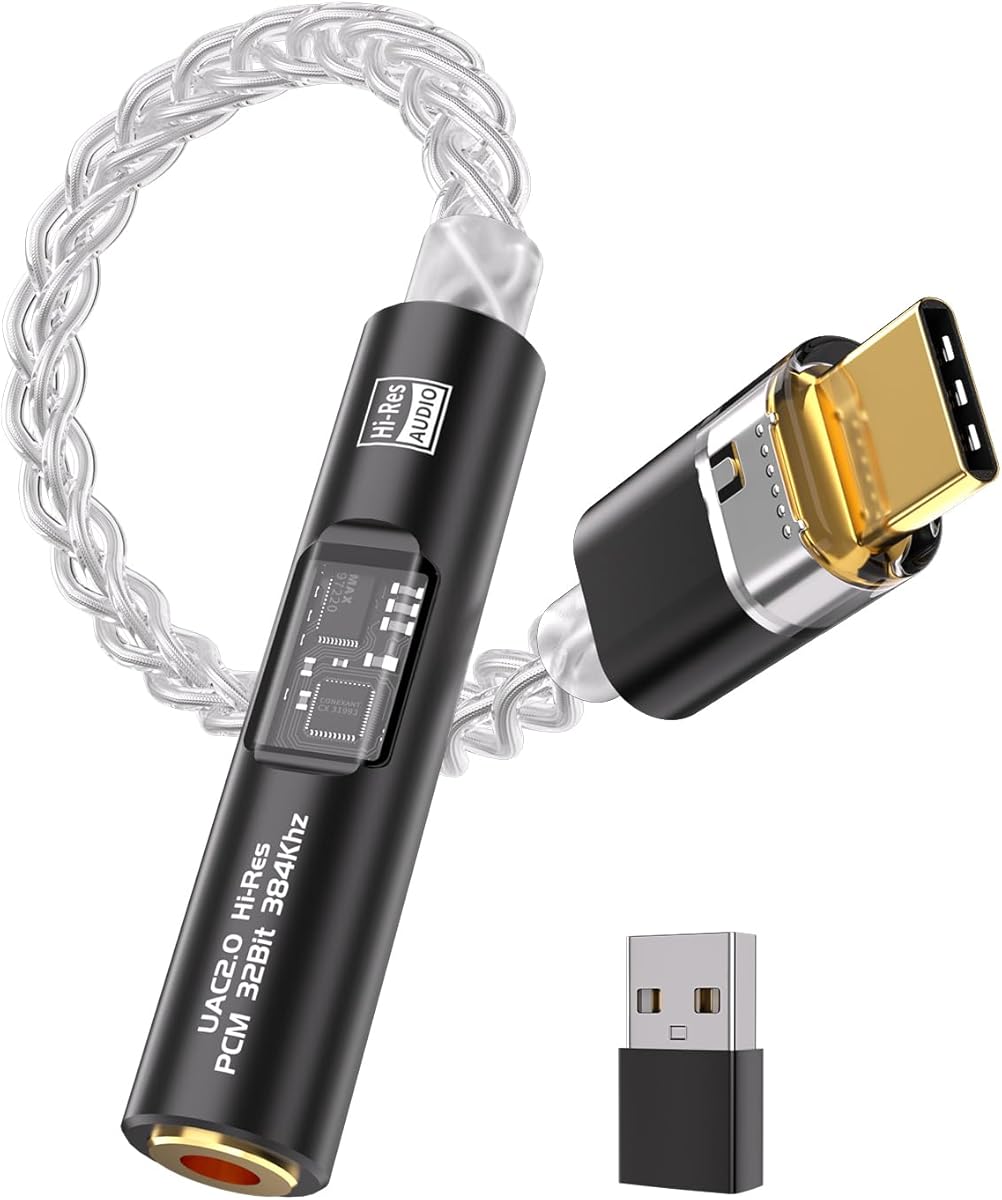
The USB C to 3.5mm CX31993 and MAX97220 adapter has a 4.5 rating and targets listeners seeking a capable upgrade at a modest entry point. It combines two named decoding chips, supports PCM up to 32bit/384kHz, and includes a USB-A adapter so it can work with more than only modern USB-C computers and phones.
We may earn a commission when you buy through this link, at no additional cost to you.
Its technical claims extend beyond basic decoding. The manufacturer lists THD+N as low as -95dB, signal-to-noise ratio above 115dB, dynamic range above 111dB, and a frequency response of 20Hz–40kHz. Output power is specified at 63mW into 32 ohms, while the stated 16–600 ohm impedance range suggests suitability for sensitive IEMs and many over-ear headphones.
The CNC-anodized aluminum housing and eight-strand single-crystal copper cable with silver plating and gold-plated connectors are designed to improve durability and reduce interference. The main compromise is the single 3.5mm output, which means users with balanced-only IEM cables cannot use the adapter without an additional cable or converter. App control and a battery are also absent.
This adapter makes the most sense for a single-ended IEM system used with USB-C or USB-A sources, especially when a full DAC/amp would be unnecessary. Its combination of dual chips, high-resolution support, and low-distortion claims gives it an attractive feature set for entry-level audiophiles. It is less suitable for buyers who specifically need 4.4mm balanced output or physical volume controls.
The included USB-A adapter broadens compatibility, while the single-ended 3.5mm output covers most conventional IEM cables. It is a straightforward way to add dedicated decoding without adopting a more complex portable system.
Published noise, dynamic-range, and distortion figures suggest a clean signal path. The 63mW output at 32 ohms also provides more drive than many minimalist adapters aimed exclusively at easy-to-power earphones.
We may earn a commission when you buy through this link, at no additional cost to you.
The iFi hip-dac3 earns a 4.4 rating and is the most feature-complete premium DAC in this group. It combines a true balanced circuit, 400mW output into a 32-ohm load, a rechargeable battery, two USB-C ports, high-resolution format support, and several analog and gain-related controls. That makes it more than a simple USB-C adapter.
We may earn a commission when you buy through this link, at no additional cost to you.
The internal 2200mAh battery provides a stated 7–10 hours of playtime, with the supplied information also mentioning up to 12 hours in the product title. Two USB-C ports simplify cable routing and allow simultaneous charging. Audio support includes PCM and DXD up to 384kHz, DSD from 2.8MHz through 12.4MHz, and full MQA decoding, with LEDs identifying the incoming format and sample rate.
Its output stage is designed to minimize distortion while driving a broad range of headphones, with up to 400mW into 32 ohms. Controls include an iEMatch switch for sensitive earphones, PowerMatch for source matching, and XBass analog enhancement. These features add flexibility, although they also make the device less immediately simple than a plug-and-play adapter.
The hip-dac3 is ideal for frequent travelers, listeners with both sensitive IEMs and more demanding headphones, and anyone who wants a battery-powered DAC that can operate independently of a phone. It is a particularly strong choice for balanced IEM users. Buyers who only need a lightweight passive dongle may find the larger body and advanced controls excessive, but the feature set justifies its premium positioning.
A true balanced circuit and 400mW output at 32 ohms give the hip-dac3 ample authority. This is useful for IEMs that benefit from more current or for users who want one portable unit to cover several wired headphones.
The iEMatch and PowerMatch controls are designed to help users match output behavior to different earphones and sources. XBass offers a separate analog bass adjustment for listeners who want a fuller presentation.
We may earn a commission when you buy through this link, at no additional cost to you.
The BZINK USB C to 3.5mm adapter receives a 4.4 rating and combines CX31993 and MAX97220 decoding chips in a compact wired design. It supports PCM up to 32bit/384kHz and carries Hi-Res Gold Label certification, making it an appealing option for listeners who want more capable decoding without a large portable unit.
We may earn a commission when you buy through this link, at no additional cost to you.
The cable uses eight-strand, 4N-purity single-crystal copper with silver plating, while the adapter body is made from anodized aviation-grade aluminum alloy. These materials are intended to improve durability and maintain stable transmission. The included USB-A adapter broadens compatibility with laptops, desktops, Android devices, USB-C iPhones, iPads, MacBooks, and car stereos.
Unlike more elaborate DACs, this model offers no balanced output, internal battery, EQ interface, or documented hardware controls. It is therefore best viewed as a refined 3.5mm adapter rather than an all-purpose portable listening hub. Users who need microphone handling or button controls should check the device's exact behavior and connector standards before ordering.
For a conventional single-ended IEM, the BZINK adapter combines a strong cable and housing with high-resolution decoding at a modest price. It works particularly well for travel and office use because it requires little space and draws power directly from the source. It is less suitable as the central solution for a balanced system, but it covers the needs of many entry-level users well.
The aluminum housing and reinforced multi-strand cable are intended to withstand repeated handling. A slim profile also makes the adapter convenient to keep in a pocket, laptop sleeve, or travel pouch.
The included USB-A adapter removes one common source of frustration when switching between USB-C and legacy USB-A equipment. Compatibility with computers, phones, tablets, and compatible car systems broadens its daily usefulness.
We may earn a commission when you buy through this link, at no additional cost to you.
The Linsoul Kiwi Ears AD1 is a compact USB-C-to-3.5mm DAC cable with a 4.3 rating. It uses a KT02H20 chip, supports PCM up to 32bit/384kHz, and lists -85dB THD+N with 100dB dynamic range. Its appeal lies in a simple, cable-like design that can move easily between a phone, tablet, or laptop.
We may earn a commission when you buy through this link, at no additional cost to you.
The 3.5mm female socket is CTIA-compliant and supports compatible Android headphone controls, including volume, playback, and call handling when used with monitor headphones that have compatible buttons and microphones. It does not support OMTP, TS, or TRS microphone standards, so verifying the wiring of an unusual headset is important. The cable requires no software or drivers.
Metal-coated connectors and a reinforced structure are designed to withstand twisting, pulling, and repeated plugging. Compared with a rigid dongle, it can be easier to route between a source and pocket. Its limitation is the absence of a balanced connection, meaning it cannot directly serve IEMs whose cables terminate exclusively in 4.4mm.
The AD1 is a good fit for Android users who want a dedicated decoder and wish to retain compatible wired headphone controls. It also works as a lightweight backup for laptops or tablets with USB-C. For balanced systems, sensitive IEMs that need substantial output power, or users who want independent volume control, one of the more powerful DAC/amp models will be a better match.
Unlike many simple DAC cables, the AD1 is designed to preserve compatible inline volume, playback, and call functions. That makes it particularly useful with wired monitor IEMs that include a remote and microphone.
The cable format is compact and requires no battery or app. It is easy to carry as a daily companion for USB-C Android phones and compatible computers.
We may earn a commission when you buy through this link, at no additional cost to you.
The MOONDROP Dawn PRO 2 has a 4.4 rating and stands apart through its combination of dual CS43198 DAC chips, substantial output voltage, balanced connectivity, and a professional app-based equalizer. It is designed for listeners who want more than basic decoding and prefer to shape the result directly from a phone or computer.
We may earn a commission when you buy through this link, at no additional cost to you.
The updated MOONDROP app provides parametric equalization with control over filter type, frequency, gain, and Q value. It also includes a headphone frequency-response database for reference. Audio hardware includes two Cirrus Logic CS43198 chips, three independent low-dropout regulators, and a separate crystal oscillator, all intended to support precise decoding, low distortion, and efficient operation.
Its 4Vrms output voltage and 124mW per channel at the specified load provide useful driving capability without relying solely on very high power. The aluminum housing uses CNC machining, anodizing, and strategically placed vents for heat dissipation. The main trade-off is that the EQ and tuning features depend on the app, and the supplied information does not identify an internal battery.
The Dawn PRO 2 is most attractive to users who want balanced IEM performance plus detailed digital tuning. It suits listeners willing to experiment with curves, compare references, and adjust the target through software. Those wanting a completely passive experience may prefer the Allegro Mini, while travel listeners needing battery operation should look toward the iFi hip-dac3.
The app allows precise changes to filter type, frequency, gain, and Q. Its headphone response database also gives users a practical reference when creating a target rather than adjusting the EQ entirely by intuition.
Separate 3.5mm and 4.4mm outputs support different earphone cables, while the 4Vrms specification indicates ample voltage headroom. Dual CS43198 chips and separate power regulation support a refined implementation.
We may earn a commission when you buy through this link, at no additional cost to you.
The MOONDROP Echo-A has a 4.1 rating and provides a simple USB-C DAC/amplifier for conventional wired earphones. It supports hardware decoding up to 32bit/384kHz, includes a 3.5mm output, and is designed for use with compatible computers, Android devices, and iOS devices without additional drivers.
We may earn a commission when you buy through this link, at no additional cost to you.
Its integrated high-resolution audio SoC combines processing and amplification functions, while the manufacturer reports THD+N as low as 0.01% and signal-to-noise ratio up to 100dB. Online controls and microphone support are included, making it relevant to listeners who use compatible wired IEMs for calls as well as music. The supplied information also references OMTP support.
The trade-off is its relative simplicity. There is no balanced output, internal battery, app, or documented analog enhancement system. Some of those omissions are minor for a first dedicated DAC, but they limit its appeal for enthusiasts who want flexible output options or software control. Its 3.5mm connection also means users with balanced-only cables will need a different solution.
The Echo-A is a practical option for a beginner who wants a cleaner and more capable phone connection than a bundled adapter. It also makes sense for mobile calls and simple music playback where 3.5mm and microphone support matter. Among the available choices, it offers fewer advanced features, so experienced users should compare it with the richer feature sets of the iFi, Dawn PRO 2, or M3 Ultra.
Compatible microphone and online-control support makes the Echo-A more practical than a basic output-only dongle. This is useful for IEM users who alternate between music, meetings, and calls.
Hardware decoding to 32bit/384kHz and a reported 100dB signal-to-noise ratio provide a clear upgrade path. The single-ended format keeps the design approachable for standard 3.5mm IEM cables.
We may earn a commission when you buy through this link, at no additional cost to you.
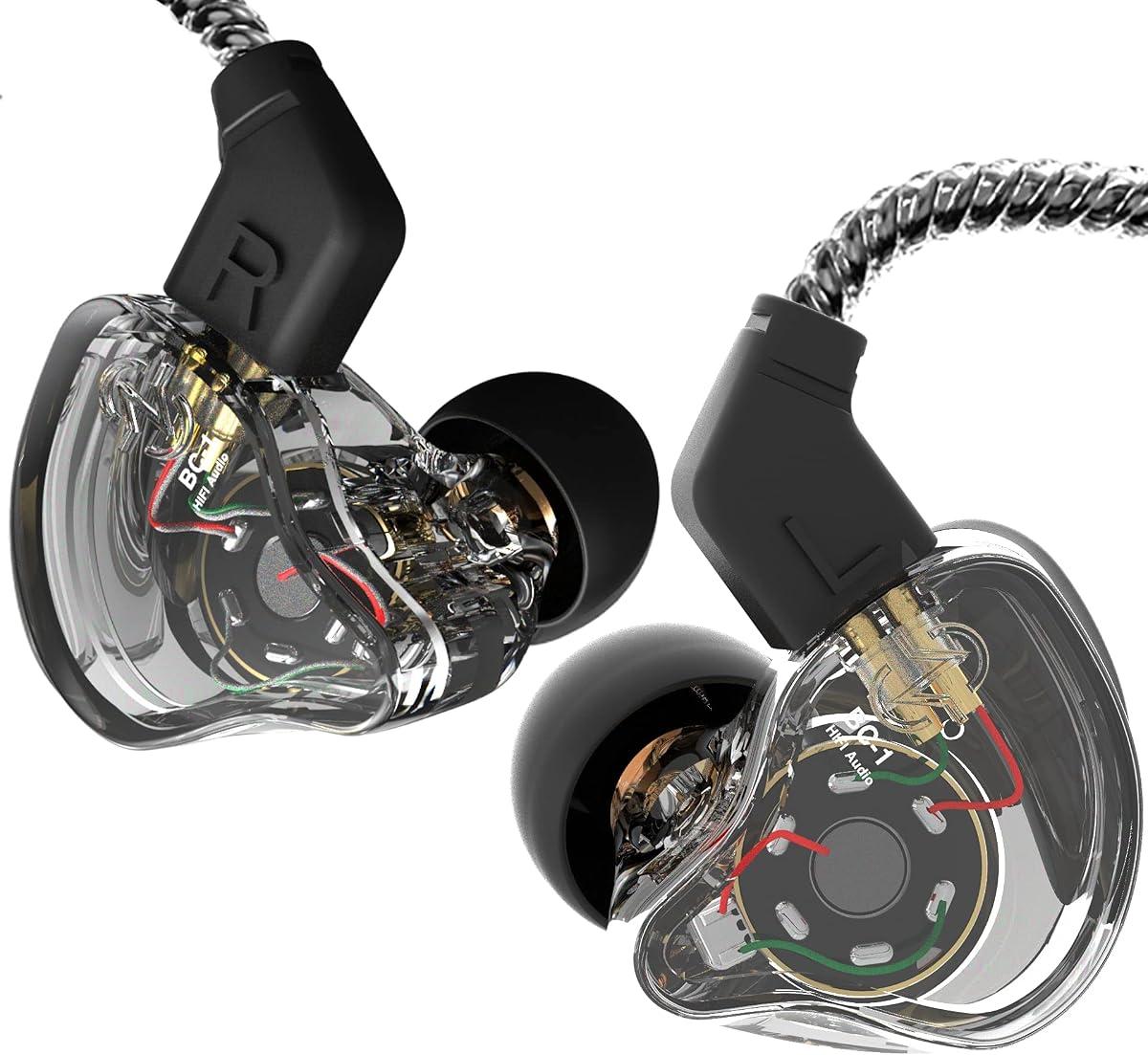
The CCZ Yinyoo Melody is not a DAC, but its inclusion is useful because it represents the kind of wired IEM a new portable DAC buyer may already own. It has a 4.4 rating, a single dynamic driver paired with a balanced armature, and a conventional 3.5mm connection suited to most of the adapters and amps in this guide.
We may earn a commission when you buy through this link, at no additional cost to you.
The housing uses a PC cavity with UV varnish, while the supplied ear tips use soft TPE material. A wrap-around ear fin and memory-style cable arrangement help keep the lightweight earpieces secure. Three pairs of silicone tips are included, and the detachable two-pin connection allows the original cable to be replaced with another compatible cable.
Its sound description emphasizes a bright, clear presentation with deep bass and transparent detail, while the product is positioned for musicians, singers, stage use, and studio work. The cable uses four-core 4N oxygen-free copper. The 3.5mm plug can connect to Android phones, Windows phones, MP3 and MP4 players, music speakers, and other compatible 3.5mm devices.
The Melody is best understood as a practical earphone rather than one of the guide's decoding devices. It is a relevant pairing target for the Allegro Mini, Echo-A, AD1, and other single-ended DACs. Listeners wanting a complete portable system can use it to evaluate whether dedicated decoding is worth adding, while those seeking balanced connectivity or more elaborate tuning should examine the Nimbus.
At 2.3 grams per earpiece, the Melody emphasizes low weight and a stable fit. Its standard 3.5mm connection makes it an uncomplicated match for the guide's more affordable DAC adapters.
The detachable two-pin socket allows users to explore compatible replacement cables. That can make it easier to integrate the IEM with different sources, though the included connection remains single-ended.
We may earn a commission when you buy through this link, at no additional cost to you.
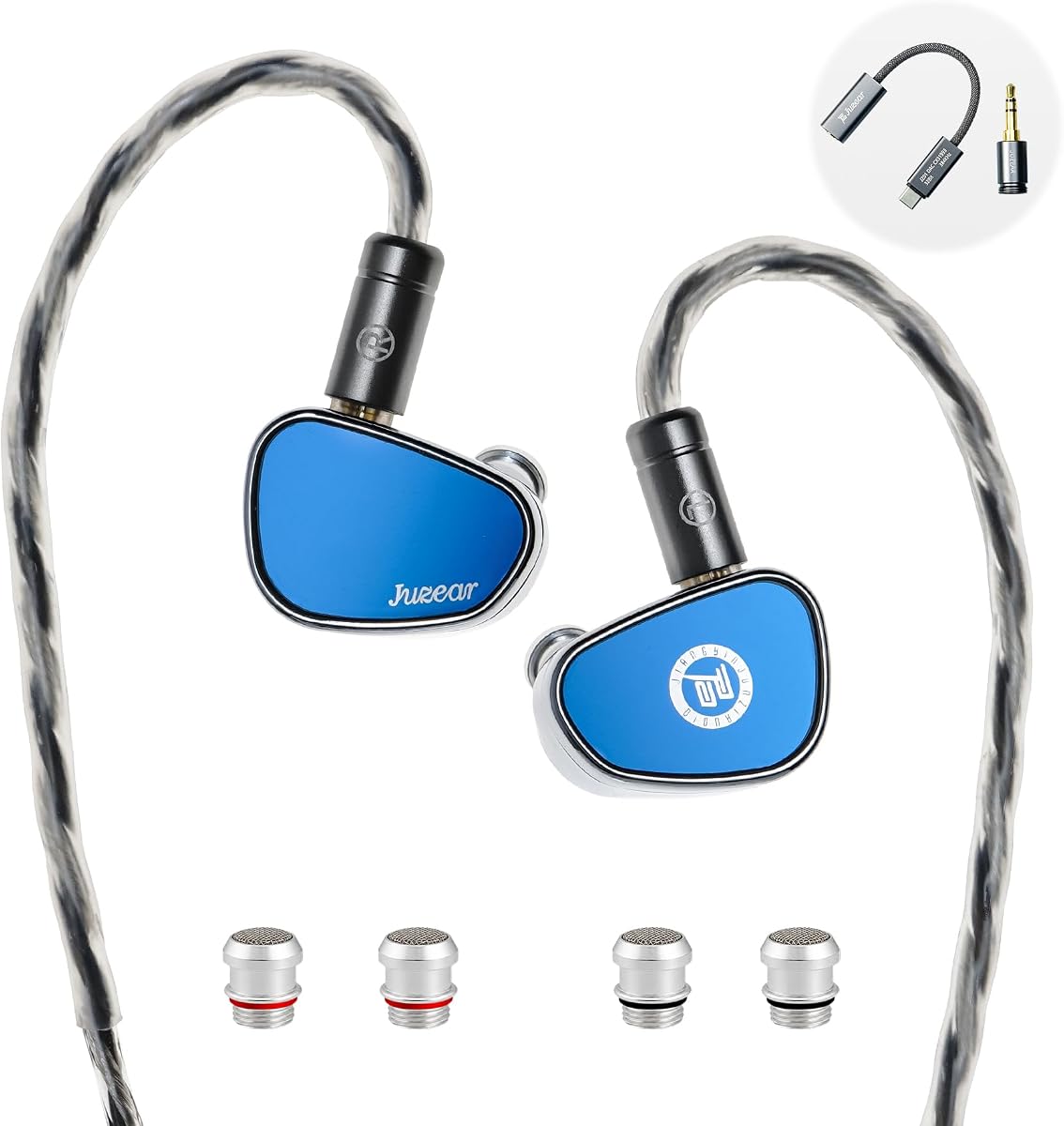
The HiFiGo JUZEAR AERO Nimbus is another IEM rather than a DAC, and it illustrates the importance of checking the earphone's cable requirements before selecting a converter. It includes a 10mm MACCD composite dynamic driver, a detachable 0.78mm two-pin cable, and interchangeable 3.5mm and 4.4mm plugs.
We may earn a commission when you buy through this link, at no additional cost to you.
Its standout feature is a set of three interchangeable tuning nozzles. The Balanced option is intended for everyday use, the Bright option for greater clarity and instrument detail, and the Bass option for more low-end impact. This allows the same earphone to cover different genres or listening preferences without relying on digital equalization.
The CNC-machined zinc alloy shells and iridescent glass faceplate give the Nimbus a durable, refined appearance, while a stated weight of 9.2 grams and passive isolation of up to 26dB support longer sessions. The package includes multiple silicone tips, a silver-plated single-crystal copper cable, interchangeable plugs, a protective pouch, and a manual.
The Nimbus is a strong reference for choosing a DAC because its 4.4mm plug can reveal the difference between balanced and single-ended sources. The M3 Ultra, Allegro Mini, Dawn PRO 2, and iFi hip-dac3 all provide 4.4mm output, while the Nimbus can also use its 3.5mm plug with simpler adapters. Because no numerical rating was supplied, the product should be judged on its documented features rather than a star score.
Swapping the tuning nozzles gives the Nimbus a level of flexibility that software-based EQ does not exactly replicate. It can move from balanced everyday listening toward brighter detail retrieval or stronger bass emphasis.
The included 3.5mm and 4.4mm plugs make the Nimbus useful for comparing outputs. It can reveal whether a DAC's balanced connection sounds more convincing for a particular source and recording.
We may earn a commission when you buy through this link, at no additional cost to you.
The right DAC depends on connector compatibility, output power, format support, power requirements, and how much control you want. Begin with your IEM's cable and sensitivity, then compare output, decoding, and convenience features rather than focusing only on headline resolution figures.
Begin with the plug on your IEM cable. A 3.5mm single-ended connection is broadly compatible with phones, laptops, DACs, and headphone amps, while a 4.4mm balanced cable requires a DAC with a matching balanced output. The Allegro Mini, M3 Ultra, Dawn PRO 2, and iFi hip-dac3 support 4.4mm, whereas the Echo-A, AD1, and the two dual-chip adapters are single-ended designs. A balanced port alone does not guarantee a balanced signal path, so check the detailed specifications and cable wiring before purchase.
Very sensitive IEMs can sound distorted or uneven at excessive volume, while demanding headphones may need more voltage or current than a basic dongle provides. Look for output power stated at a relevant load such as 32 ohms, along with a supported impedance range. The M3 Ultra offers 460mW single-ended and 480mW balanced output, while the iFi provides 400mW at 32 ohms. The CX31993 and MAX97220 adapter claims 63mW at 32 ohms and a 16–600 ohm range. These figures matter more than raw wattage when they are presented with a clear test condition.
PCM 32bit/384kHz appears across many of the devices, and the more advanced models also support DSD up to DSD256. Higher supported rates do not automatically produce a more noticeable improvement; the source, playback application, operating system, and music file must all support the format. The M3 Ultra, hip-dac3, and Dawn PRO 2 cover the broadest stated format combinations, while the AD1 and Echo-A focus on PCM. If your library is predominantly high-resolution PCM, DSD support is less important than stable everyday operation.
Low background noise and low total harmonic distortion plus noise are especially important with ultra-sensitive IEMs because small unwanted signals can be heard clearly. Published claims range from -95dB THD+N on the CX31993 and MAX97220 adapter to 0.004% at 32 ohms for the Allegro Mini and 0.0003% on the M3 Ultra's balanced output. These percentages and decibel figures are not perfectly interchangeable, so compare them within the same type of measurement rather than treating every number as directly equivalent.
A passive dongle draws power from the phone, tablet, or computer and is usually the smallest option. A battery-powered DAC such as the hip-dac3 can continue playing when the source is empty, making it more practical for travel and long listening sessions. The M3 Ultra, Dawn PRO 2, Echo-A, Allegro Mini, AD1, and dual-chip adapters do not list an internal battery in the supplied information. Consider size, cable strain, heat, pocketability, and the amount of time you expect to listen away from a powered source.
Physical controls, inline remotes, and app-based equalization can materially improve daily usability. The AD1 supports compatible Android headphone controls, the Echo-A supports microphones and online control, and the hip-dac3 provides iEMatch, PowerMatch, and XBass functions. The Dawn PRO 2 goes further with a professional parametric EQ interface and a headphone response database. Check microphone standards carefully: the AD1 is CTIA-compatible and does not support OMTP, TS, or TRS microphone devices, so unusual headsets may not function as expected.
Portable audio equipment lives in pockets, bags, and cable tangles, so connector strength and housing material deserve attention. The Allegro Mini uses an all-aluminum body, the hip-dac3 uses an aluminum frame, the Dawn PRO 2 has an anodized aluminum housing with vents, and the dual-chip adapters use anodized aluminum shells with upgraded cables. A compact wired adapter may integrate more easily into a phone case, while a rigid dongle can be easier to operate. Look for reinforced USB-C connectors and a short, manageable lead rather than judging only by appearance.
Some listeners prefer the uncolored presentation associated with a dedicated digital converter, while others enjoy the harmonic character of a tube design. The M3 Ultra explicitly uses a genuine JAN6418 tube to provide a warmer, more organic presentation, with protections intended to reduce microphonics. The iFi adds XBass as an analog enhancement, and the Dawn PRO 2 offers granular digital EQ. For transparent adjustment, the more basic adapters keep the signal path simple. The best choice is the one whose controls help without overwhelming your preferred workflow.
Begin by confirming that the source device has a compatible USB-C port and that the playback application outputs audio to the DAC. Connect the IEM to the appropriate 3.5mm or 4.4mm socket, start at a low volume, and then select a familiar recording before increasing the level. For balanced cables, verify that the pin configuration matches the DAC rather than assuming every visually similar 4.4mm plug is wired identically.
Use high-resolution files and formats only when the source, application, and DAC all support them. A 32bit/384kHz file will not automatically sound better if it is being resampled or decoded without the appropriate support. For a battery-powered unit such as the hip-dac3, check the charging state and use the appropriate USB-C cable. Avoid pushing sensitive IEMs to excessive levels, particularly when using an amplifier with high output power and no gain adjustment.
To maintain the connection, avoid sharply bending the USB-C plug or pulling the IEM cable from the socket. Keep the device away from moisture, pocket grit, and excessive heat, and clean the headphone jack with a soft, dry tool designed for contacts. Tube-based products such as the M3 Ultra deserve careful transport because physical shocks can create microphonics even when the product's shock protection is working as intended.
Not always. A modern phone, laptop, or digital audio player may provide adequate output for easier-to-drive earphones, particularly when volume control is precise and the device has a good headphone jack. A dedicated DAC becomes more useful with high-impedance IEMs, very sensitive models, balanced cables, unreliable phone output, or a desire for higher-resolution decoding and stronger amplification.
No, although a properly implemented balanced output can offer advantages when the entire chain is balanced. Both the DAC and the IEM cable must be compatible, and the source must provide a balanced digital signal. If your IEM uses a standard 3.5mm cable, connecting it to a 4.4mm DAC output does not automatically produce balanced playback.
Sensitive IEMs usually benefit from a lower, more controlled output level rather than maximum amplifier power. Very high-power DACs can be useful when the same unit must also drive demanding headphones, but sensitive models may need volume attenuation or gain reduction. The M3 Ultra and hip-dac3 offer substantial power, while their controls should be approached carefully with ultra-sensitive earphones.
No. The source must contain a compatible high-resolution file, the playback application must output it correctly, and the DAC must decode it without resampling or compatibility problems. Even with all those conditions met, audible improvement depends on the recording, comparisons, listener, and rest of the system rather than resolution alone.
Yes, provided the phone supports USB-C audio output and the DAC is compatible with that device. The Allegro Mini specifically lists broad modern Android support, while the dual-chip adapters and AD1 emphasize USB-C and USB-A compatibility. Check operating-system requirements, microphone standards, and whether the phone supports audio through a USB-C adapter.
A DAC cable is a lightweight passive adapter that typically provides one 3.5mm output, draws power from the source, and has few or no controls. A portable DAC may add balanced output, stronger amplification, internal charging, status indicators, gain controls, analog adjustments, or app-based equalization. The Linsoul AD1 illustrates the cable approach, while the hip-dac3 shows how much more a full portable unit can offer.
Only if you regularly use DSD files or want a DAC capable of accepting a DSD signal from your source and software. Most listeners can focus on reliable PCM playback, correct volume control, suitable output power, and a compatible connection. DSD256 support on the M3 Ultra, hip-dac3, and Dawn PRO 2 is useful, but it is not essential for every listening setup.
Check the IEM manufacturer's recommended output requirements and compare them with the DAC's published performance at a relevant impedance. High-impedance earphones may need more voltage, while ultra-sensitive IEMs may need controlled, low-level output. The CX31993 and MAX97220 adapter lists a 16–600 ohm range, but the stated 63mW at 32 ohms is the more concrete figure for direct comparison.
The HiFiGo M3 Ultra is the leading enthusiast choice in this lineup because its genuine JAN6418 tube, 460mW single-ended output, 480mW balanced output, and high-resolution decoding create a distinctive portable system. The iFi hip-dac3 is the most versatile premium option, offering true balanced power, a battery, dual USB-C ports, and multiple sound-matching controls. The Linsoul Allegro Mini stands out as the best budget pick, combining 3.5mm and 4.4mm outputs with PCM 384kHz and DSD128 support in a compact body.
Start with compatibility rather than specifications. Confirm whether your IEM uses 3.5mm or 4.4mm, whether you need a microphone or inline controls, how sensitive the earphone is, and whether the source supplies enough output. Then choose based on power, format support, battery needs, and whether you prefer a transparent converter, tube warmth, analog adjustments, or app-based equalization. The CCZ Yinyoo Melody and HiFiGo JUZEAR AERO Nimbus are useful references because they illustrate the two common cable ecosystems.
Finally, verify current specifications, included accessories, device support, and the current price before ordering. Portable audio products can change through firmware updates, revised accessories, new connector standards, and revised manufacturer claims. A careful compatibility check and realistic expectation of the DAC's controls will lead to a more satisfying result than choosing solely by the largest resolution number on the package.