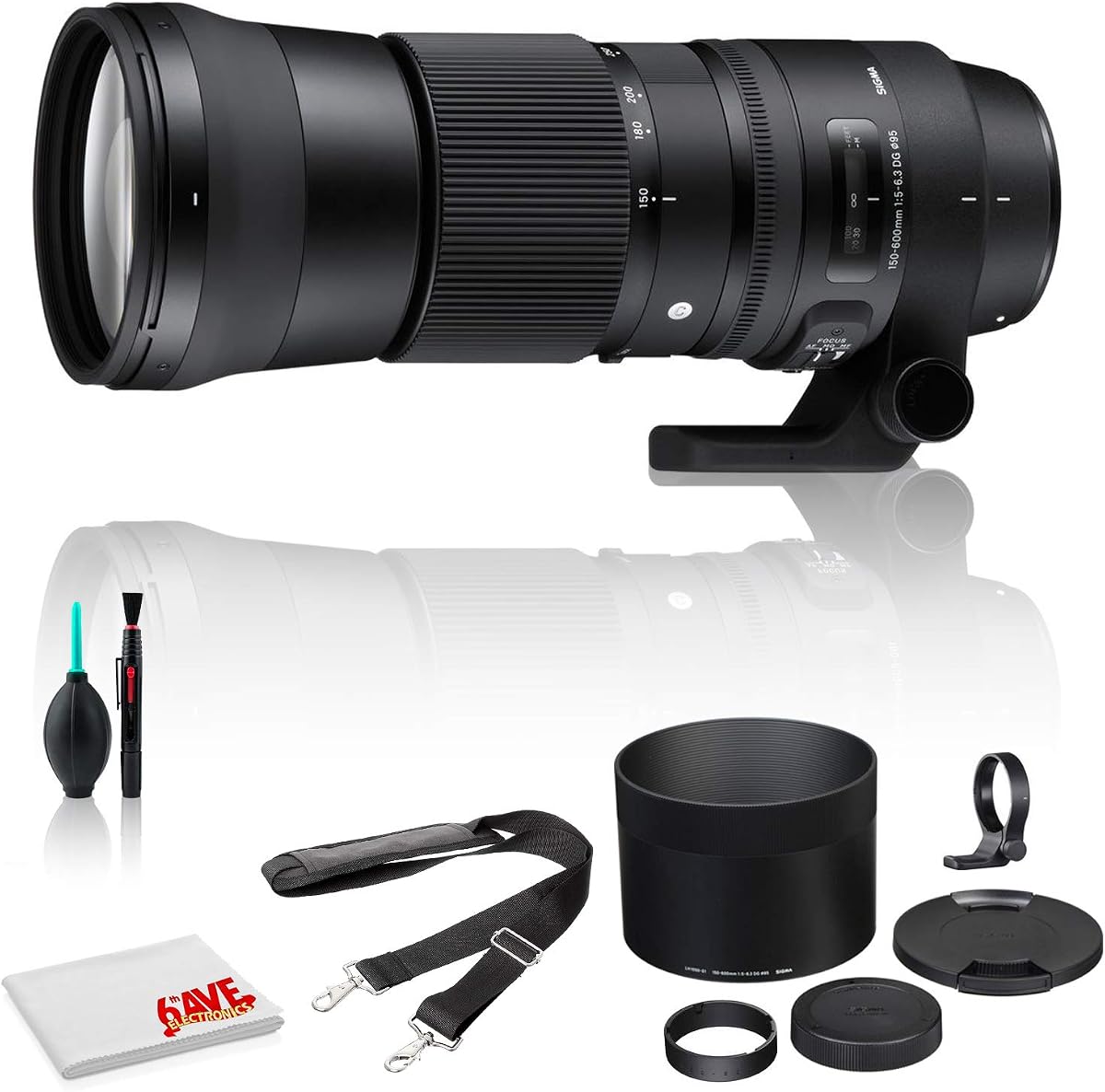
Sigma 150-600mm f/5-6.3 DG OS HSM
4.5Editor score
150-600mm focal range
Constant f/5-6.3 aperture
Optical stabilizer included
Discover the best camera lens for long distance wildlife, compared for reach, stabilization, autofocus, portability, and field usability by system.
A camera lens for long distance wildlife must combine reach, dependable autofocus, effective stabilization, and a practical aperture. Those qualities determine whether distant birds remain sharp while flying, whether mammals can be isolated without losing detail, and whether a long lens remains manageable during hours in the field.
This guide compares ten telephoto zoom lenses for Canon and Nikon systems, including professional, enthusiast, compact, manual-focus, standard, and renewed options. The comparison considers focal range, maximum aperture, stabilization, focusing behavior, compatibility, handling characteristics, and the needs of wildlife photographers.
Each selection highlights a different approach, from highly portable glass to extreme manual-focus reach. The top three provide the strongest overall balance for most situations, while the remaining options serve particular systems, budgets, and shooting styles. Prices and availability can change, so confirm current listings before purchasing.
4.5Editor score
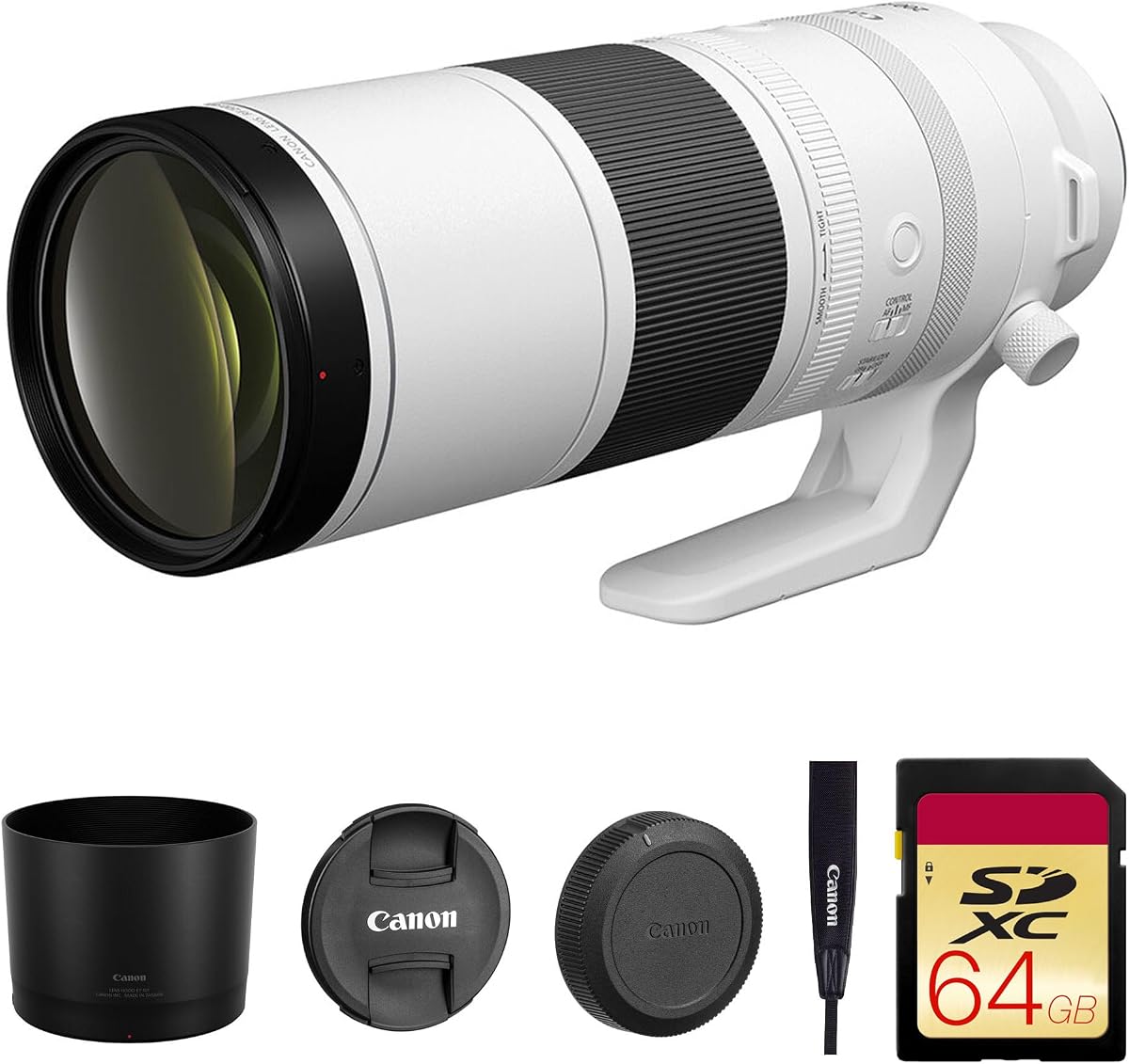
4.7Editor score

4.6Editor score
The comparison below places all ten lenses by focal range, aperture, stabilization, focusing system, mount, and intended wildlife use, making it easier to identify the option that matches your camera and field priorities.



The Canon RF 200-800mm f/6.3-9 IS USM Bundle receives a 4.7 rating and stands out as the most complete high-reach option in this guide. It combines a broad 200-800mm range with image stabilization, a fast USM autofocus system, and a design Canon describes as lightweight and field-ready. The bundle also includes a 64GB SDXC memory card and carries Canon USA Authorized positioning.
We may earn a commission when you buy through this link, at no additional cost to you.
Its principal strength is native reach. An 800mm endpoint gives wildlife photographers room to isolate birds in open country, frame predators across valleys, and enlarge distant mammals without depending on a teleconverter. The built-in stabilization supports steadier handheld framing and tracking, while the USM motor is designed to acquire moving subjects quickly and quietly. Compatibility with Canon RF-mount bodies makes it a natural choice for EOS R-series users.
The trade-off is the variable f/6.3-9 maximum aperture, which is less generous than a constant f/4 design. That can affect light gathering and depth of field in dim conditions, especially as the focal length increases. It also remains a substantial lens rather than a lightweight prime, so support may be worthwhile for long sessions. These limitations are understandable for the unusual amount of reach contained in a relatively compact zoom.
This is the recommendation for most Canon RF wildlife photographers who need to cover everything from medium-distance songbirds to distant, small subjects. The bundle adds practical value without changing the core lens specification. It is especially compelling for birders and travel photographers who would rather carry one zoom than switch between shorter glass and a much heavier super-telephoto setup.
Starting at 200mm provides a practical working range for larger wildlife, while extending to 800mm handles distant birds and minute details. The 4x zoom span also lets photographers reframe quickly when a subject changes direction or when environmental context becomes important.
Built-in image stabilization helps reduce the visible effects of camera shake at long focal lengths. It is especially useful when tracking animals without a tripod, although a monopod or tripod can still improve consistency during demanding field sessions.
We may earn a commission when you buy through this link, at no additional cost to you.
This Canon RF 200-800mm f/6.3-9 IS USM has a 4.6 rating and delivers the same major advantage as the bundle version: substantial 800mm reach in a zoom designed for comfortable handheld use. The product information calls it the world's first AF super-telephoto zoom with an 800mm telephoto end, positioning it as a specialized tool for wildlife, nature, and outdoor action.
We may earn a commission when you buy through this link, at no additional cost to you.
The 200-800mm range gives photographers an efficient way to locate and isolate subjects. A 4x focal-length span reduces the need to change lenses, and Canon emphasizes that its optimized optical design uses the RF mount to maintain image quality throughout the zoom range. The autofocus system supports moving wildlife, while the relatively compact construction makes the lens more practical for travel and handheld bird photography.
Canon also states that the lens is compatible with its RF 1.4x and 2x extenders at all focal lengths. That creates potential for still more reach, although extending the system can reduce light and increase demands on stabilization and focusing. The f/6.3-9 aperture is the principal limitation, particularly when light is limited or maximum subject isolation is desired.
Choose this lens when you want the reach of a super-telephoto without committing to a much heavier conventional 600mm or 800mm prime. It is best suited to Canon RF mirrorless photographers who value zoom flexibility, quick subject acquisition, and manageable size. The bundle version may be more convenient for buyers who also need storage media.
The broad focal-length range allows a photographer to move from a closer view of a deer to a tight composition of a distant eagle without changing lenses. This flexibility is valuable during unpredictable wildlife encounters where distance and framing can change within seconds.
The RF mount is central to the lens's optical and physical design. Its compact zoom construction demonstrates how modern full-frame mirrorless platforms can offer extended reach without the footprint associated with many traditional super-telephoto lenses.
We may earn a commission when you buy through this link, at no additional cost to you.
The Sigma 150-600mm f/5-6.3 DG OS HSM Contemporary earns a 4.5 rating and is the premium choice here for photographers who want a broad working range without moving to the 800mm end. Its 150mm starting point gives more framing flexibility than a traditional 200mm super-telephoto, making it useful for landscapes containing animals, group portraits, and environmental wildlife compositions.
We may earn a commission when you buy through this link, at no additional cost to you.
The aperture begins at f/5, which is more light-gathering than the variable f/6.3 openings found in some longer Canon RF zooms. Sigma's optical design includes one FLD and three SLD elements, while the Hyper Sonic Motor provides automatic focusing. An optical stabilizer with an accelerometer helps control camera shake, an important feature when handholding a 600mm lens.
This lens's main inconvenience is its physical scale. A zoom covering 150-600mm is naturally substantial, and the front end may place a noticeable load on the camera when mounted on a suitable support. The lens is also specified for the Canon EF mount, making it relevant to full-frame EOS DSLRs and compatible APS-C Canon cameras rather than RF mirrorless bodies.
The Sigma is a strong all-around wildlife and nature zoom for photographers who value both reach and framing flexibility. Its useful accessory bundle and broad range set it apart from extreme manual-focus alternatives. It is best for birding, open-country mammals, and wildlife trips where a single dependable zoom must cover many compositions.
The 150mm end is shorter than the 200mm starting point of many super-telephoto lenses. Photographers can include more habitat, photograph groups, and react when a subject approaches, then zoom smoothly to isolate it as it moves farther away.
One fluorite-like SLD designation and three conventional SLD elements are part of Sigma's approach to controlling optical characteristics across the zoom. The included accelerometer-assisted optical stabilizer works with the lens to improve handheld usability.
We may earn a commission when you buy through this link, at no additional cost to you.
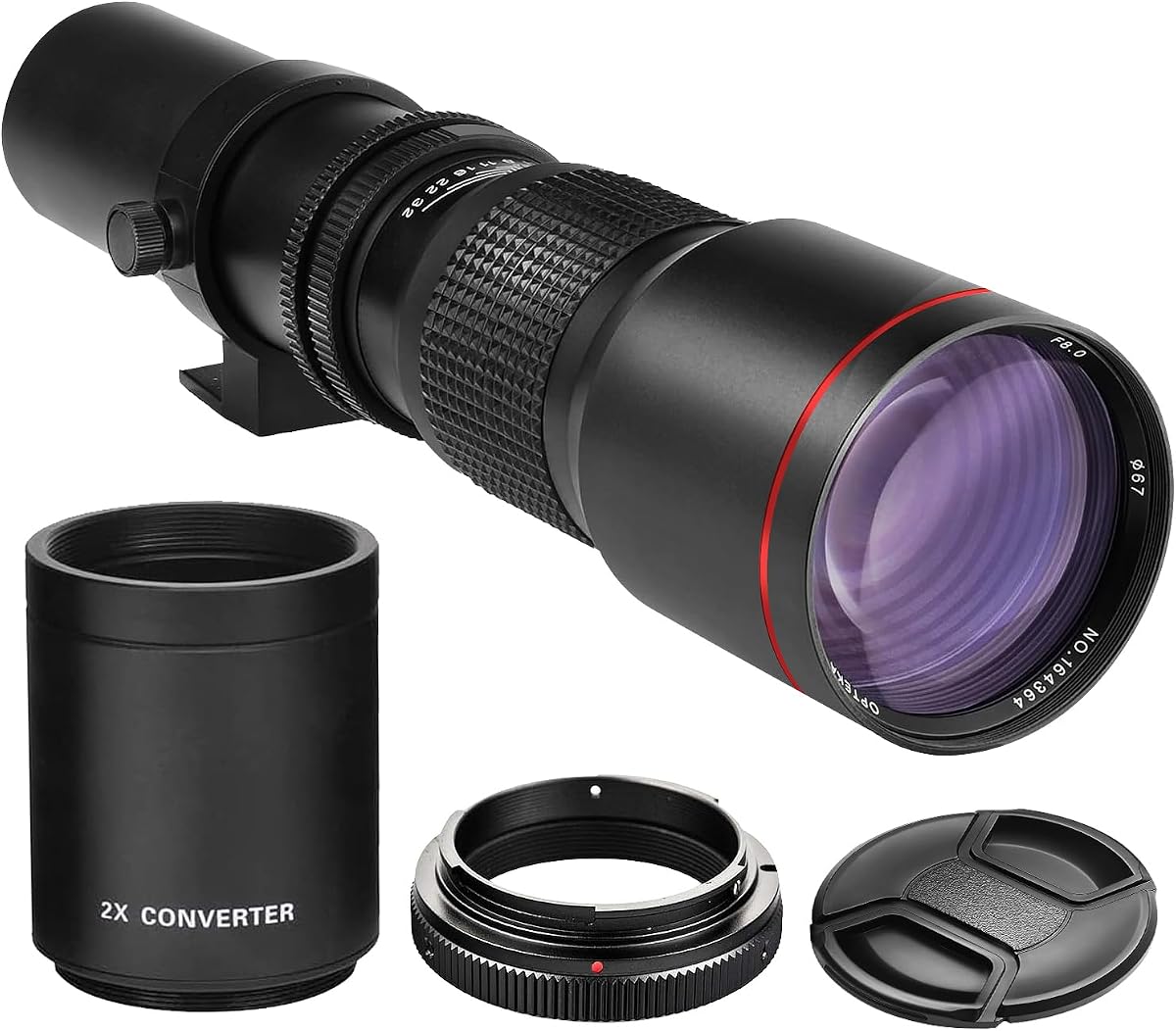
This manual-focus 500mm/1000mm f/8 telephoto has a 4.0 rating and is designed for photographers willing to work methodically to obtain extreme reach. The listed 2x teleconverter can double the lens's power to 1000mm, making it one of the most specialized options for landscapes, celestial subjects, and extremely distant wildlife.
We may earn a commission when you buy through this link, at no additional cost to you.
Its high-index, low-dispersion, multi-coated optical glass is intended to support clarity and detail, while the manual-focus design gives the photographer complete control over focus and aperture. The f/8 aperture is relatively slow, and the 1000mm setting increases the likelihood that a tripod, monopod, or very careful technique will be necessary.
The chief drawback is operational complexity. Fast birds, erratic mammals, and distant subjects can be difficult to locate and hold with manual focus. The listed camera compatibility is extensive for Canon EF-mount DSLRs, yet users must verify their exact body and lens compatibility before buying. The bundle and included accessories do not change the lens's fundamental manual nature.
This option makes the most sense for a Canon DSLR owner who specifically wants 1000mm-class framing and already understands how to focus and support a manual super-telephoto. For routine birding or handheld action, one of the stabilized autofocus zooms will be easier and more dependable.
The 2x conversion takes the lens from 500mm to 1000mm, providing an enormous amount of subject size in the frame. That magnification is valuable when a bird is tiny against the sky or a distant ridge holds animals too small to frame comfortably with conventional telephoto glass.
Manual focus and aperture control can support precise, repeatable work on stationary subjects. The tradeoff is that moving wildlife requires practice, patience, and a disciplined approach to acquiring focus before the subject leaves the frame.
We may earn a commission when you buy through this link, at no additional cost to you.
The Canon EF 100-400mm f/4.5-5.6L IS USM receives a 4.0 rating and is a professional-style choice for Canon EOS DSLR photographers who value image quality, handling, and a bright aperture. Its 100-400mm range covers wildlife, sports, aviation, and distant action, while compatibility with APS-C bodies provides additional framing reach.
We may earn a commission when you buy through this link, at no additional cost to you.
The optical construction uses one fluorite element, one Super UD element, and four aspherical elements to address chromatic and spherical aberrations. A floating element system is designed to preserve consistency across zoom and focus positions. The ring-type USM delivers quick, quiet autofocus with full-time manual override, and optical stabilization can reduce the appearance of shake by up to two stops.
One particularly useful feature is the dedicated panning stabilization mode, which assists photographers following lateral movement. The removable rotating tripod collar improves balance on a support, and optional 1.4x and 2x teleconverters can extend the reach when conditions justify the additional light and size. The supplied bundle adds a 77mm filter kit and lens cap keeper.
This lens is well suited to professionals or serious enthusiasts who shoot with a full-frame EOS DSLR or compatible APS-C body. Its main limitation is the 400mm native endpoint, which is shorter than the 500mm and 600mm options here. It may be the right choice when aperture, autofocus refinement, and balanced construction matter more than maximum focal length.
The f/4.5-5.6 range provides a meaningful light-gathering advantage over slower super-telephoto zooms. It can support faster shutter speeds and greater depth-of-field control in shade, dawn conditions, or open woodland.
The adjustable zoom tension and position lock help prevent accidental movement, while the rotating tripod collar supports balanced portrait or landscape orientation. These practical touches matter during long wildlife waits where quick lens repositioning can disturb the subject.
We may earn a commission when you buy through this link, at no additional cost to you.
The 420-1600mm f/8.3 manual telephoto zoom has a 4.0 rating and is built around a simple idea: maximize available reach on a compatible Canon DSLR. Its zoom range provides enough magnification for extremely distant wildlife, landscapes, and celestial scenes, giving it a distinct role compared with conventional 400mm or 600mm wildlife zooms.
We may earn a commission when you buy through this link, at no additional cost to you.
The listed specification includes a 62mm filter thread and a 2x teleconverter capability that can extend the zoom to 1600mm. Its f/8.3 aperture is slow, so it is better suited to bright conditions and patient work than fast-moving subjects in low light. Manual focusing requires practice and may make erratic birds difficult to follow.
Compatibility covers a long list of Canon DSLR models, including Rebel, EOS xxD, 5D, 6D II, and 7D II cameras. Buyers should still confirm that the selected body can operate the lens as expected. The product's generic branding and broad specification list provide less assurance of professional refinement than the named L-series and RF models in this guide.
This lens is most appropriate for a photographer who prioritizes magnification over focusing speed and low-light performance. It may be attractive for observatory-style landscapes, distant mountain wildlife, and carefully planned compositions. For everyday bird photography, an autofocus zoom with stabilization will be substantially easier to use.
The 420-800mm native zoom covers long-distance subjects while the listed teleconverter can push the result toward 1600mm. That gives photographers a way to move from conventional telephoto framing into extreme magnification without carrying multiple super-telephoto bodies.
The fixed f/8.3 aperture and manual focus operation make this a specialty tool. Subjects that remain still or move predictably can be approached carefully, while fast, erratic animals will demand a great deal of skill and rapid repositioning.
We may earn a commission when you buy through this link, at no additional cost to you.
The Canon RF 100-400mm f/5.6-8 IS USM has a 4.6 rating and is the most approachable recommendation for mirrorless wildlife photographers who value portability. Covering 100-400mm, it provides enough reach for many birds and mammals while remaining light and easy to carry on trips where every piece of equipment affects stamina.
We may earn a commission when you buy through this link, at no additional cost to you.
Its optical image stabilizer is rated at up to 5.5 stops of shake correction, or up to six stops when paired with an EOS R-series body featuring in-body image stabilization. This layered stabilization support is a major benefit for handheld wildlife work. Canon also specifies high-speed, smooth, quiet autofocus through the Nano USM motor, helping the lens keep pace with moving subjects.
Close-focus performance is another strength. The minimum focusing distance is 2.89 feet at 200mm, while maximum magnification reaches 0.41x at 400mm. These figures make the lens useful for detailed portraits of insects, flowers, and smaller wildlife as well as distant animals. The variable f/5.6-8 aperture can become restrictive in dim conditions, and 400mm is less reach than several competing models.
This is the top budget-oriented pick for Canon RF users who want a compact, stabilized telephoto with dependable autofocus. It is particularly useful for day hikes, backyard observation, and travel where a large 500mm or 600mm lens would be burdensome. It can also serve as a lighter everyday lens in a broader wildlife kit.
A compact 100-400mm zoom is easier to carry and shoulder quickly than a large super-telephoto. That can translate into more shooting opportunities during active wildlife encounters and less fatigue over a full day of observation.
The lens's substantial optical stabilization performance, potentially enhanced by compatible camera IBIS, helps keep distant subjects more stable. It also makes the lens more useful for video and for deliberately framed still images when support is unavailable.
We may earn a commission when you buy through this link, at no additional cost to you.
The Canon EF 75-300mm f/4-5.6 III has a 4.7 rating and remains a practical, lightweight telephoto for Canon SLR photographers. Its 75-300mm range starts wide enough for environmental portraits and extends to a useful 300mm for larger birds and mammals. The lens measures 2.8 inches in diameter and 4.8 inches long while weighing 16.8 ounces.
We may earn a commission when you buy through this link, at no additional cost to you.
Its maximum aperture of f/4-5.6 is relatively bright for the class, which can help when photographing wildlife in shade or under overcast skies. A 4.9-foot closest focusing distance and diagonal angle of view ranging from 32 to 8 degrees make it versatile for subjects at different distances. The improved zoom mechanism is intended to provide smoother zooming than earlier versions.
Image stabilization is explicitly absent, an important consideration at the long end. Camera shake may be more visible in the resulting images, and the autofocus performance reflects an older lens generation. The lens is also limited to 300mm, so very small or distant birds may not fill the frame as effectively as they would through a 500mm or 600mm zoom.
This lens is best for beginners, travel photographers, and Canon DSLR owners who want a small general-purpose telephoto without a large financial commitment. It works particularly well for large animals, casual bird observation, and situations where portability outweighs extreme reach. A monopod can be helpful when working near 300mm.
At 16.8 ounces and only 4.8 inches long, the lens is easy to include in a general camera bag. Its lower burden makes it practical for casual wildlife outings where a large super-telephoto would be inconvenient.
The 75-300mm range can frame medium-sized animals and many perched birds without extreme reach. Because the lens has no optical stabilization, faster shutter speeds or a support remain important at the telephoto end.
We may earn a commission when you buy through this link, at no additional cost to you.
The Nikon AF-S NIKKOR 200-500mm f/5.6E ED VR is the primary Nikon-specific choice in this guide, earning a 4.2 rating for a strong combination of 500mm reach and a constant f/5.6 aperture. It is built for FX sensors and can also be used on DX bodies, where the stated equivalent range becomes 300-750mm.
We may earn a commission when you buy through this link, at no additional cost to you.
Three extra-low dispersion elements help reduce color fringing and chromatic aberrations. The Silent Wave Motor provides rapid, quiet autofocus with full-time manual focus override, and the internal focusing design keeps the lens length relatively stable while focusing. Vibration Reduction is stated at up to 4.5 stops, with a dedicated Sport Mode intended for fast-moving action.
A rotating tripod collar supports balanced use on a tripod or monopod in horizontal and vertical positions. The electromagnetic aperture mechanism is designed to provide stable exposure control during high-speed continuous shooting. Compatibility information includes a broad list of Nikon D3200-series, D7000-series, D8xx, D500, D6, and other cameras, but users should verify current body support.
This is the most compelling selection for Nikon photographers who want a bright, stabilized 500mm lens without moving to a manual-focus extreme telephoto. Its 200mm minimum focal length is less flexible than the Sigma's 150mm, yet the constant aperture is a notable advantage. The bundle also includes a filter kit, lens cap keeper, and cleaning kit.
Maintaining f/5.6 from 200mm through 500mm simplifies exposure changes while zooming. The consistent light-gathering performance can also make the lens more practical for wildlife in changing shade and sun.
Vibration Reduction is designed to reduce the appearance of camera shake by up to 4.5 stops, while Sport Mode is tailored to active tracking. Together, they support a more stable approach to birds in flight and animals moving quickly.
We may earn a commission when you buy through this link, at no additional cost to you.
This renewed Canon EF 75-300mm f/4-5.6 III has a 4.7 rating and gives Canon DSLR users a budget-conscious route into telephoto photography. The 75-300mm focal range remains versatile for portraits of larger animals, environmental compositions, and moderately distant birds, while the lens body retains the compact dimensions of the standard version.
We may earn a commission when you buy through this link, at no additional cost to you.
A DC autofocus motor handles focusing, and the closest focusing distance is 4.9 feet. The diagonal angle of view ranges from 32 degrees at the wide end to 8 degrees at 300mm. At 2.8 inches in diameter and 4.8 inches long, the lens weighs 16.8 ounces, making it much easier to carry than the 400mm, 500mm, 600mm, and 800mm options.
The renewed status is the key distinction. Visual and mechanical condition can vary among renewed units, so buyers should review the seller's description, return terms, included accessories, and any available warranty information. The lens also lacks the image stabilization found in many modern wildlife telephotos, and its 300mm endpoint remains modest for small birds.
This is a sensible choice for a beginner, student, or casual wildlife photographer who already owns a compatible Canon DSLR and wants an inexpensive, light telephoto. It can also serve as a backup body for a photographer who already has a long lens. Those prioritizing modern stabilization, rapid autofocus, or extreme reach should choose one of the newer zoom options instead.
The renewed listing provides access to a recognized telephoto design at a comparatively low entry point. It can help new photographers learn framing, shutter speed, focus, and exposure without requiring a large commitment to high-end equipment.
Because a renewed product may show cosmetic wear or have been inspected and refurbished to a defined standard, condition should be reviewed carefully. Checking the listing details and return policy is especially important for a used optical product.
We may earn a commission when you buy through this link, at no additional cost to you.
Choosing a wildlife telephoto means balancing magnification, light-gathering ability, focusing speed, stabilization, support requirements, and camera compatibility. The most useful lens is the one whose features match the animals, locations, and shooting conditions you actually encounter.
Focal length determines how tightly a camera can frame a distant subject. A 100-400mm zoom is convenient for many birds and larger mammals, while 500mm and 600mm ranges offer stronger isolation for small or faraway animals. The Canon RF 200-800mm reaches 800mm natively, giving it exceptional flexibility for subjects that appear too small in a 400mm frame. On APS-C cameras, the effective framing can become tighter, but this should be considered alongside the available light and depth of field.
A wider maximum aperture gathers more light, supports faster shutter speeds, and can provide a shallower depth of field. The constant f/5.6 Nikon 200-500mm and f/4.5-5.6 Canon 100-400mm offer useful advantages in shade, while manual-focus lenses with f/8 or f/8.3 apertures generally demand brighter conditions. The Canon RF 200-800mm has a variable f/6.3-9 aperture, so light gathering becomes more demanding toward 800mm.
Fast autofocus is essential when birds take off or mammals change direction. The Canon RF 200-800mm, Canon RF 100-400mm, Canon EF 100-400mm, and Nikon 200-500mm use motorized autofocus systems designed for quick subject acquisition. Manual-focus options can produce effective results but require substantial practice, especially when the subject is moving at long range.
Long focal lengths magnify camera shake, making stabilization valuable for handheld framing and panning. The RF 200-800mm includes image stabilization, the RF 100-400mm specifies up to 5.5 optical stops, and the Canon EF 100-400mm provides up to two stops. The Nikon 200-500mm adds up to 4.5 stops of Vibration Reduction. Stabilization does not eliminate the need for support with very heavy or manual-focus lenses, so a monopod or tripod remains useful.
The mount is a non-negotiable compatibility point. Canon RF lenses require compatible EOS R-series mirrorless cameras, while Canon EF lenses are intended for compatible Canon EOS DSLRs and some APS-C DSLRs. The Nikon AF-S 200-500mm works with listed Nikon F-mount cameras. Product descriptions are helpful, but buyers should verify the exact camera model, mount, and any relevant restrictions before ordering.
A wide zoom can replace several fixed-focal-length choices, making it easier to react as a subject approaches or changes position. The Sigma 150-600mm and RF 200-800mm provide broad ranges, while the RF 100-400mm offers a more portable compromise. Specialized manual lenses offer exceptional magnification but less convenient framing. A zoom is usually more practical for varied wildlife encounters.
A lens that is too heavy may be left at home, while a compact lens can accompany every outing. The Canon EF 75-300mm versions are the lightest options here, and the RF 100-400mm is positioned as compact and lightweight. The Sigma 150-600mm, Canon EF 100-400mm, and Nikon 200-500mm provide greater reach but place more demand on support. Balance, pack size, and expected walking distance should be considered alongside focal length.
Useful details include removable or rotating tripod collars, zoom-position locks, close-focusing capability, filter threads, and included memory cards or cleaning kits. The top Canon RF bundle includes a 64GB SDXC card, while several other options include filter or cleaning accessories. Accessories can improve convenience, but they should not outweigh core factors such as focusing, aperture, reach, and compatibility.
Mount the lens only after switching the camera off, align the mounting marks, and lock it securely. For a long telephoto, check that the collar and zoom ring are properly tightened before lifting the camera. If the lens uses a removable tripod collar, make sure the foot is correctly attached and the balance does not depend on the camera's lens mount alone.
Begin at a shorter focal length to locate the subject, then zoom toward the required framing with a smooth, controlled motion. Use a fast shutter speed for flying birds or running animals, continuous autofocus when appropriate, and burst shooting to improve the chance of capturing a decisive instant. Stabilize the lens against the body, use a monopod for extended reach, and avoid extending a lens further than the camera's metering or focus system can comfortably support.
After the shoot, retract the zoom if the lens design permits and place it in a padded bag with the cap and rear cover attached. Keep glass away from dust, moisture, and direct heat, and use a blower or proper cleaning kit before wiping the front element. Never use a dry tissue on coated glass, and avoid leaving the lens in a hot vehicle. If a manual-focus lens shows looseness, haze, or damage, have it inspected before relying on it in the field.
A 400mm lens handles many medium-sized birds and larger mammals, while 500mm to 600mm provides stronger isolation for smaller or more distant subjects. An 800mm option such as the Canon RF 200-800mm is ideal when tiny birds must fill the frame. Focal length is only one consideration, so aperture, stabilization, autofocus, weight, and camera compatibility remain equally important.
It is enough for many larger animals and for birds that approach relatively closely. It can feel limiting when subjects remain far away or are small against the sky. In those cases, 500mm, 600mm, or 800mm provides more useful framing without requiring a digital crop that reduces image quality.
Stabilization is highly useful at long focal lengths because it reduces the visible effect of camera shake during handheld shooting and panning. It cannot freeze a moving animal or replace fast shutter speed, however. A monopod or tripod can still provide the steadiest support, especially with heavier optics or extended manual-focus lenses.
Some Canon EF lenses can be used with specified EOS R-series bodies through an appropriate adapter, but the product data for this guide identifies the Canon EF models with Canon SLR compatibility. The RF lenses are directly intended for EOS R-series mirrorless cameras. Verify the exact camera, adapter, autofocus, and stabilization behavior before making a cross-system purchase.
They can be, but only with practiced technique and favorable conditions. Manual-focus 500mm, 800mm, 1000mm, and 1600mm-class options provide exceptional reach, yet locating and holding fast-moving birds is considerably harder than using motorized autofocus. Their slow apertures also make them less convenient in low light or at high shutter speeds.
A brighter aperture such as f/4.5 to f/5.6 is useful in shade, overcast conditions, or whenever a fast shutter speed is needed. Slower f/8-class lenses can work well in bright conditions on relatively steady subjects. Background blur also depends on focal length and subject distance, so aperture alone does not determine how isolated a subject will appear.
A monopod is usually the most practical first support for mobile wildlife work, while a tripod provides maximum stability for static subjects. Stabilization helps, but the front-heavy balance of a long zoom can still cause fatigue. Proper collar use, a secure grip, and balanced positioning are important even when the lens has internal stabilization.
A renewed lens can be a sensible lower-cost choice if the seller provides an accurate condition description, useful warranty coverage, and a clear return policy. Inspect the listing for signs of wear, fungus, haze, scratches, or mechanical damage. The renewed Canon EF 75-300mm in this guide is best understood as an entry-level option rather than a substitute for modern stabilized super-telephoto glass.
The Canon RF 200-800mm bundle is the strongest overall choice because it combines exceptional native reach, image stabilization, rapid autofocus, and a comparatively compact super-telephoto design. The Sigma 150-600mm stands out as the premium all-round option for Canon EF users, while the Canon RF 100-400mm is the best budget pick for photographers who value portability and stabilization over maximum magnification.
The right choice depends on your camera system and priorities. Canon RF shooters should weigh the 200-800mm against the lighter 100-400mm, while Canon DSLR users can consider the Sigma 150-600mm or professional EF 100-400mm. Nikon users have a strong 200-500mm option. Manual-focus models are best reserved for extreme reach, patient work, and photographers with the skills to use them effectively.
Before purchasing, confirm mount compatibility, maximum reach, aperture, focusing behavior, stabilization, and how much weight you will genuinely carry. Prices and product availability can change over time, so review the current listing and buy the lens that best fits both your camera and the field conditions in which you photograph.